Gel Positioning Pads
Gel Pads · Positioning Pads · Padding · Positioning Aids · Gel Head Ring · Head Doughnut · Chest Rolls · Axillary Roll · Gel Overlay
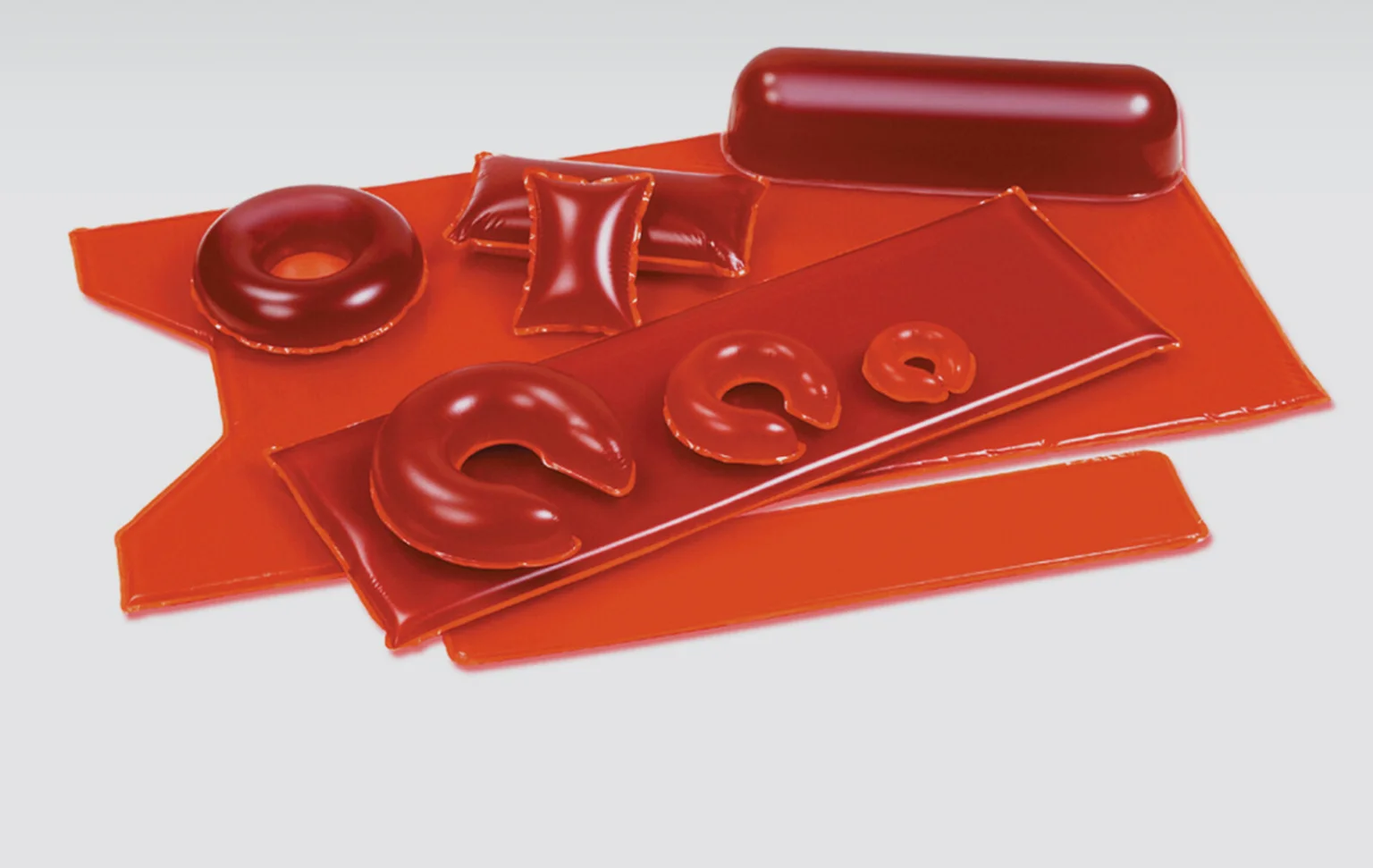
Soft, heavy pads of viscoelastic gel in a smooth plastic skin, in many shapes: head rings (doughnuts), horseshoe and prone head pads, rolls, flat sheets and overlays, and heel and elbow pads.
On the table
What it does, the lengths it comes in and what experienced techs know about it.
What it’s for
Protect bony prominences and areas with shallow nerves and blood vessels, and hold the patient in position. Used under the sacrumSAY-krumThe large, triangle-shaped bone at the base of the spine, between the two hip bones.sacr/o sacrumFull entry , knees, elbows and heels; head doughnuts steady the head for anesthesiaan-us-THEE-zhuhLoss of feeling or sensation, often brought on by drugs so that surgery or a procedure can be done without pain.an- withoutesthesi/o feeling, sensation-ia conditionFull entry ; chest and axillary rolls lift the patient off the bed in prone and lateral positions. A gel overlay placed directly under the patient also adds frictionFRIK-shunThe rubbing of one surface against another, such as skin against bed sheets.Full entry against sliding in steep Trendelenburg positiontren-DEL-en-burg puh-ZISH-unA position in which the client lies on the back with the bed tilted so the head is lower than the feet.Full entry .
Lengths and variants
Available in all sizes and shapes for specific parts of the body, including prone head pads that frame the face and keep the airway free.
What experienced techs know
What techs who reach for it every day know about it.Pro
Through the case
In the order you meet it: before, during and after the case.
- During the case
Caution
What not to do with it, and why.Pro
Know it on sight.
With Pro, for every instrument in the library. Cancel any time.
Or scrub in free: 5 questions a day.
On 31 setups
Every setup it is laid out on.
Every setup this instrument is laid out on, with photos of each table.
See ProKnow this instrument?
Send a clearer photo, another name it goes by, or a fix for this page.
2 sources
- Fuller JK. Surgical Technology: Principles and Practice. 8th ed. Chapter 16 (Moving, Handling, and Positioning the Surgical Patient), p. 326-327, 334
- Rothrock JC. Alexander's Care of the Patient in Surgery. 17th ed. Chapter 6 (Positioning the Patient for Surgery), p. 160, 162, 163
The rest of this card is Pro.
The photos, the description, the uses and the lengths stay free. Pro opens the rest on every instrument: the 3D model, the notes from the table, where it is kept, every setup it is on, and practice.
Free, for good. No card.
- All 3,323 instrument cards
- Every General setup in full
- 5 exam questions a day
- Your own preference cards
Pass your exam. Know every case.
Everything in Free, plus:
- All 298 setups in every specialty: back table, Mayo and every step
- Practice that never runs out and full timed exams for the CST, TS-C, CRCST, CSPDT and CSFA, with the why behind every answer
- Flashcards on any tray, timed to come back before you forget
- Every instrument card in full: the 3D model, cautions, inspection, how to pass it
Cancel any time from your account. Not worth it? Email us within 30 days of a charge for a refund, one per customer. Refund policy
Pro is also in the CSTSetup app, on the same account. Already have Pro? Log in
Send a photo or a fix
A photo of it on your tray, a name your OR calls it, or anything wrong on this page. Your email is only used to credit you. Submissions stay private and are reviewed by our team; accepted ones earn a Contributor credit here.