Guidewire
Guide Wire · Glide Wire · J-Wire · Exchange Wire · Stiff Wire
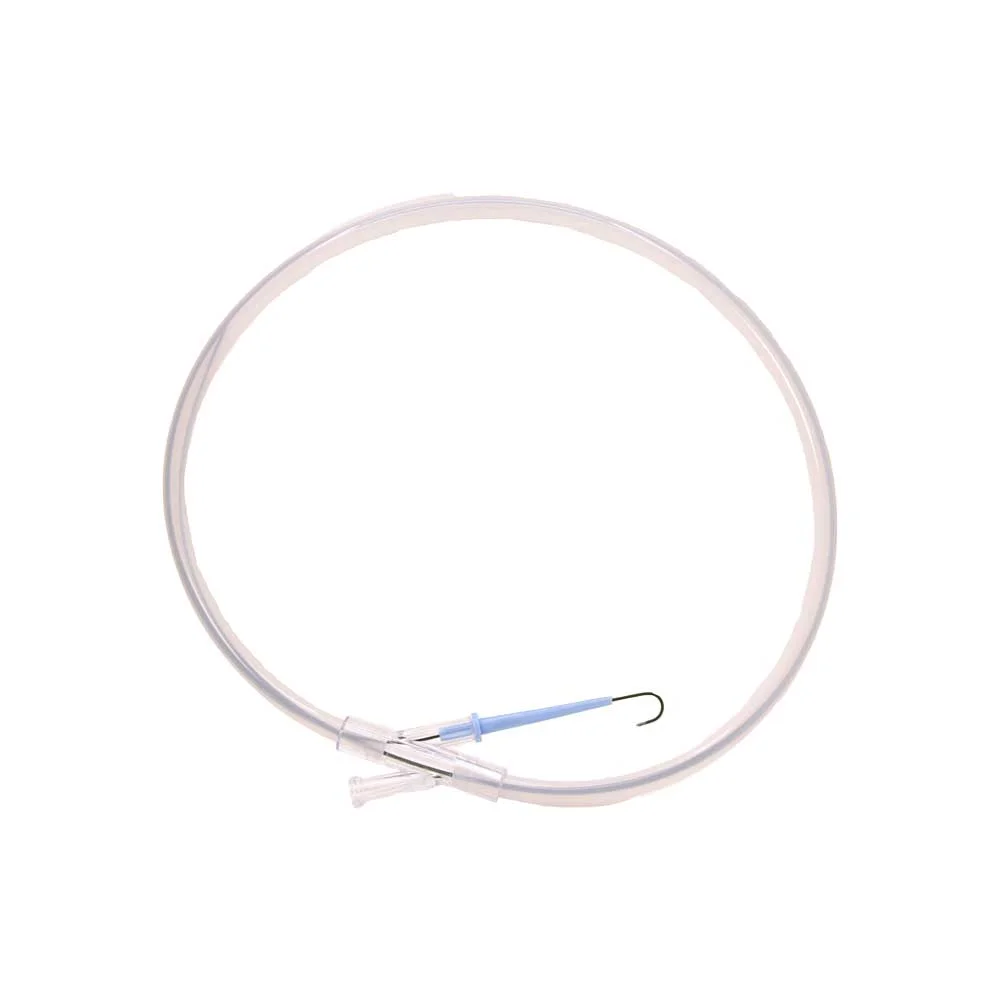
A long, thin, flexible wire made of stainless steel or nitinol, often with a slippery coating. It comes coiled inside a plastic dispenser hoop, and the tip may be straight, J-curved, floppy or stiff.
On the table
What it does, the lengths it comes in and what experienced techs know about it.
What it’s for
Placed into a vessel (or the ureterYOOR-uh-terOne of the two tubes that carry urine from the kidneys down to the bladder.Full entry ) through a needle or catheter, it acts as a pilot that sheathSHEETHA covering that wraps around a structure; in procedures, a short hollow tube left in a blood vessel to pass catheters through.Full entry , catheters, stentstentA small tube, often of metal mesh, placed inside a vessel or duct to hold it open.Full entry and other devices slide over. It holds access in the vessel while devices are exchanged. Pulled for endovascular, vascular access, device implant (ICD, pacemakerPAYS-may-kerA small device that sends electrical pulses to the heart to keep it beating at a set rate; also the heart's own natural rhythm center.Full entry ) and ureteral cases.
Lengths and variants
Common diameters are 0.014, 0.018 and 0.035 inch, and catheter lumenLOO-menThe open space inside a tube, such as a blood vessel, the intestine or a catheter.Full entry match these sizes. Lengths run from about 50 to 260 cm; long exchange-length wires are used for larger aortic repairs. Variants include J-tip, straight, floppy-tip, stiff (for example Amplatz Super Stiff or Lunderquist) and hydrophilic glide wires.
What experienced techs know
What techs who reach for it every day know about it.Pro
Through the case
In the order you meet it: before, during and after the case.
- Before the case
Inspection and testing
What to check before it reaches the field.Pro
- During the case
Caution
What not to do with it, and why.Pro
Know it on sight.
With Pro, for every instrument in the library. Cancel any time.
Or scrub in free: 5 questions a day.
On 13 setups
Every setup it is laid out on.
Every setup this instrument is laid out on, with photos of each table.
See ProKnow this instrument?
Send a clearer photo, another name it goes by, or a fix for this page.
3 sources
- Fuller. Surgical Technology: Principles and Practice. 8th ed. Chapter 30 (Vascular and Microvascular Surgery), p. 841-842
- Fuller. Surgical Technology: Principles and Practice. 8th ed. Chapter 24 (Genitourinary Surgery), p. 596
- Rothrock. Alexander's Care of the Patient in Surgery. 17th ed. Chapter 7 (Sutures, Sharps, and Instruments), p. 197
The rest of this card is Pro.
The photos, the description, the uses and the lengths stay free. Pro opens the rest on every instrument: the 3D model, the notes from the table, where it is kept, every setup it is on, and practice.
Free, for good. No card.
- All 3,322 instrument cards
- Every General setup in full
- 5 exam questions a day
- Your own preference cards
Pass your exam. Know every case.
Everything in Free, plus:
- All 298 setups in every specialty: back table, Mayo and every step
- Practice that never runs out and full timed exams for the CST, TS-C, CRCST, CSPDT and CSFA, with the why behind every answer
- Flashcards on any tray, timed to come back before you forget
- Every instrument card in full: the 3D model, cautions, inspection, how to pass it
Cancel any time from your account. Not worth it? Email us within 30 days of a charge for a refund, one per customer. Refund policy
Pro is also in the CSTSetup app, on the same account. Already have Pro? Log in
Send a photo or a fix
A photo of it on your tray, a name your OR calls it, or anything wrong on this page. Your email is only used to credit you. Submissions stay private and are reviewed by our team; accepted ones earn a Contributor credit here.