Peanut and Kittner Sponges
Peanut Sponges · Peanuts · Kittner Dissectors · Kittners · Kitners · Sponge Dissectors · Dissector Sponges · Pushers · Cherries
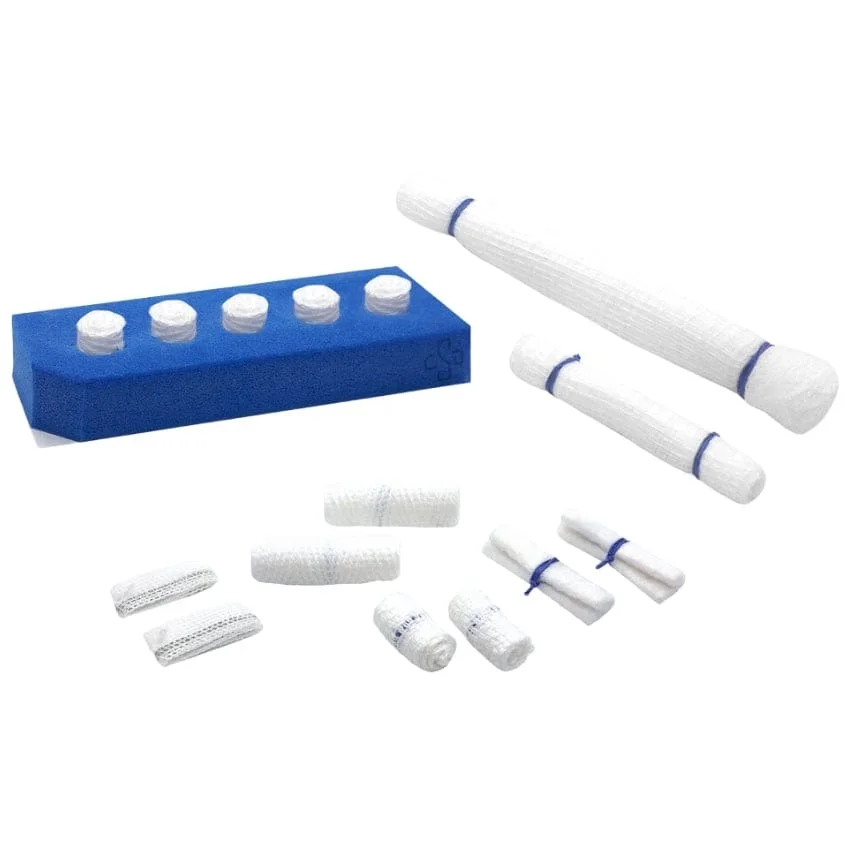
Small, tightly rolled or round cotton gauze sponges with an X-ray detectable thread, from about 1/2 to 3/4 inch across. Peanuts are round or oval; Kittners are small firm cylinders. They come five or ten to a foam holder.
On the table
What it does, the lengths it comes in and what experienced techs know about it.
What it’s for
Used for blunt dissectiondy-SEK-shunA tear in the inner layer of an artery wall that lets blood split the layers apart; also, the cutting apart of tissue in surgery.Full entry : mounted on a clamp, the surgeon uses the sponge tip to gently push tissue apart and separate tissue planes, as in herniaHER-nee-uhA bulge of an organ or tissue through a weak spot in the muscle or tissue wall that normally holds it in.Full entry repair, pericardiectomy and vascular work. They also blot small amounts of blood.
Lengths and variants
Named by size and shape: peanut, Kittner, cherry and pusher, about 1/2 to 3/4 inch, in packs of five or ten in a foam holder.
What experienced techs know
What techs who reach for it every day know about it.Pro
Through the case
In the order you meet it: before, during and after the case.
- During the case
Caution
What not to do with it, and why.Pro
Know it on sight.
With Pro, for every instrument in the library. Cancel any time.
Or scrub in free: 5 questions a day.
On 36 setups
Every setup it is laid out on.
Every setup this instrument is laid out on, with photos of each table.
See ProKnow this instrument?
Send a clearer photo, another name it goes by, or a fix for this page.
3 sources
- Fuller JK. Surgical Technology: Principles and Practice. 8th ed. Chapter 19 (Surgical Skills II: Intraoperative and Immediate Postoperative Period), p. 394-395
- Goldman MA. Pocket Guide to the Operating Room. 3rd ed. Chapter 31 (Pediatric Surgery), p. 995
- 4mdmedical.com
The rest of this card is Pro.
The photos, the description, the uses and the lengths stay free. Pro opens the rest on every instrument: the 3D model, the notes from the table, where it is kept, every setup it is on, and practice.
Free, for good. No card.
- All 3,331 instrument cards
- Every General setup in full
- 5 exam questions a day
- Your own preference cards
Pass your exam. Know every case.
Everything in Free, plus:
- All 341 setups in every specialty: back table, Mayo and every step
- Practice that never runs out and full timed exams for the CST, TS-C, CRCST, CSPDT and CSFA, with the why behind every answer
- Flashcards on any tray, timed to come back before you forget
- Every instrument card in full: the 3D model, cautions, inspection, how to pass it
Cancel any time from your account. Not worth it? Email us within 30 days of a charge for a refund, one per customer. Refund policy
Pro is also in the CSTSetup app, on the same account. Already have Pro? Log in
Send a photo or a fix
A photo of it on your tray, a name your OR calls it, or anything wrong on this page. Your email is only used to credit you. Submissions stay private and are reviewed by our team; accepted ones earn a Contributor credit here.