Pharmacology
How drugs work, how they are named, measured and calculated, and how every drug reaches the sterile field verified, labeled and counted.
1Why it matters
Many operations use drugs from the sterile back table. Antibiotics, anticoagulants, anti-inflammatory drugs and local anesthetics are among those used often. As the scrub, you receive each drug on the field, mix and measure it, label it and hand it to the surgeon.
Mistakes are common and they can kill. In one study of 277 operations watched from start to finish, medication errors happened in about half of them. Patients have died after being given the wrong drug from a basin or medicine cup that nobody had labeled.
Once a drug leaves its original container, the label on the bottle no longer travels with it. That is why the steps in this chapter exist. You are the last check before the surgeon gives the drug, and you share responsibility for a drug error on the field, whether or not the patient is harmed.
AST's guideline says a CST may handle drugs in the OR while working under the surgeon's direct supervision and orders, and it is the surgeon who gives every drug used at the surgical site. Your facility's policies, written within your state's laws, set exactly what you may do.
This chapter teaches the science and safe handling of drugs. Other chapters hold the pieces around it: abbreviations and the "Do Not Use" list as language in chapter 1; blood types in chapter 5; anesthesia drugs, preoperative medications, local anesthetics, reversal agents and emergency drugs in chapter 13; legal liability and documentation in chapter 15; labeling basins and cups at setup in chapter 28; delivering drugs during the case and tracking them in chapter 29; and each specialty's own drugs with its procedures in chapters 32 to 42.
2The words of pharmacology
These words come up every time a drug is ordered, labeled or passed.
- Pharmacology: the study of drugs and how they act in the body.
- Drug (or medication): a substance used to diagnose, cure, relieve, treat or prevent disease, or to change the way the body is built or works.
- Drug administration: giving a drug to a person by any route.
- Dose: the amount of a drug given at one time, or the amount of drug in each unit, such as 0.5 mg in each milliliter.
- Dosage: the prescribed amount of a drug, often stated as an amount over a period of time. Some references use dose and dosage to mean the same thing.
- Concentration (strength): how much drug is in a set volume or weight of the product, such as 10 mg per mL.
- Diluent: the liquid that is mixed with a powder to make the drug ready to use.
- Prescription: an order for a licensed drug from a health care provider who is allowed to write one.
3Where drugs come from
Drugs come from three main places: nature (plants, animals and minerals), the chemistry lab, and biotechnology.
- Plants: atropine comes from the belladonna plant, digoxin from the foxglove, and morphine and papaverine from the opium poppy.
- Animals: drugs from hogs are called porcine and drugs from cattle bovine. Heparin is made from hog intestine, thrombin for the field was first made from cattle, and early insulin came from the pancreas of cattle and hogs.
- Minerals: calcium, magnesium and silver salts are used in drugs, such as the silver in silver sulfadiazine cream for burns. Barium for x-ray studies and the electrolytes given to balance the body's fluids are minerals too.
- Laboratory synthesis: most modern drugs are made in the lab. A synthetic drug is built from laboratory chemicals; a semisynthetic drug starts from a natural substance that is purified and changed, as many penicillins start from a mold.
- Biotechnology: genes are placed into bacteria or animal cells, which then make a human protein in large amounts. Human insulin, the clot-dissolving drug alteplase and the hepatitis B vaccine are made this way. Biotechnology is the way the drug is manufactured, not its source.
The source matters to the patient. Drugs made from animals can trigger allergies, and proteins made by biotechnology cause fewer of those reactions. A patient allergic to pork products should not receive enoxaparin, which comes from hog intestine, and one kind of recombinant thrombin is not used in a patient allergic to hamster or snake proteins. Protein drugs would be digested if swallowed, so they are given by injection.
4How drugs are named
Every drug has three names: a chemical name, a generic name and a trade name.
| Name | What it is | Example |
|---|---|---|
| Chemical name | Describes the drug's molecules; long and used by scientists | Found in the package insert, rarely on the label |
| Generic name | The official name, written in lowercase and owned by no company | cefazolin, furosemide, acetaminophen |
| Trade (brand) name | The maker's name for the product, capitalized and often marked ® | Ancef, Lasix, Tylenol |
- In the United States, the USAN Council gives a drug its generic name when it is approved for marketing, and it makes sure new generic names do not look or sound like existing ones.
- The law requires the generic name on every drug label. On many labels it sits just under the brand name, sometimes in parentheses; on some labels it is the only name.
- A company that develops a drug holds a patent on it, so only that company can sell it for about 20 years. After that, other companies may sell the same drug under their own trade names or as a generic drug.
- A generic drug has the same chemical makeup, dosage form, strength, safety and intended use as the brand-name drug, and it costs much less.
- One drug can have several trade names, because each company that sells it gives it its own name, and trade names can differ between countries.
On the field, say and write the generic name. Everyone in the drug process should know and use it, because one shared name prevents the confusion that brand names cause and helps prevent errors.
Some generic names are spelled almost the same yet belong to very different drugs. When you are not sure of a name, check it before the drug goes anywhere.
5Where to look up a drug
When you meet a drug you do not know, look it up before the case.
- The package insert: the leaflet in the drug's box. It describes what the drug contains, what it is for, how it acts, its adverse reactions, its warnings and its dose.
- Physicians' Desk Reference (PDR): updated every year, it collects the makers' prescribing information for thousands of prescription and over-the-counter drugs. Its entries match the package inserts.
- United States Pharmacopeia and National Formulary (USP-NF): the official list of drugs approved in the United States, with the standards for their quality, purity, packaging, storage and labeling. A drug that meets these standards carries "USP" after its generic name.
- American Hospital Formulary Service (AHFS): drug information grouped by what the drugs do, and the classification system most of the U.S. health system uses.
- The Institute for Safe Medication Practices (ISMP) and The Joint Commission's National Patient Safety Goals: the safety alerts and rules on medication errors that this chapter returns to again and again.
- The hospital pharmacist: the person to ask about any drug, especially a new one.
Anyone can post drug information online, so check what you find against two reliable sources, such as a government website and a drug reference.
6The laws and rules around drugs
Who controls drugs
- The U.S. Food and Drug Administration (FDA) approves a drug only after strict testing, approves what its label and literature say, and oversees prescription, generic and over-the-counter drugs, supplements, medical devices, suture and biologic products.
- The U.S. Pharmacopeia (USP) sets the standards a drug must meet for quality, purity, identity and strength.
- The Drug Enforcement Administration (DEA) enforces the federal law on controlled substances.
- State practice acts decide who may prescribe, dispense and give drugs. When a state and a federal law disagree, the stricter one applies. The surgical technologist works under the surgeon's delegated authority, and the limits of that delegation differ from state to state.
- Your facility's policies must follow state law, and The Joint Commission requires the facility to write them. AST found no state law, in 37 states studied, that spoke directly to the CST's role with drugs, so the facility's written policy and your job description set your limits. Never go beyond them.
Prescription and over-the-counter drugs
A prescription drug can be obtained only with an order from a licensed professional allowed to prescribe, such as a physician, dentist, physician assistant or advanced practice nurse. An over-the-counter (OTC) drug can be bought without one, and the FDA regulates it too. Some drugs are sold OTC at a low dose and need a prescription at a higher one.
Herbal remedies and alternative medications
Complementary medicine is used alongside standard medical care, and alternative medicine is used in place of it. About 40 percent of adults say they use one or the other.
The FDA treats herbs as food supplements, not drugs, so they do not go through the testing that prescription and OTC drugs do. Yet many of them change how the body works and can interfere with the action of other drugs.
Patients often leave OTC drugs and herbs off their list because they do not think of them as medicines. They can cause serious interactions, so the history asks about them. Warfarin, a blood thinner, has more interactions with foods, drugs and herbs than any other drug.
Controlled substances
A controlled substance is a drug with a high risk of abuse or addiction, and state and federal law control it. The Controlled Substances Act of 1970 sorted these drugs into five schedules by their risk of abuse and dependence and by whether they have a medical use. Schedule I carries the highest risk.
| Schedule | Abuse risk and use | Examples |
|---|---|---|
| I | Highest risk; no accepted medical use | heroin, LSD |
| II | High risk; accepted medical use with strict limits | morphine, fentanyl, cocaine, oxycodone |
| III | Moderate to low risk | ketamine, anabolic steroids, acetaminophen with codeine |
| IV | Low risk | diazepam, lorazepam, alprazolam |
| V | Lowest risk | some cough medicines and antidiarrheal drugs, such as diphenoxylate with atropine |
- A controlled drug's label carries a large C with the schedule's Roman numeral, such as C-II, or CIV on a vial of diazepam.
- Anyone who prescribes a controlled substance must register with the DEA and puts the DEA number on the prescription.
- Once a controlled drug leaves the pharmacy it is kept locked, and the facility records how much is used, when, for which patient, and who obtained and gave it.
- AST notes that controlled substances may need a different way of reaching the field, set by facility and state policy. Cocaine used on the nasal lining is a Schedule II drug, and hospital policy and state law guide how it is handled.
These rules are the narcotic precautions the Core Curriculum names. Chapter 13 teaches the narcotics themselves.
Drugs in pregnancy and breastfeeding
Some drugs cross the placenta to the fetus and others are blocked. A drug known to harm the developing baby is called a teratogen. No drug is 100 percent safe in pregnancy, and a drug with no safety data has not been proven safe.
Under the FDA's Pregnancy and Lactation Labeling Rule (PLLR), which took effect in June 2015, a drug's label explains in words what is known about its risks during pregnancy and breastfeeding, in place of a single letter. All drugs the FDA has approved should now carry the new labeling.
Labels used to rank drugs with the letters A, B, C, D and X, from no shown risk to the fetus (A) to a risk that outweighs any benefit (X). Some references still teach the letters, and you will see them in older drug books.
7Medication orders
Every drug a patient receives starts with an order from a licensed prescriber, such as the surgeon or the anesthesia provider.
What an order contains
An order names the patient and the prescriber and gives the date and time it was written, the drug's name, its strength, the dose, the route, and the time or how often to give it. The prescriber signs it. An order missing any of these parts is not a valid, legal order.
Types of orders
- Written order: handwritten, typed or entered into the electronic record.
- Verbal order: spoken in person or by phone, with the same content as a written one. In surgery it is common: the surgeon asks for a drug from the field or tells the anesthesia provider to give one. A verbal order in the OR is usually for one dose, and it is recorded in the patient's chart. Repeat it back to the surgeon to confirm it.
- Standing order: an order that stays in effect until the prescriber cancels it. In surgery, the drugs on the surgeon's preference card are standing orders, and the patient's name may be left off because the card applies to every patient having that procedure.
- Stat order: give the drug at once, one time. It is used most in emergencies such as a cardiac arrest.
- PRN order: give the drug as needed. PRN stands for the Latin pro re nata.
The preference card as an order
The drugs on a preference card name the drug, its strength and its volume, such as heparin 5,000 units in 1,000 mL of saline for irrigation. The route and timing are often left off, because the surgeon gives every drug at the field. AST asks the team to check the card for each drug and dose, and never to write error-prone abbreviations, symbols or dose designations on a card.
Cards can be out of date. If a card's drug does not suit this patient, such as an antibiotic in the irrigation for a patient allergic to that antibiotic, the team raises it before the drug is prepared. The patient's drug allergies are confirmed along with the patient's identity. Chapter 28 covers keeping cards current.
8Drug forms
A drug's form (also called its dosage form) is what it is made as: a tablet, a liquid, a cream. The form is not the route, the way the drug enters the body, though the form decides which routes are possible. Neosporin ointment, for example, can only be put on the skin.
The Core Curriculum sorts drug forms into four groups.
- Solid: tablets and capsules, which are swallowed and so are rarely used in surgery, where patients take nothing by mouth. Some drugs come as a dry powder in a vial that must be mixed with a liquid before use, as many antibiotics are.
- Semisolid: creams, gels, foams and ointments. A cream has a water base and an ointment an oil or petroleum base. Lidocaine jelly, estrogen cream for vaginal packing and antibiotic ointment for a dressing are semisolids used in surgery.
- Liquid, solution: a drug fully dissolved in a liquid, as in saline for irrigation, antibiotic irrigation and heparin irrigation.
- Liquid, suspension: solid particles floating in a liquid, which settle when it stands. Shake it, or roll the syringe between your palms, just before you pass it. Some ear drops used in ear surgery are suspensions.
- Liquid, emulsion: two liquids that do not normally mix, such as oil and water, held together by an emulsifier. The most common emulsion in surgery is an anesthetic given into the vein (chapter 13).
- Gas: among the anesthetics, nitrous oxide is the only common one that is a true gas. The other inhaled anesthetics are liquids that the anesthesia machine turns into vapor.
Liquids act faster than solids, and gases and vapors act faster still. A solution is absorbed faster than a suspension, and a suspension faster than a solid.
Forms you will handle on the field
- Powder for reconstitution: a dry drug mixed with a diluent such as sterile water or saline to make a liquid, as with some antibiotics and topical thrombin.
- Irrigant: a sterile solution that bathes or flushes a wound or body cavity. It is used on tissue only, never injected.
- Solution for slush: saline made into iced slush to cool tissue in some heart and kidney operations.
- Sponge: a soft matrix such as an absorbable gelatin sponge, used dry or soaked in thrombin to stop oozing.
- Spray: a drug sprayed over tissue, such as a numbing spray for the throat or a sealant sprayed on an oozing liver.
- Tincture: any solution made with alcohol, such as some skin prep solutions.
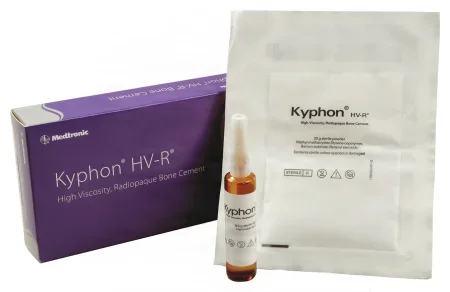
- Cement: bone cement, a powder mixed with a liquid on the field in a closed mixing device that keeps its harmful vapor away from the team.
- Film, packing, graft and implant: a film is a thin sheet left over tissue, as to seal a leak; packing is gauze, usually soaked with a drug, packed into a cavity; a graft is tissue or synthetic material that replaces or bridges tissue; and an implant is a material or device left in the body.
9How drugs work
When a drug enters the body, two things happen. The body changes the drug, breaking it down and removing it, and the drug changes the body. The first is pharmacokinetics, what the body does to the drug. The second is pharmacodynamics, what the drug does to the body.
Pharmacokinetics: the drug's path through the body
Every drug goes through four steps.
- Absorption: the drug moves from where it was given into the blood. Speed depends on the route, the blood supply at the site and how easily the drug dissolves. A drug injected into a vein needs no absorption and acts almost at once; one injected into muscle or under the skin usually takes 15 to 30 minutes. Mucous membranes and the lungs, with their many small vessels, absorb quickly.
- Distribution: the blood carries the drug around the body to the tissues where it acts. Organs with a rich blood flow, such as the heart, liver and kidneys, get it quickly; bone, fat and skin get less. Many drug molecules ride on proteins in the plasma, and only the free, unbound part can act.
- Metabolism (biotransformation): the body, mostly the liver, breaks the drug down into smaller products called metabolites that are easier to remove. A drug swallowed by mouth passes through the liver before it reaches the rest of the body, and the liver may inactivate much of it there; this is the first-pass effect. Drugs given by injection or under the tongue skip it.
- Excretion (elimination): most drugs and their metabolites leave the body in the urine. Some leave in bile, feces, saliva or breast milk, and inhaled anesthetics leave through the lungs as the patient breathes out.
Bioavailability is how much of a dose, and how fast, reaches the bloodstream and the site where it acts.
A drug's half-life is the time it takes for half of it to be cleared from the body. A drug with a short half-life must be given often to keep enough in the blood; one with a long half-life is given less often.
The patient changes all four steps. Liver disease slows metabolism and kidney disease slows excretion, so a normal dose can build up to a toxic level. Babies have immature livers and kidneys, and in older adults the body holds less water and more fat and the liver shrinks, which changes how drugs move. Weight, genetics, diet and other drugs matter too.
Pharmacodynamics: what the drug does
Most drugs work by attaching to receptors, special proteins on cells, the way a key fits a lock. The body's own chemicals, such as hormones and nerve messengers, normally fit these locks.
- An agonist binds to a receptor and turns on a response. The body's own acetylcholine is a natural agonist.
- An antagonist binds to a receptor and blocks it, so nothing happens. It is a key that fits the lock but will not turn it, and it is also called a blocker.
Not every drug works on a receptor. Some act on enzymes or on germs, as penicillin stops bacteria building their cell walls, and some simply change the chemistry around cells, as an antacid neutralizes stomach acid.
Three times describe a drug's effect:
- Onset: when the drug first begins to work. The route changes it; a drug in a vein starts far sooner than the same drug swallowed.
- Peak effect: when the drug's effect is strongest.
- Duration of action: how long the drug keeps working, from onset until the effect is gone.
The therapeutic window (or therapeutic range) is the span of doses between too little to work and so much that it is toxic. Some drugs have a narrow window, so a small mistake in strength or amount can harm the patient. That is why the strength and the amount of every drug on the field are checked so carefully.
Drugs acting together
The Core Curriculum names five drug actions: the four below, and the therapeutic action that follows them. Two drugs given together can change each other's effects.
- Additive: the combined effect equals the sum of the two drugs' effects.
- Synergist: one drug strengthens the other, so together they do more than either could alone. This is also called potentiation. Synergy can allow lower doses, but it can also make a combination more toxic than either drug.
- Agonist: turns on a receptor, as above.
- Antagonist: blocks a receptor or works against another drug. Vitamin K, for example, works against the blood thinner warfarin.
Drugs can also compete for the same place on the plasma proteins. Aspirin taken with warfarin pushes warfarin off those proteins, leaving more of it free to act, and the patient may bleed.
Why a drug is given, and when it must not be
- Therapeutic effect: the effect the drug is given for.
- Indication: the reason for giving a drug.
- Contraindication: a reason not to give it, because it would raise the risk of harm. An antibiotic may be indicated for an infection but contraindicated in a patient allergic to it.
10Side effects, adverse reactions and allergy
Every drug causes changes in the body, some wanted and some not.
- A side effect is an expected effect other than the one intended, such as the drowsiness many antihistamines cause. Side effects are usually mild and often cannot be avoided. Some are even useful.
- An adverse effect (adverse reaction) is an unwanted, possibly harmful reaction to a normal dose. It can be mild, such as nausea or dizziness that stops with the drug, or serious, such as trouble breathing or a racing heart.
- Toxicity is harm from too much drug, from an overdose or from a body that cannot clear it. Some drugs harm one organ: the liver (hepatotoxic), the kidneys (nephrotoxic) or the inner ear (ototoxic).
- An idiosyncratic reaction is a rare, unpredictable reaction with no known cause. Malignant hyperthermia, a reaction to certain anesthetic drugs, is one kind (chapter 13).
- Tolerance is a weaker response to a drug after repeated doses, so more is needed for the same effect. It is common with opioids.
Allergy and hypersensitivity
A true drug allergy is a reaction of the immune system, and it needs an earlier exposure to the drug or to one like it. The reaction, called hypersensitivity, ranges from a rash, hives or wheezing to anaphylaxis, in which the airways swell and the circulation collapses.
Allergic reactions can come at once or be delayed by hours or even days. They are grouped into four types:
- Type I, immediate: histamine causes swelling, leaky vessels and narrowed airways. Anaphylactic shock is its most extreme form.
- Type II, cytotoxic: antibodies attack cells, as in a mismatched blood transfusion.
- Type III, immune complex: antibody and antigen clumps damage tissue, causing itching, rash, swelling and fever, as in some antibiotic allergies.
- Type IV, delayed: a cell-mediated reaction, with no antibodies involved, 24 to 72 hours after exposure, such as a positive tuberculin skin test.
You are not the one who diagnoses a reaction, but you are often the one who sees it first. Know what is normal for the patient, and tell the surgeon, the anesthesia provider or the circulator at once about anything that is not: what you see, when it started, what the patient says, and anything you did to help. Chapter 13 covers treating anaphylaxis.
11Routes of administration
The route is the way a drug enters the body. The route is printed on the label, and a drug is given only by the route it is made and labeled for. Giving a drug by any other route is a medication error and can kill.
The Core Curriculum groups routes into three families.
Enteral: through the digestive tract
- By mouth (PO, from the Latin per os): swallowed. Onset is slow, and it is rarely used in surgery because the patient takes nothing by mouth or is asleep.
- Rectal: through the lining of the rectum, for a local effect or for absorption into the blood.
Parenteral: by injection, outside the digestive tract
- Intravenous (IV): into a vein. Absorption is immediate. Most drugs given by injection in surgery are given IV, by the anesthesia provider, as a single push (a bolus) or as a slow infusion.
- Intramuscular (IM): into a large muscle; absorption is usually fast.
- Subcutaneous: into the fatty tissue under the skin, as with heparin given before some operations to prevent clots. ISMP asks that this route be written out as "subcut", because "SC" and "SQ" are misread.
- Intradermal (ID): between the layers of the skin, as in a tuberculin skin test or a little local anesthetic before an IV is placed.
- Intrathecal: into the spinal canal, the fluid-filled space around the spinal cord.
- Intra-articular: into a joint space, such as an anti-inflammatory drug or local anesthetic after arthroscopy.
- Intracardiac: straight into the heart, as epinephrine may be given during a cardiac arrest.
- Retrobulbar: behind the eyeball, into the cone of eye muscles, where a regional anesthetic is injected.
- Intraosseous (IO): into the bone marrow, used when an IV line cannot be started or kept.
- Intraperitoneal and epidural: into the peritoneal cavity, and into the space just outside the covering of the spinal cord.
Topical: on a surface
- Skin and mucous membranes: some topical drugs act only where they are put, as an antibiotic ointment does; others are absorbed into the blood. Mucous membranes absorb much faster than skin. Topical hemostatic agents, used almost only in surgery, and antibiotic irrigation poured into the wound are topical drugs too.
- Transdermal: through the skin from a patch, for a slow, steady effect in the whole body.
- Buccal and sublingual: a tablet held in the cheek or under the tongue and absorbed through the lining of the mouth, not swallowed.
- Inhalation: breathed into the lungs as a mist or gas. Inhaled anesthetics act on the whole body.
- Instillation: drops or fluid placed into a lined cavity, such as the eye, nose, ear or urethra. A decongestant may be instilled into the nose before sinus surgery, and contrast into the bile duct for a cholangiogram.
- Intraocular: into the eye itself, as some drugs that shrink the pupil are injected into the eye during surgery on its front part.
References sort a few routes differently. Some group buccal and sublingual with the oral routes and rectal with the topical ones, and some call every route outside the digestive tract parenteral. What never changes is the rule: give a drug only by the route on its label.
Never pass a drug made for one route to be used by another. Some drugs come in different forms for different routes under the same name, so read the route on the label every time.
12Measuring drugs
Every drug on the field has to be measured exactly. Mistakes in drug math are a major cause of drug errors. The Core Curriculum expects you to work the conversions and calculations in this section, and the CST cert exam tests weights, measures and conversions.
The metric system
Medicine measures in the metric system, the international standard and the most accurate of the systems in use. Its base units are the meter for length, the liter for volume and the gram for weight.
Prefixes make each unit bigger or smaller by tens.
| Prefix | Means | Example |
|---|---|---|
| kilo- (k) | 1,000 times | 1 kilogram (kg) = 1,000 grams |
| centi- (c) | one hundredth | 1 centimeter (cm) = 0.01 meter |
| milli- (m) | one thousandth | 1 milligram (mg) = 0.001 gram; 1 milliliter (mL) = 0.001 liter |
| micro- | one millionth | 1 microgram (mcg) = one millionth of a gram, or 0.001 milligram |
The equivalents you use most:
- 1 kg = 1,000 g
- 1 g = 1,000 mg
- 1 mg = 1,000 mcg
- 1 L = 1,000 mL
- 1 mL = 1 cubic centimeter (cc). Say and write mL: "cc" can be misread, and The Joint Commission suggests writing mL instead.
A milligram is a weight and a milliliter is a volume. They are never the same thing, and mixing them up in a calculation can seriously harm the patient. Write "mcg" for micrograms, because the Greek letter symbol is easily read as mg, a thousandfold error.
To change between grams, milligrams and micrograms, or between liters and milliliters, each step is 1,000. Going to a smaller unit, multiply by 1,000, which moves the decimal point three places to the right. Going to a larger unit, divide by 1,000, which moves it three places to the left.
- 0.25 g to milligrams: 0.25 g × 1,000 mg/g = 250 mg
- 500 mcg to milligrams: 500 mcg ÷ 1,000 mcg/mg = 0.5 mg
- 2.5 L to milliliters: 2.5 L × 1,000 mL/L = 2,500 mL
Writing numbers safely
- Always a leading zero: write 0.5 mg, never .5 mg. A decimal point with no zero in front of it is easy to miss, and .5 mg becomes 5 mg.
- Never a trailing zero: write 1 mg, never 1.0 mg. If the point is missed, 1.0 mg becomes 10 mg.
A trailing zero is allowed only where a number must show its precision, such as a lab result or the size of a tube, and never in a medication order or on a drug label.
Household and apothecary measures
The household system uses teaspoons, tablespoons, ounces and cups. It is too imprecise for any medical measurement and is never used in surgery; ISMP recommends avoiding it. You may still need to explain a measure to a patient, so know the common equivalents.
| Household or customary | Metric |
|---|---|
| 1 teaspoon | 5 mL |
| 1 tablespoon | 15 mL |
| 1 fluid ounce (2 tablespoons) | 30 mL |
| 1 pint | about 500 mL |
| 1 quart | about 1,000 mL (1 L is about 1.06 quarts) |
| 1 ounce of weight | about 30 g |
| 2.2 pounds | 1 kg |
| 1 inch | 2.54 cm |
The apothecary system, with grains, drams and minims written in Roman numerals, is obsolete and replaced by metric everywhere. If you meet it, never confuse a grain with a gram. The Joint Commission suggests writing metric units in place of apothecary units.
Units, milliunits and milliequivalents
Some drugs are measured by their effect, in units, instead of by weight. Heparin, insulin, penicillin, bacitracin and thrombin are measured this way. A unit is set separately for each drug, so a unit of heparin and a unit of insulin are not the same amount.
- Write the word "units" in full. "U" is misread as a zero, a 4 or "cc", and "IU" as IV or 10.
- When a powder measured in units is mixed with a diluent, the liquid changes the concentration but not the total number of units. To receive every unit on the vial, the patient must receive all of its contents.
- Oxytocin is dosed in milliunits, thousandths of a unit, and electrolytes such as potassium chloride in milliequivalents (mEq).
Temperature
Temperatures are given in degrees Celsius (°C) or Fahrenheit (°F). Water freezes at 0°C (32°F) and boils at 100°C (212°F), and normal body temperature is 37°C (98.6°F).
- Celsius to Fahrenheit: multiply by 9/5, then add 32. For 40°C: 40 × 9/5 = 72; 72 + 32 = 104°F.
- Fahrenheit to Celsius: subtract 32, then multiply by 5/9. For 104°F: 104 − 32 = 72; 72 × 5/9 = 40°C.
The 24-hour clock
Hospitals write times on a 24-hour clock, called international or military time, so that a morning time is never mistaken for an evening one. It uses four digits, hours then minutes, with no colon and no AM or PM.
- Before noon, the time is the same as on the 12-hour clock, written with four digits: 5:00 AM is 0500, said "zero five hundred."
- After noon, add 12 to the hour: 1:00 PM is 1300, and an incision made at 4:46 PM is 1646, said "sixteen forty-six."
- To change back, subtract 12: 1900 is 7:00 PM.
- Midnight can be written 0000 or 2400. Nine minutes after midnight is 0009, and nine minutes after noon is 1209.
Roman numerals
Roman numerals were once used on prescriptions and are still printed in a controlled drug's schedule, such as C-II. I is 1, V is 5, X is 10, L is 50, C is 100, D is 500 and M is 1,000.
- Numerals in a row are added: III = 3, XXX = 30.
- A smaller numeral before a larger one is subtracted: IV = 4, IX = 9, XL = 40, so XLV = 45 and XIX = 19.
13The math
The Core Curriculum asks for six kinds of basic math: decimals, fractions, military time, percentages, proportions and ratios. The 24-hour clock is above; here are the rest.
Fractions
A fraction is part of a whole, written a/b. The top number (the numerator) is how many parts you have, and the bottom number (the denominator) is how many equal parts make the whole.
- A proper fraction is less than 1 (3/4). An improper fraction is more than 1 (5/4). A mixed number is a whole number with a fraction (1 1/4).
- To change a fraction to a decimal, divide the top by the bottom: 3/8 = 3 ÷ 8 = 0.375.
- To add fractions, give them the same denominator first: 1/2 + 1/3 = 3/6 + 2/6 = 5/6.
- To multiply, multiply the tops and the bottoms: 3/4 × 20 mL = 60/4 mL = 15 mL. To divide, turn the second fraction upside down and multiply.
- Always reduce the answer to its lowest terms: 10/12 = 5/6.
Decimals
A decimal shows a whole number and its parts in tens: in 652.345, the digits after the point are tenths, hundredths and thousandths. To add or subtract decimals, line up the decimal points first.
Multiplying by 10, 100 or 1,000 moves the decimal point one, two or three places to the right, one place for each zero; dividing moves it to the left. This is why metric conversions are so simple.
Percentages
Percent means "per hundred." To change a percent to a decimal, move the decimal point two places to the left: 25% = 0.25. To find a percent of a number, change it to a decimal and multiply: 20% of 80 = 0.20 × 80 = 16.
A drug's percent strength tells you how many grams are in every 100 mL.
- A 1% solution has 1 g in 100 mL, which is 10 mg in every mL.
- So you can turn any percent into mg/mL by multiplying by 10: a 2% solution has 20 mg/mL, and a 0.1% solution has 1 mg/mL.
- Normal saline is 0.9% sodium chloride: 0.9 g in every 100 mL, or 9 g in a liter.
The same amount of drug can come in different volumes. Thirty mL of a 1% solution (30 mL × 10 mg/mL = 300 mg) holds the same 300 mg as 15 mL of a 2% solution (15 mL × 20 mg/mL) or 60 mL of a 0.5% solution (60 mL × 5 mg/mL). This is how local anesthetics are labeled and counted (chapter 13).
Ratios
A ratio compares two numbers, written a:b or a/b.
A drug's ratio strength means 1 g of drug in that many milliliters.
- 1:1,000 means 1 g in 1,000 mL: 1,000 mg ÷ 1,000 mL = 1 mg/mL.
- 1:10,000 means 1 g in 10,000 mL = 0.1 mg/mL.
- 1:100,000 means 1 g in 100,000 mL = 0.01 mg/mL, which is 10 mcg/mL.
The bigger the second number, the weaker the drug. Epinephrine added to a local anesthetic is written this way. On the sterile field, 1:1,000 is used only on a surface, never injected. Weak strengths such as 1:100,000 and 1:200,000 are mixed into local anesthetics that are injected (chapter 13). Two strengths of epinephrine on one field, as in some ear operations, must never be confused.
See how far apart they are. The same 3 mL holds 3 mL × 1 mg/mL = 3 mg of epinephrine at 1:1,000, but 3 mL × 0.01 mg/mL = 0.03 mg at 1:100,000: one hundred times less.
Proportions
A proportion says that two ratios are equal: a:b = c:d. The two outer numbers multiplied together equal the two inner numbers multiplied together, so when you know three of the numbers you can find the fourth, x.
Example: finding the strength per mL. A label reads 500 mg in 5 mL. How much is in 1 mL?
- Set up the proportion: 500 mg : 5 mL = x mg : 1 mL.
- Multiply the outer and inner terms: 5 × x = 500 × 1, so 5x = 500.
- Divide both sides by 5: x = 100 mg in each mL.
Example: pounds to kilograms. Many doses are ordered per kilogram of body weight. A patient weighs 185 pounds.
- 1 kg : 2.2 lb = x kg : 185 lb
- 2.2 × x = 185
- x = 185 ÷ 2.2 = 84.09, about 84.1 kg
A quick check: a patient's weight in kilograms is always a smaller number than in pounds. If your answer comes out bigger, you multiplied when you should have divided.
14Dose calculations
The amount of drug a patient receives is its strength (concentration) multiplied by the volume given. The surgical technologist must be able to work out how much to prepare, and must keep track of how much has been given.
Dose = concentration × volume. Write the units at every step: units/mL × mL = units, and mg/mL × mL = mg. If the units do not cancel to the answer you want, the setup is wrong.
Example 1: units per milliliter. The preference card calls for 5,000 units of heparin in 1,000 mL of saline for irrigation.
- Concentration: 5,000 units ÷ 1,000 mL = 5 units/mL.
- The surgeon uses 300 mL of it. Amount delivered: 300 mL × 5 units/mL = 1,500 units.
Example 2: how much to draw up. The order is 5,000 units of heparin, and the vial holds 1,000 units/mL.
- Volume = dose ÷ concentration: 5,000 units ÷ 1,000 units/mL = 5 mL.
- Now suppose the only vial is 10,000 units/mL: 5,000 units ÷ 10,000 units/mL = 0.5 mL. An amount under 1 mL is measured in a tuberculin syringe.
One milliliter of heparin can hold 10, 100, 1,000, 5,000 or 10,000 units, so the same volume from the wrong vial can give a dose 1,000 times larger than ordered. Read the strength aloud, and say it again when you pass the drug.
Example 3: a dose by weight. For heart surgery on bypass, heparin is given at 300 to 400 units per kilogram. The patient weighs 176 pounds.
- Weight: 176 lb ÷ 2.2 lb/kg = 80 kg.
- Dose at 300 units/kg: 80 kg × 300 units/kg = 24,000 units.
- At 1,000 units/mL: 24,000 units ÷ 1,000 units/mL = 24 mL.
The prescriber orders the dose; your job is to prepare exactly what is ordered and to check that the numbers make sense.
Example 4: one drug in two strengths. A drug used at two strengths in one case is totaled for each strength and then added, and the cumulative dose is recorded. Suppose a port is flushed with 20 mL of heparin at 10 units/mL and then 5 mL at 100 units/mL.
- First strength: 20 mL × 10 units/mL = 200 units.
- Second strength: 5 mL × 100 units/mL = 500 units.
- Total: 200 units + 500 units = 700 units of heparin.
Keeping inside the maximum dose
Some drugs have a maximum safe dose, which depends on the patient's weight and condition. Confirm the maximum with the anesthesia provider and the circulator before the case, and work out the total each time more of the drug is given. A combination drug, such as a local anesthetic with epinephrine added, may need each part checked on its own.
Example 5: a running total. Suppose the anesthesia provider confirms that this patient may receive no more than 300 mg of a drug supplied as a 1% solution.
- Strength: 1% = 10 mg/mL.
- The most you can hand up: 300 mg ÷ 10 mg/mL = 30 mL.
- The surgeon has injected 12 mL, then 8 mL: 12 mL + 8 mL = 20 mL, and 20 mL × 10 mg/mL = 200 mg so far.
- What is left before the limit: 300 mg − 200 mg = 100 mg, which is 100 mg ÷ 10 mg/mL = 10 mL. As the scrub you share responsibility for keeping the total under the limit, and the circulator records each amount as it is injected.
The CST cert exam expects you to keep the maximum doses of local anesthetics, heparin and epinephrine in mind. Chapter 13 gives the local anesthetics and their limits.
15Mixing drugs
The Core Curriculum names three ways drugs are mixed: combining, diluting and reconstituting. The circulator may mix a drug off the field before passing it, or you may mix it on the field.
Combining
To combine two drugs, draw each one up separately and put them together in a dry cup or basin of the right size. The mixture is a new drug with properties of its own, so it gets a new delivery device and a new label the moment it is mixed.
Diluting
Adding diluent to a drug lowers its concentration. The dilution equation finds how much of a stronger drug you need: C1 × V1 = C2 × V2, where C is concentration and V is volume.
Example: making a weaker solution. You have a 1% solution and need 50 mL of a 0.5% solution.
- C1 × V1 = C2 × V2: 1% × V1 = 0.5% × 50 mL.
- V1 = (0.5% × 50 mL) ÷ 1% = 25 mL of the 1% solution.
- Add diluent to make 50 mL in all: 50 mL − 25 mL = 25 mL of diluent.
Reconstituting
Reconstituting means adding a diluent, usually sterile water or saline, to a dry powder to make a liquid. The label and package insert give the type and amount of diluent and the concentration it makes.
- One antibiotic powder, 1 g reconstituted with 10 mL of saline, makes 1,000 mg ÷ 10 mL = 100 mg/mL for the vein. The same 1 g added to 500 mL of saline for wound irrigation makes 1,000 mg ÷ 500 mL = 2 mg/mL.
- Topical thrombin, 1,000 units mixed with 10 mL of diluent, makes 1,000 units ÷ 10 mL = 100 units/mL. One recombinant thrombin comes as 5,000 or 20,000 units of powder mixed with saline to 1,000 units/mL, which takes 5 mL or 20 mL of saline.
When you mix a powder:
- Inject the diluent slowly, and do not force it in.
- Do not shake the vial, which makes foam. Roll it gently between your palms.
- Keep the needle tip under the surface of the liquid while you draw up, so you do not pull in air.
- Get the air out before the drug is used. Air bubbles make the measurement wrong and must never reach a vessel or duct. If a little drug squirts out with the air, recalculate the amount.
- Measure any amount under 1 mL in a tuberculin syringe, and never use an insulin syringe for any drug but insulin.
- Label the mixed drug at once.
Some drugs come in a two-part pouch holding the powder and the diluent separately; bending the pouch mixes them with no other device.
If you are unsure of a calculation, ask a teammate to check it before the drug goes to the surgeon. Some facilities require that second check.
16Devices for preparing and giving drugs
Syringes
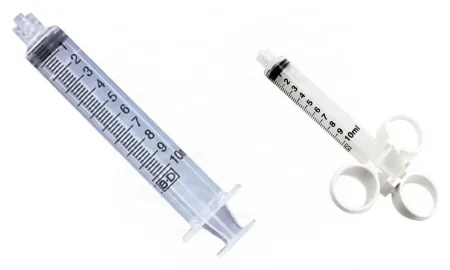
A syringe has three parts: the tip, the barrel, which is marked in milliliters, and the plunger. Read the amount at the inner edge of the plunger's rubber tip. Syringes come from 1 mL to 60 mL; the 10 mL syringe is the one used most in the OR.
Two kinds of tip connect a syringe to a needle or tubing, and both sides of a connection must be the same kind.
- Luer-lock (lock tip): the needle twists on and locks, so it cannot come apart. It is the most common tip in surgery and the one for any connection under pressure.
- Slip tip (plain tip): the needle pushes on and can be pulled off. It is used for low-pressure connections and specific jobs.
Kinds of syringe you will meet:
- Tuberculin syringe: the smallest, holding 0.5 or 1 mL and marked down to 0.01 mL. Use it for any dose of 1 mL or less.
- Insulin syringe: a 1 mL syringe marked in insulin units, with an orange cap. Its unit marks are not milliliters, so never use it for any drug but insulin; mistaking one syringe for the other can injure or even kill a patient.
- Finger-control (control) syringe: rings on the barrel and plunger give a firmer grip and more precise control when injecting, as for local anesthetic.
- Prefilled (preloaded) syringe: comes from the maker already filled, often for emergency drugs, because drawing up takes time.
- Tubex or Carpuject: a reusable holder that takes a prefilled glass cartridge (a carpule) of a drug.
- Catheter-tip syringe: its tip fits a catheter or tubing instead of a needle.
- Dual syringe: two barrels that deliver two parts at once, as for a fibrin sealant.
A 60 mL syringe is for flushing and irrigation. Its marks are too far apart to measure a small dose safely.
Irrigating syringes
- Asepto syringe: a rubber bulb on a long barrel, the irrigator used most in open cases; it holds about 120 mL.
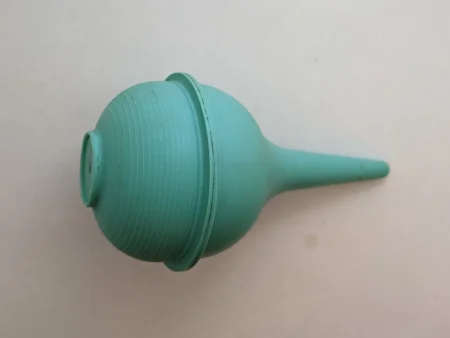
- Bulb syringe (ear syringe): a bulb with no barrel, for small areas such as the ear canal, and for suctioning a newborn's nose and mouth.
- Toomey syringe: a large syringe, about 50 mL, used with an adapter on a catheter to irrigate the bladder and prostate, or with a scope.
AST counts an Asepto (bulb) syringe as a drug container like any other: whatever is in it is labeled.
Needles
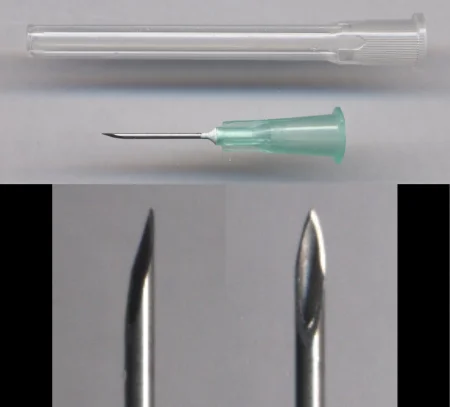
A hypodermic needle has a hub that fits the syringe, a shaft, and a point whose slanted face is the bevel. Needles are sized by length, in inches, and by gauge, the width of the shaft.
- The higher the gauge, the thinner the needle: an 18-gauge needle is wider than a 25-gauge.
- Hubs are color-coded by gauge, though colors can vary by maker. Several makers use pink for 18, gray for 22 and blue for 25 gauge. The common length on the field is 1 1/2 inches.
- An 18-gauge needle is used to draw up a drug quickly; it is then changed for a finer needle, such as a 25-gauge, for the injection.
- Blunt needle: used to draw a drug from a vial the circulator holds, so the circulator is not stuck.
- Filter needle or filter straw: draws a drug out of a glass ampule while catching tiny pieces of glass. Never inject through a filter needle.
- Spinal needle: a long needle, often 3 inches. From the field it may be used to aspirate a cyst or to fill a shoulder joint with fluid before arthroscopy.
- IV catheter (angiocatheter): a soft plastic tube over a needle. The needle is withdrawn and the tube stays in the vein, so the anesthesia provider can give fluids and drugs.
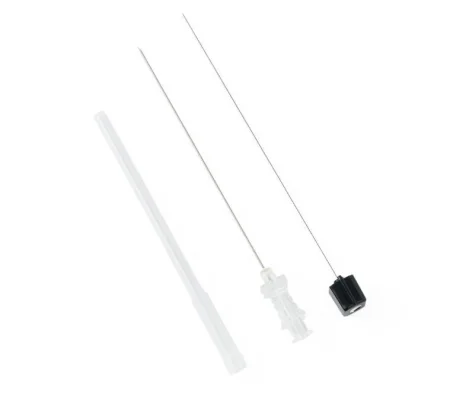
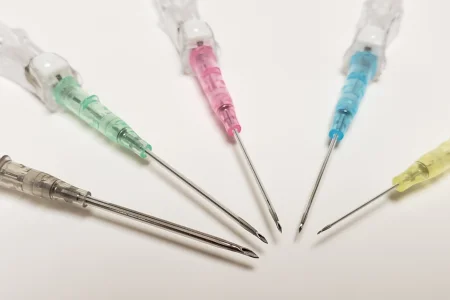
Needles carry the risk of bloodborne disease, so syringes and needles have safety features that cover or pull back the needle after use. A needle used again during a case, as when local anesthetic is injected in stages, is recapped only with a one-handed scoop or a recapping device, never with two hands. Chapter 25 covers needles as supplies, and chapter 29 passing sharps.
Transfer devices and containers
- Vial spike and decanter: a sterile spike pushed into a vial's or bag's stopper, with a spout that lets the circulator pour into a container on the field without reaching over it. A double spike joins two vials for mixing.
- IV tubing and stopcock: tubing gives a flexible link between a syringe and a vessel or duct, and a two-way or three-way stopcock opens and closes the flow or lets two syringes share one line.
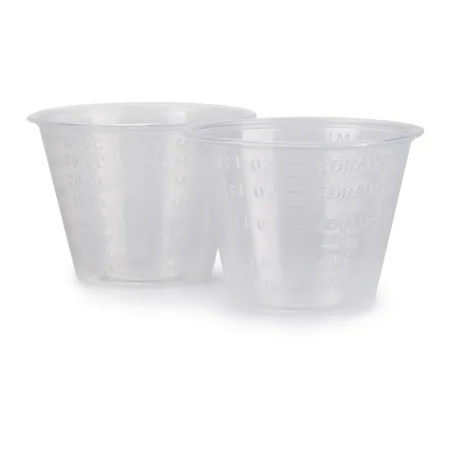
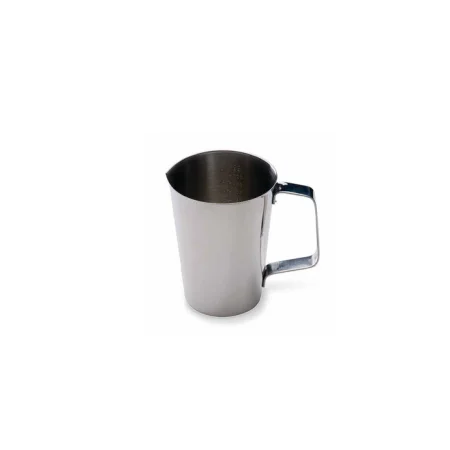
- Medicine cups, basins and graduated pitchers: plastic or stainless steel containers for drugs and solutions on the back table. Put local anesthetics in plastic or glass, because metal may react with them. Use containers that will not tip.
The marks on a medicine cup or pitcher are too far apart for measuring a dose. Measure drugs with a syringe.
Off the field, an infusion pump gives a set amount of IV fluid over a set time and is run by the anesthesia provider or the circulator. An intrathecal pump delivers a drug into the fluid around the spinal cord, and a central line is a catheter placed in a large vein for longer treatment.
How drugs are packaged
Packaging keeps a drug free of germs, protects it from breaking down and from tampering, and shapes how the drug reaches the field.
- Vial: a glass or plastic bottle with a rubber stopper under a metal or flip-off cap. Standards groups recommend single-dose vials over multidose vials, because of the risk of spreading infection.
- Ampule: a sealed glass container with a narrow neck that is snapped open. A sterile ampule may be opened on the field. Hold the neck in a sponge or cap, break it away from you, drop the top into the sharps container, and draw up through a filter needle. Clear the sponge off the field, since it may hold glass.
- Prefilled cartridge: a ready-to-use cartridge, sometimes with two chambers that mix as they dispense, used for glues, cements and coagulants.
- Pouch: dry products such as some hemostatic agents arrive peel-packed; the circulator opens the pouch and you lift the item out.
- Two-part pouch: holds a powder and its diluent apart until the pouch is bent to mix them.
- Tube: an ointment or cream in a tube is squeezed out by the circulator.
17Reading a drug label
A drug's label, printed on the container and its box, is your main source of information about it. The FDA regulates labels to protect patients from missing or wrong information. Read the whole label every time.
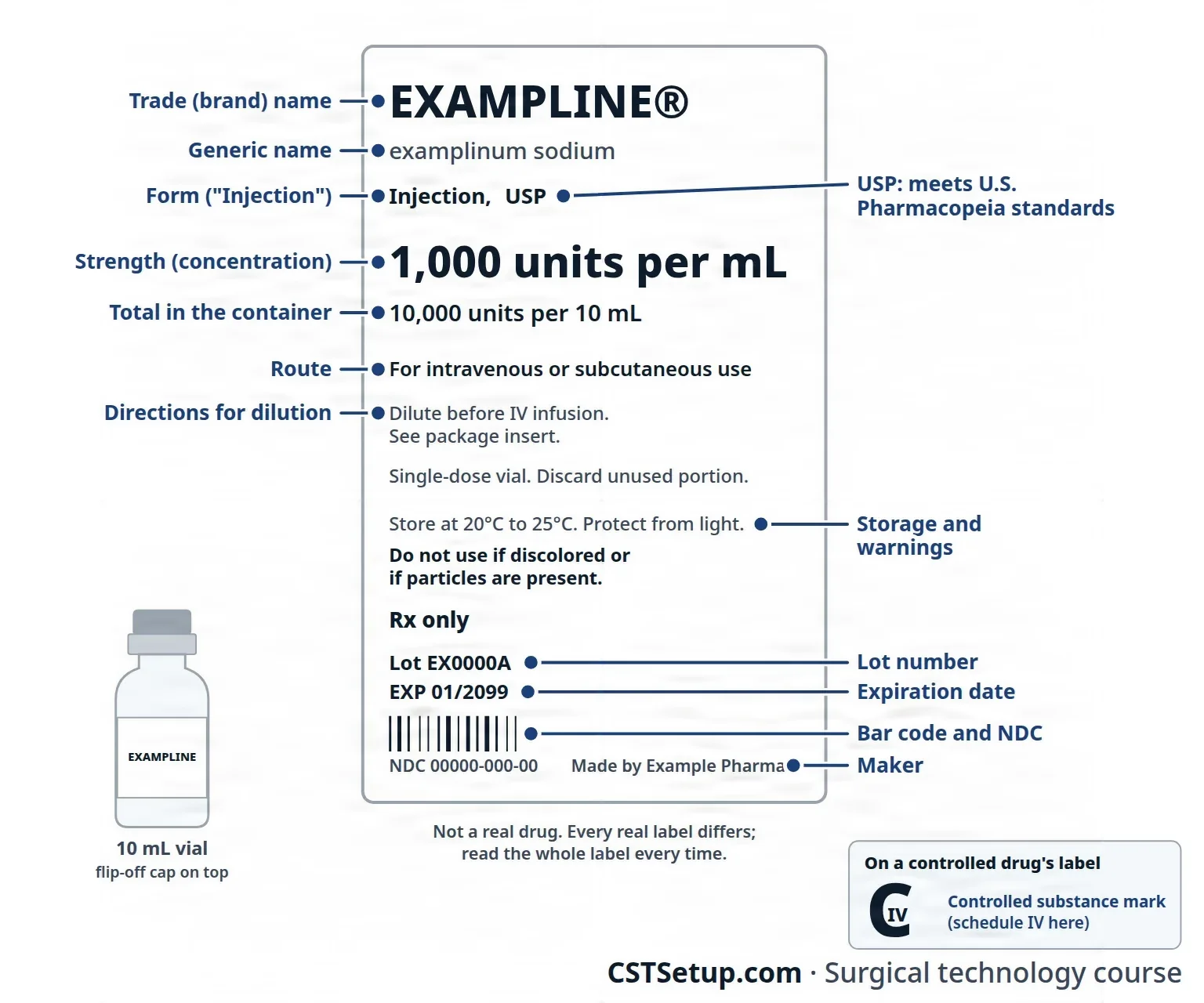
- Trade and generic names: the brand name is usually the largest; the generic name, in lowercase, must appear on every label.
- Strength and concentration: how much drug is in each unit, such as 1,000 units/mL or 20 mg/mL. For liquids the supply strength is the concentration.
- Amount: the total in the container, such as 10 mL. Heparin labels now show the strength of the whole container as well as the amount in each mL, so nobody has to work it out.
- Form: solution, suspension, powder for reconstitution and so on.
- Route: such as "for IV or IM use," "for topical use only" or "not for use in the eyes."
- Directions for reconstitution or dilution: the diluent to use and how much.
- Storage, handling precautions and warnings: such as "refrigerate," "protect from light" or "shake well."
- Controlled substance mark: a C with the schedule's numeral, such as CIV.
- Expiration date: the date after which the drug must not be used, because it may lose strength or even become toxic. An expired drug goes back to the pharmacy.
- Lot number: identifies the batch, in case it is recalled.
- Bar code and National Drug Code (NDC): a scannable code and the identifying number federal law requires on every prescription drug.
- Manufacturer and the letters USP: who made it, and that it meets U.S. Pharmacopeia standards.
Some labels add a color code. A local anesthetic with red on its label, for example, contains epinephrine.
Since 2016 the FDA has required single-drug injections to state strength as an amount per milliliter, not as a ratio: epinephrine once labeled 1:1,000 is now labeled 1 mg/mL. Ratios may still appear on combinations, such as a local anesthetic with epinephrine 1:200,000.
Look at the drug as well as the label. A drug that is discolored, has particles in it, or sits in a cracked or leaking container does not go to the field; it goes back to the pharmacy.
18The medication process
A drug passes through many hands before it reaches the patient. Each person is a check on the others.
- A licensed prescriber, such as the surgeon or the anesthesia provider, orders the drug.
- The circulator selects the right drug and prepares it off the field if needed, such as reconstituting a powder; mixing may also be done by the scrub.
- The circulator and the scrub verify the drug together, and the circulator transfers it to the field with sterile technique.
- The scrub labels it at once.
- The scrub prepares it: calculating, measuring, mixing and placing it in the device that will deliver it.
- The scrub passes it to the surgeon, stating its name and strength.
- The surgeon gives the drug at the surgical site.
- The anesthesia provider, circulator or surgeon watches the patient for its effect, and the circulator and anesthesia provider document it.
The circulator's role
Errors can happen even when drugs come from a computer-controlled cabinet: a drug can be stocked in the wrong place or matched to the wrong code, so nobody assumes the machine gave the right one.
The circulator obtains the exact drug and strength on the card, checks the container and expiration date, keeps strict sterile technique while delivering it, and documents every drug used from the field. The circulator may draw a drug up into a syringe for the field. Drugs are never sent to the field without the scrub taking part.
Your role as the scrub
You identify each drug, accept it onto the field, label it at once, pass it when the surgeon asks, and say its name and strength aloud as you pass it. You are responsible for every drug on your back table: its generic name, what it does, its dose limit, its strength and how much has been used.
19The rights of medication
The rights are a checklist that guides everyone who handles a drug. AST and the Core Curriculum use six.
- Right patient: the patient is identified on the way to the OR and again at the time-out, and the patient's drug allergies are confirmed.
- Right drug: the one ordered, checked against the preference card or the verbal order. Repeat a verbal order back to the surgeon.
- Right dose: the right amount and strength for this patient, checked by everyone who handles it. Take special care when two strengths of one drug are on the field.
- Right route: the one the drug is made and labeled for. Different strengths of one drug often go by different routes.
- Right time: the card or the order often tells you when. A local anesthetic goes in before the incision or as needed, and a drug for pain afterward may go in at the start or after closure.
- Right documentation: the circulator records every drug delivered to the field, and you give the final total of each drug and solution used. The record shows the drug's name, its strength and amount, the route and the place on the body, the time, who gave it, and how the patient responded.
Traditionally there were five rights, without documentation. Some newer references add more: the right reason (or right indication), so that everyone knows why the drug is being given, and the right response, watching what the drug does.
The rights only work if they are checked at every step. Many errors on the field happen when an unlabeled or badly labeled drug is picked up and passed.
20Getting a drug to the field
Chapter 28 shows how basins, cups and labels are set out at setup. This section explains the steps and the reasons behind them.
Get ready first
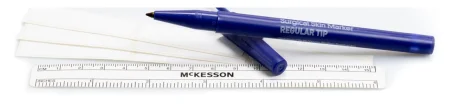
Before you receive a drug, have the right size and type of sterile container ready, along with labels and a sterile marker. You must not be distracted while a drug comes onto the field. Drugs needed at the start are received during setup; those needed later are brought up close to the time they will be used.
Verify: read, show, say
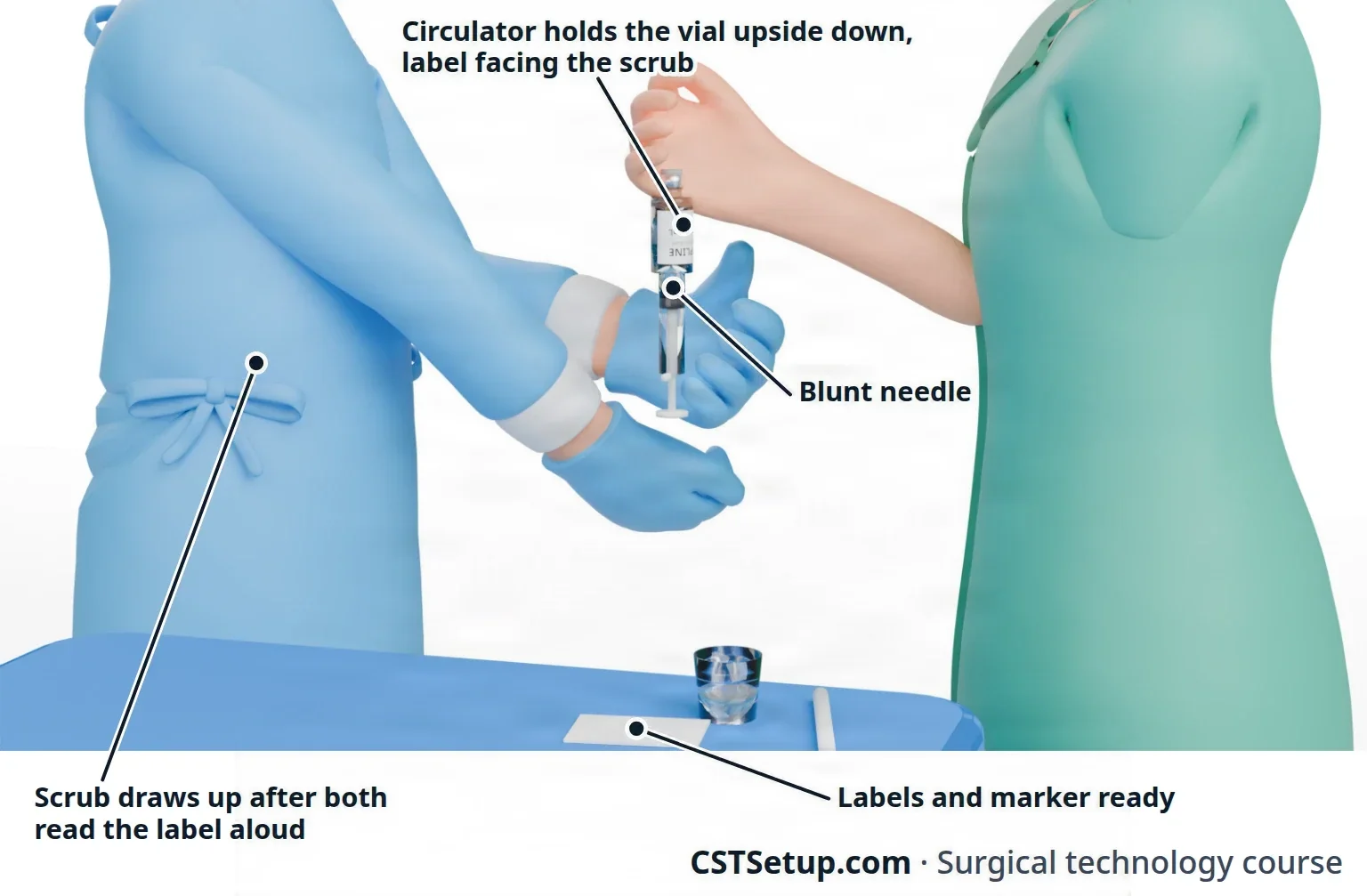
The Joint Commission's National Patient Safety Goal on labeling requires every medication and solution label to be checked both aloud and by sight, by two qualified people, whenever the person preparing a drug is not the one who will give it. On the field, that is the circulator and you.
- The circulator reads the label: the drug's name, strength, amount, route and expiration date.
- The circulator reads it aloud to you and shows you the label.
- You read the information back aloud.
- You both look at the drug for discoloration, particles or a damaged container. If either of you doubts it, it does not come onto the field.
- Only then is it transferred, and the circulator shows you the label again.
When you accept an antibiotic or an iodine-based contrast medium, ask the circulator whether the patient has any drug allergies.
Transfer with sterile technique
AST's guideline lists the ways a drug may reach the field.
From a vial, after the circulator cleans the stopper:
- the circulator pours the drug into your container through a sterile transfer device, such as a vial decanter;
- or the circulator draws the drug into a syringe through a sterile needle and empties it into your container;
- or the circulator holds the vial upside down and you draw the drug up into your syringe through a sterile needle. A blunt needle protects the circulator's hand.
From an ampule, once the circulator has opened it:
- the circulator draws the drug up through a sterile filter needle and empties it into your container;
- or the circulator holds the ampule and you draw it up through a sterile filter needle.
From a tube: the circulator squeezes it out, and AST recommends onto an uncounted sponge that does not show on x-ray. A tube is never used for a second patient.
Never take the stopper off a vial to pour from it, because nobody can be sure its lip is still sterile. The only exception is a vial whose maker designed the stopper to come off for pouring. Saline and other solutions come in pour bottles: the cap comes straight off, the circulator pours slowly and steadily into a basin at the edge of your table or one you hold, and the bottle is never recapped or poured again. What is left is thrown away.
While the drug is poured, the circulator does not lean over the field, and you hold your container out so the circulator can keep a safe distance.
Label at once
Once a drug leaves its original container, nothing shows what it is but your label. Most drugs on the field are clear liquids that look alike.
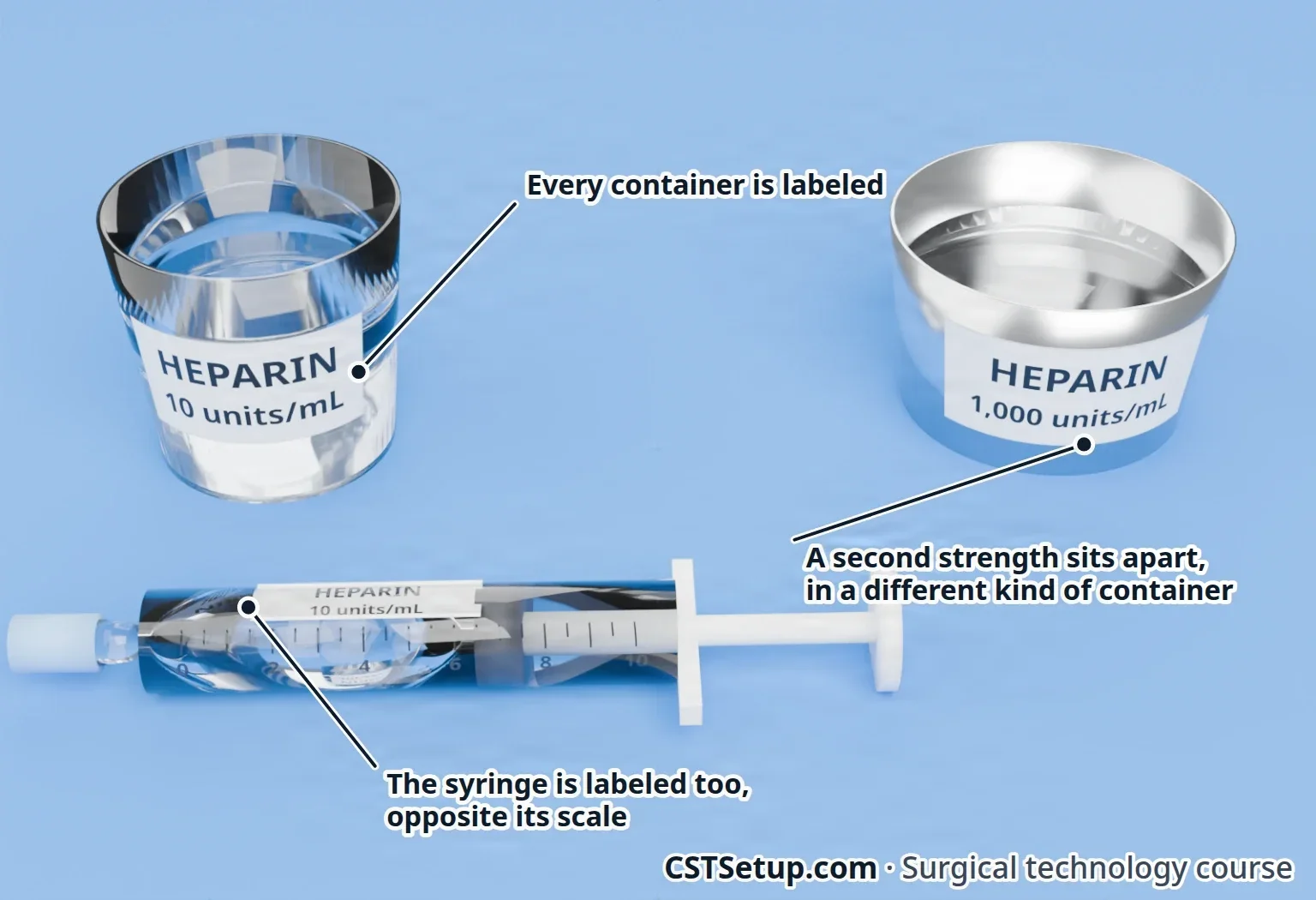
- Label every container: every medicine cup, basin, pitcher and syringe, the Asepto included, even when there is only one drug on the field. The Joint Commission's labeling goal requires it.
- Label at once, never ahead: label as soon as the drug is received, and never before.
- Label the delivery device too, so one syringe is never used for two drugs.
- What the label says: the drug's name and strength; the amount if the container does not show it; and the diluent's name and volume if the container does not show them. Some facilities also want the total received and the time.
- Write clearly with a sterile marker, and never use an error-prone abbreviation. Preprinted sterile labels are the best choice.
- Do not cover the marks on a syringe. Put the label on the side opposite the scale so you can always read how much is left.
Never keep an unlabeled drug. Anything found unlabeled, or any container you have the least doubt about, is thrown away and a fresh supply obtained. There is no excuse for an unlabeled drug on the back table.
Keep drugs apart
- Give labeled drugs their own area of the back table.
- Keep two strengths of one drug apart, in different kinds of containers, so one cannot be taken for the other.
- Keep a drug meant only for the surface, such as thrombin or epinephrine 1 mg/mL, out of syringes. Put it in a shallow labeled container, such as a small dish, so nobody draws it up and injects it; both can kill if injected.
Chapter 29 teaches the rest: passing each drug to the surgeon with its name and strength, and keeping track of every drug and solution until the case ends.
21Preventing medication errors
A medication error is a mistake at any step of the medication process. In surgery, the common ones are drugs left unlabeled or labeled badly, labels nobody can read, not knowing enough about a drug, mixing one drug up with another, and passing the wrong drug. Fatigue, stress and distraction, all common in the OR, make them more likely.
ISMP, working with The Joint Commission's safety goals, names the things that most affect drug errors, among them:
- missing information about the patient, such as weight, allergies or lab results
- missing knowledge about the drug, its action, its dose and its interactions
- poor communication about the drug
- confusing packaging, labels and names, including the labels made on the field
- distractions such as dim lights during a scope case, loud talk and music
- staff who are not trained on new drugs, high-alert drugs and the facility's procedures
No error-prone abbreviations
The Joint Commission's "Do Not Use" list bans these on any medication order or medication document, and on the labels you write. Chapter 1 teaches them as language; here is what each one does to a drug.
| Do not use | What goes wrong | Write instead |
|---|---|---|
| U, u (unit) | read as 0, 4 or cc | "unit" |
| IU (International Unit) | read as IV or the number 10 | "International Unit" |
| Q.D., Q.O.D. (daily, every other day) | read as each other | "daily", "every other day" |
| Trailing zero (1.0 mg) | read as 10 mg, a tenfold overdose | "1 mg" |
| No leading zero (.5 mg) | read as 5 mg | "0.5 mg" |
| MS, MSO4, MgSO4 | morphine sulfate or magnesium sulfate? | the full drug name |
Facilities may add more to their own lists, such as cc (write mL), µg (write mcg) and drug names cut short.
Look-alike and sound-alike drugs
Many drugs have names that look or sound alike, and they have caused serious harm. ISMP keeps a list of confused drug names, and every facility must keep its own list of the look-alike, sound-alike drugs it uses. Some labels print part of a name in capital letters, called tall man lettering, to show where two names differ.
- Depo-Medrol and Solu-Medrol, two forms of a steroid, sound alike.
- Tobrex and TobraDex, two eye drugs, are spelled alike.
- Arista, a hemostatic powder, and Arixtra, an anticoagulant, look alike and do opposite jobs.
- Monsel solution, which chemically burns a bleeding surface, and Lugol solution, which stains the cervix to find abnormal tissue, are both brown and may sit on the same back table. Putting Monsel on the cervix in place of Lugol damages the tissue that needs a biopsy.
When a request is unclear, ask. Always clarify a drug name if there is any doubt.
High-alert medications
A high-alert medication is one that causes great harm when it is used in error, and that has been involved in many errors, some of them deadly. ISMP publishes the list.
On the field, the high-alert drugs are the strengths of heparin, thrombin, epinephrine and the local anesthetics. ISMP's list also includes insulin, concentrated potassium chloride and oxytocin given into a vein.
High-alert drugs get every check, every time: verify the strength aloud, label at once, keep strengths apart, track the total, and say the name and strength when you pass the drug.
When an error happens
Errors on the field have killed patients. A child died after being injected with epinephrine meant only for the surface, from a cup and syringe that were not labeled. Another child died of an epinephrine overdose in recovery after the dose given during surgery was not recorded and more was given.
If you make or find an error, admit it at once so it can be corrected. Tell the surgeon right away, then follow your facility's policy, which usually means telling the unit supervisor and filing an incident report. The empty drug containers, kept in the room until the procedure ends, help show what was given.
Leaving a drug unlabeled, or labeling it wrong, may be judged negligence: failing to do what a reasonable, careful professional would do. In health care, negligence causes more injuries and deaths among patients than anything else, and medication errors are one example of it. Chapter 15 covers negligence and liability.
AST asks surgery departments to build a culture where people report errors so everyone can learn from them. ISMP gathers reports from across the country and sends out alerts, and surgical technologists should keep up with those alerts.
22Drugs used in surgery
Drugs are grouped by what they do. In the United States the AHFS system sorts them into numbered classes by their therapeutic action, and knowing a drug's class tells you much about its use: a vasoconstrictor narrows vessels, and a thrombolytic breaks down a clot. Learn these classes first, then the drugs your own facility uses.
Some drug classes belong to other chapters. Anesthetic agents, sedatives and tranquilizers, opioids (narcotics) and the drugs that reverse them, local anesthetics, and the emergency drugs for cardiac arrest, respiratory arrest and malignant hyperthermia are taught in chapter 13. Each specialty's own drugs are taught with its operations.
Pain and fever
An analgesic relieves pain. An antipyretic brings down a fever. Acetaminophen relieves mild pain and lowers fever, and ibuprofen and other anti-inflammatory drugs also ease swelling. Aspirin is an analgesic, an antipyretic and an anti-inflammatory all at once. Chapter 13 teaches the opioid analgesics.
Anti-infectives
Anti-infectives treat infections. Antibiotics act on bacteria, antivirals on viruses and antifungals on fungi. Antibiotics are the largest group and the ones used most in surgery.
Antibiotics kill bacteria or stop them growing in different ways: some stop bacteria from building their cell walls, some damage the cell membrane, some block the proteins or the genetic material the cell needs, and some interfere with its metabolism. Bacteria that survive a drug can pass their resistance on, so older antibiotics stop working and new ones keep being made.
In surgery, antibiotics are used in four ways:
- To prevent infection, given into the vein before the incision when guidelines call for it, timed so the drug is already in the blood and tissues when the incision is made (chapter 11).
- As irrigation in the wound. It is usually the last irrigation before closure, mixed into about 500 mL of irrigation fluid just before use so it is not cold. Many facilities now limit antibiotic irrigation as part of antibiotic stewardship.
- In dressings and packing impregnated with a drug that stops bacteria from multiplying.
- After surgery, to prevent or treat infection.
The classes the Core Curriculum names:
- Penicillins: the first true antibiotic, from a mold. Some are narrow, acting mainly on gram-positive bacteria, and some broad. Ampicillin and piperacillin are examples.
- Cephalosporins: grouped in generations; each newer generation acts on more gram-negative bacteria. A first-generation cephalosporin such as cefazolin is a common choice for preventing infection after surgery.
- Aminoglycosides: act mainly on gram-negative bacteria. Gentamicin is one. They are used with care because they can damage the kidneys (nephrotoxic) and the inner ear (ototoxic).
- Polymyxins and bacitracin: made by bacteria, and used mainly on the surface, as in irrigation. They must never be suctioned into a cell saver, because given into a vein they can harm the nerves and kidneys.
- Sulfonamides: in use since the 1930s, they only stop bacteria growing; now used mostly for urinary infections.
- Tetracyclines: broad-spectrum drugs given almost only by mouth, such as doxycycline.
- Other groups you will hear of: macrolides such as azithromycin; lincosamides such as clindamycin and ketolides such as telithromycin, which block the proteins bacteria need; vancomycin, which stops bacteria building their cell walls; and quinolones such as ciprofloxacin.
Antifungals, such as amphotericin, treat fungal infections, and antiretrovirals are the drugs given to a health care worker after an exposure to HIV (chapter 10).
Before you accept an antibiotic onto the field, ask whether the patient has any drug allergies.
Vaccines and immune globulins
A vaccine is a preparation of weakened or killed germs, or parts of them, that stimulates the immune system to build protection against a disease. The hepatitis B vaccine, made by biotechnology, is one health care workers are required to have. An immune globulin, such as RhoGAM (below), gives ready-made antibodies instead. Chapter 10 covers immunity.
Drugs that affect clotting
When a vessel is injured it tightens, platelets clump into a plug, and a chain of clotting factors builds a mesh of fibrin around them to make a clot. Chapter 5 explains clotting and chapter 29 how bleeding is controlled on the field. These are the drugs.
Anticoagulants keep new clots from forming; they do not dissolve clots that have already formed. They are high-alert drugs, so handle them with great care on and off the field.
- Heparin, made from hog intestine, works quickly and is given only by injection or on tissue, never by mouth. In surgery it is given into the vein before a vessel is clamped, and diluted in saline to rinse vessels and grafts, as in 5,000 units in 1,000 mL. It is measured in units, and its strengths run from 10 to many thousands of units in 1 mL.
- Protamine sulfate neutralizes heparin. The anesthesia provider gives it slowly into the vein at the end of the case if the blood is still too thin; about 1 mg of protamine neutralizes 100 units of heparin.
- Low-molecular-weight heparins, such as enoxaparin, are given under the skin to prevent clots in the legs after surgery.
- Warfarin, taken by mouth, blocks vitamin K. Its effect lasts days, so it is usually stopped before planned surgery; vitamin K and fresh frozen plasma counter it. Newer oral anticoagulants include rivaroxaban and apixaban.
- Antiplatelet drugs, such as aspirin and clopidogrel, keep platelets from clumping. One dose of aspirin can lengthen bleeding for days, so it is often stopped before elective surgery.
Thrombolytics (fibrinolytics) dissolve clots that have already formed, as in a heart attack, a stroke caused by a clot, or a pulmonary embolism. Alteplase (tissue plasminogen activator) and urokinase are examples. Their main danger is bleeding, which can be severe.
Coagulants help blood clot. Systemic coagulants, such as calcium, vitamin K and clotting factors, are usually given before surgery to correct a shortage. Topical hemostatic agents are used almost only in surgery, on oozing surfaces; they help minor bleeding and are not meant to stop bleeding from an artery or large vein.
- Active hemostats take part in clotting. Thrombin turns the patient's own fibrinogen into fibrin, the mesh of the clot. It comes as a powder to reconstitute or as a solution, is labeled with its strength in units per mL, and is a high-alert drug: never inject it into a vessel. Thrombin made from cattle can cause antibodies, so human and recombinant forms now exist.
- Mechanical (passive) hemostats give the blood a framework to clot on without joining the clotting chain themselves: absorbable gelatin, oxidized cellulose, collagen and plant-starch powder.
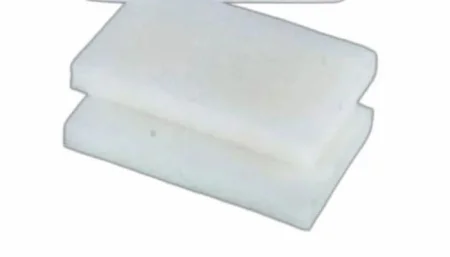
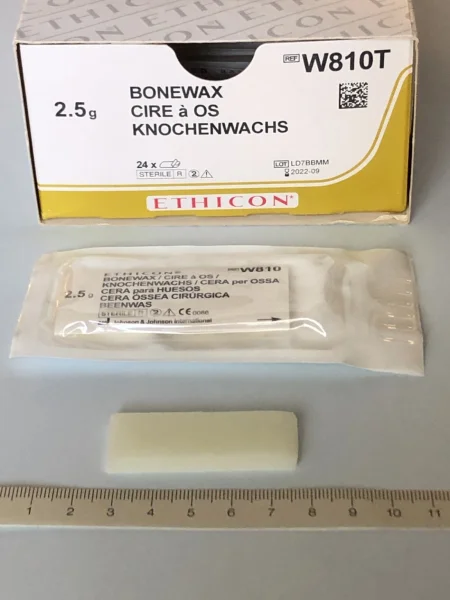
- Bone hemostats: bone wax, a soft wax pressed onto cut bone as a barrier, warmed in the gloved fingers first; newer synthetic forms also exist.
- Flowable hemostats: a gelatin paste, often with thrombin, about as thick as honey, for hard-to-reach places.
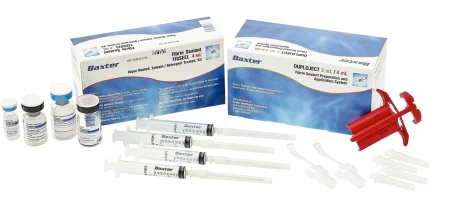
- Sealants: fibrin sealants, which combine fibrinogen and thrombin so that fibrin forms where they are applied, and newer synthetic sealants. They close air and blood leaks, as on the lung, the liver and vessels sewn together, and some seal the small holes left after the dura is sutured.
- Chemical hemostats, such as silver nitrate and Monsel solution, burn a bleeding surface.
Each product is prepared as its maker's instructions direct, and chapter 29 covers preparing and passing them during the case. Several of them must never be suctioned into a cell saver (see Blood replacement, below).
Autonomic drugs
The autonomic nervous system runs the body's automatic work: heart rate, blood pressure, glands, the gut and the pupils. Its sympathetic side readies the body for stress and its parasympathetic side is active at rest. Norepinephrine is the sympathetic messenger, and its receptors, called adrenergic, come in alpha and beta types. Acetylcholine is the parasympathetic messenger, and its receptors are called cholinergic. Chapter 4 explains the system.
The Core Curriculum names four groups, each named for what it does to the messenger:
- Adrenergic (sympathomimetic) drugs act like norepinephrine. Epinephrine narrows small vessels and opens the airways. It is added to local anesthetics to keep them in place, and in a strong topical form it controls oozing in delicate areas such as the middle ear; chapter 13 covers its emergency uses. Phenylephrine narrows vessels and dilates the pupil.
- Adrenergic blockers (alpha blockers and beta blockers) block those receptors. Beta blockers are used to lower blood pressure, and some, such as esmolol, to treat abnormal heart rhythms.
- Cholinergic drugs act like acetylcholine. In eye surgery, acetylcholine and carbachol are injected into the eye to shrink the pupil.
- Cholinergic blockers (anticholinergics), such as atropine, glycopyrrolate and scopolamine, block acetylcholine. They speed a slow heart, dry the secretions of the mouth and airways, prevent bronchospasm, and in the eye dilate the pupil and relax its focusing muscle.
Epinephrine is a high-alert drug that comes in very different strengths, and the strong one can kill if it is injected. When two strengths of epinephrine are on one field, label each one the moment it arrives, keep them apart, and say the strength aloud every time you pass one.
The heart and blood pressure
Drugs for the heart are given during surgery to steady the heart muscle, hold the blood pressure and prevent clots. Most are given into the vein by the anesthesia provider.
- Inotropic drugs change the force of the heartbeat: dobutamine, dopamine, digoxin, milrinone and epinephrine strengthen it. Chronotropic drugs change the heart rate.
- Antiarrhythmics correct an abnormal rhythm, such as amiodarone, adenosine, esmolol and lidocaine; lidocaine is also a local anesthetic, so always know which use a lidocaine on the field is for.
- Coronary dilators (antianginals), such as nitroglycerin, widen the coronary arteries or lower the heart's need for oxygen, to relieve angina.
- Antihypertensives lower blood pressure: diuretics, beta blockers, calcium channel blockers, alpha blockers, ACE inhibitors such as captopril and lisinopril, which block the making of angiotensin II, and angiotensin receptor blockers such as losartan. Interrupting them makes the pressure rise, which can harm the patient during surgery.
- Papaverine relaxes the smooth muscle of vessels and is used on the field in vascular surgery to stop a vessel from going into spasm.
Diuretics
Diuretics make the kidneys produce more urine, which lowers the volume of fluid in the vessels. They treat high blood pressure and fluid in the lungs, and in surgery they lower pressure inside the skull or the eye.
- Loop diuretics, such as furosemide, work fast and strongly; furosemide is the one used most, and it is useful in brain surgery. They wash out potassium and other electrolytes.
- Osmotic diuretics, such as mannitol, pull fluid out of the tissues into the blood, so they are used to shrink a swollen brain or lower eye pressure.
- Thiazides, such as hydrochlorothiazide, are milder and treat high blood pressure. Potassium-sparing diuretics keep potassium in the body. Carbonic anhydrase inhibitors, such as acetazolamide, lower eye pressure in glaucoma.
The brain and nerves
- Anticonvulsants prevent seizures. A patient with epilepsy needs a steady level of the drug in the blood to keep seizures away.
- Central nervous system stimulants include the analeptics, drugs that stimulate the central nervous system.
- Neuroleptics do the opposite: they calm. They are antipsychotic drugs, such as haloperidol, that block dopamine receptors. Droperidol, a neuroleptic, is also used to prevent nausea after anesthesia.
The stomach and nausea
- H2-receptor blockers, such as famotidine, lower stomach acid by blocking its release. Proton-pump inhibitors, such as omeprazole and pantoprazole, shut down the acid pump in the stomach lining. Both make stomach fluid less acidic, so less harm is done if it is breathed in during anesthesia. Antacids, such as sodium bicarbonate, neutralize acid chemically.
- Antiemetics prevent nausea and vomiting after anesthesia. Ondansetron, metoclopramide and droperidol are examples.
- Antihistamines, such as diphenhydramine, block histamine and are used to treat allergic symptoms; drowsiness is a common side effect.
Chapter 13 covers how these drugs are given before and during anesthesia.
Hormones
Hormone drugs replace or copy the body's own hormones. Chapter 9 explains each gland.
- Corticosteroids, such as dexamethasone, methylprednisolone and triamcinolone, calm inflammation and the immune response. Some are injected at the field, as into a joint at the end of an arthroscopy. Long-term use suppresses the adrenal glands and the immune system. A patient on steroids keeps taking the usual dose around surgery, and whether an extra dose is needed is decided for each patient, from how much steroid they take and for how long, and from the type and length of the operation.
- Insulin lowers blood sugar; glucagon, from the other islet cells of the pancreas, raises it. Type 2 diabetes is often treated with drugs taken by mouth, such as metformin, as well. Glucagon can also relax the sphincter at the end of the bile duct when contrast will not flow into the duodenum during a cholangiogram. Measure insulin only in an insulin syringe.
- Prostaglandins are made inside cells and act there. They widen vessels, contract smooth muscle, and soften and open the cervix in labor.
- Estrogen cream may be put on vaginal packing after a vaginal hysterectomy.
- Gonadal steroids, estrogen and progesterone in females and testosterone in males, and their synthetic forms, are used in hormone therapy and for contraception.
Drugs for childbirth
- Oxytocics make the uterus contract. Oxytocin strengthens labor, ergometrine treats heavy bleeding after birth, dinoprostone is used to start labor, and carboprost is another oxytocic. Chapter 33 covers these drugs at a cesarean birth and in gynecologic surgery.
- Methylergonovine (Methergine), like ergometrine, makes the uterus contract to control bleeding after a birth; it is given into a muscle or slowly into a vein, and it is not given to a patient with high blood pressure, preeclampsia or heart disease.
- Carboprost and misoprostol are prostaglandins that also contract the uterus when bleeding continues after a birth. Carboprost is given into a muscle, never into a vein, and with caution in a patient with asthma.
- Vasopressin (Pitressin), diluted in saline, is injected into the tissue in some gynecologic operations to clamp down the vessels and cut bleeding. Its name looks and sounds like Pitocin (oxytocin), so the two are never confused: read the label every time.
- Tranexamic acid keeps clots from breaking down (it is an antifibrinolytic), and it may be given for heavy bleeding.
- Magnesium sulfate, given by vein, prevents and treats the seizures of eclampsia; IV calcium gluconate is kept at hand to reverse it if too much is given. Tocolytics relax the uterus to stop early labor.
- Methotrexate, a drug that stops cell division, can treat an unruptured ectopic pregnancy instead of surgery.
- RhoGAM (Rho(D) immune globulin) is made from human plasma. It is given to an Rh-negative patient carrying an Rh-positive baby, at about 28 weeks and again within 72 hours of the birth, so the patient's immune system does not make antibodies that would harm a later Rh-positive baby. It is injected into a muscle only.
Nasal sprays
A vasoconstrictor nasal spray, such as oxymetazoline, may be instilled into the nose before sinus surgery to shrink the lining and reduce bleeding.
Cancer drugs
Antineoplastic (chemotherapy) drugs are sometimes used in surgery, as when a cancer drug is put straight into the bladder through a urinary catheter to treat bladder cancer. These drugs can harm the people who handle them, so the facility's rules for their storage, protective equipment, disposal and staff training apply, and chapter 17 teaches that protection. The pharmacist usually mixes them ahead of the procedure.
Diagnostic agents: contrast media, dyes and stains
Contrast media are radiopaque liquids put into vessels, ducts or cavities to outline them on x-ray.
- Iodinated contrast is used for x-ray, CT and fluoroscopy, as in a cholangiogram to look for stones in the common bile duct. Its strength may be written as milligrams of iodine per mL. It is often diluted with an equal amount of saline on the back table.
- Fill the syringe and catheter so there are no air bubbles: a bubble can look like a stone on the x-ray.
- A patient can be allergic to contrast, so ask about allergies, but a shellfish allergy is not a reason to expect a reaction.
- Gadolinium contrast is used for MRI, microbubble contrast for ultrasound, and barium, swallowed or given as an enema, for the digestive tract outside the sterile field.
- Keep track of the total amount and strength of contrast used.
Dyes color a passage or tissue so it can be seen. Most come to the field in ampules or vials.
- Methylene blue (1%, 10 mg/mL) shows whether the fallopian tubes are open, finds a bladder injury, marks a sinus tract and, given into the vein, colors the urine.
- Isosulfan blue (1%) is injected to show the lymph vessels and find the sentinel lymph node in cancer surgery.
- Indigo carmine, given into the vein, turns the urine blue so a leak from a ureter or the bladder can be seen.
- Gentian violet is the dye in many skin markers.
- Fluorescein stains the cornea to show scratches and is also used to guide the removal of some brain tumors.
Stains show abnormal cells. Lugol solution, a strong iodine solution, is painted on the cervix: normal cells stain brown and abnormal ones do not (the Schiller test). Acetic acid helps show abnormal cervical tissue during colposcopy. Do not confuse Lugol with Monsel solution, which looks the same.
Eye drugs on the field
Eye surgery uses many drugs, and many of them come in small single-dose bottles that look alike, so read every label. Keep the drugs meant to go inside the eye apart from the others. Chapter 35 covers them with each eye operation.
- Mydriatics dilate the pupil, such as phenylephrine.
- Cycloplegics dilate the pupil and also paralyze the muscle that focuses the lens, such as tropicamide, cyclopentolate and atropine.
- Miotics constrict the pupil, such as acetylcholine and carbachol injected into the eye during surgery.
- Viscoelastics are thick gels, such as sodium hyaluronate, injected into the eye to keep the front chamber open and hold tissues apart so the cornea's inner lining is protected. They come in prefilled syringes with blunt cannulas and are washed out at the end, or the eye pressure can rise.
- Enzymes: hyaluronidase is mixed with the anesthetic for an eye block to help it spread; zonulysis is the use of an enzyme to dissolve the ligament that holds the lens.
- Dyes and stains: trypan blue stains the lens capsule during cataract surgery, and fluorescein stains the cornea.
- Irrigating solution: balanced salt solution (BSS), a sterile irrigating fluid balanced to suit the body's tissues.
- Antibiotics and lubricants: given as drops, ointments or injections, often at the end of the case.
23Fluids
About two-thirds of the body's weight is water, held inside the cells, between the cells and in the vessels. Surgery and anesthesia shift it, and the team tracks the fluids lost and given. Giving the wrong fluid, or too much, can overload the heart.
IV fluids
Almost every surgical patient has an IV line for fluids and drugs.
- Crystalloids are water with small amounts of dissolved salts or sugar. An isotonic one has the same concentration as the body's fluid, a hypertonic one a higher concentration and a hypotonic one a lower concentration.
- Normal saline (0.9% sodium chloride) is the IV fluid used most in surgery, and the only one given with blood, because it does not break down red cells.
- Lactated Ringer's solution is close to the body's own fluid and is the other common surgical IV fluid.
- Dextrose 5% in water (D5W) gives water and some calories; it is never given with blood, because it breaks down red cells.
- Half-strength saline (0.45%) is hypotonic, and 3% and 5% saline are hypertonic.
Plasma expanders
Colloids hold large molecules that stay in the vessels and draw fluid into them, so they expand the blood volume when blood is not available at once. Albumin (5% or 25%) and plasma protein fraction come from human plasma; dextran and hetastarch are made. Dextran 40 is also used as a medication to help prevent clots.
Irrigation solutions
Irrigation keeps tissue moist, washes away blood and debris, fills a bladder, uterus or joint so a scope can see, and carries other drugs such as antibiotics. A large amount can be absorbed into the blood, so treat every irrigation as a drug.
Choose the solution for the procedure, as the card and the surgeon direct:
- Normal saline irrigation: the choice for open wounds and body cavities. It conducts electricity. Saline labeled for irrigation is for tissue only, never for injection; only solutions labeled for IV use go into or near open vessels.
- Sterile water: for the instrument basin (saline corrodes steel), rinsing gloves and cooling instruments. It is hypotonic, so it makes cells swell and burst. Never use it where blood is being saved for the cell saver; some surgeons use it to destroy loose cancer cells and others avoid it in cancer cases, so ask.
- Nonconductive solutions such as glycine 1.5%, sorbitol 3% and mannitol 5%: for monopolar electrosurgery inside a fluid-filled bladder or uterus, as in a transurethral resection of the prostate or a hysteroscopy, because saline would carry the current. Large amounts absorbed can dilute the blood's sodium, so the flow, the volume used and the height of the bags are watched. Radiofrequency wands that work through a conductive fluid use saline instead.
- Balanced solutions for joints and eyes: a balanced electrolyte irrigation close to joint fluid for arthroscopy, and BSS for the eye.
- Heparinized saline: to rinse vessels and grafts.
- Antibiotic irrigation: as above.
- Iced saline slush: to cool the heart, a kidney or a transplanted organ.
Irrigation for a body cavity is kept at body temperature to help keep the patient warm; chapter 29 gives the limits. A bottle is poured once and never recapped. Track every milliliter, because irrigation ends up in the suction canister with the blood, and blood loss cannot be worked out without your total.

24Blood replacement
The most common reason for giving blood in surgery is a low blood volume from bleeding, as in trauma and vascular surgery. Blood is also given to carry oxygen in a patient with anemia and to help clotting. Chapter 5 teaches the blood types, and chapter 13 transfusion reactions.
Type and crossmatch
- Type: the test for the patient's ABO group and Rh factor.
- Screen: the test for unexpected antibodies in the patient's blood.
- Crossmatch: the patient's serum is mixed with the donor's red cells to prove they are compatible.
A patient having planned surgery for which blood was requested is not put to sleep until the blood is typed, crossmatched and available, and consent to receive blood is documented. A patient may refuse blood, and that refusal is documented too.
When blood is needed before a crossmatch can be done, O-negative blood, the universal donor, is used; trauma centers keep it on hand. Because O-negative blood is short in some regions, O-positive blood may be given to males and to females not of childbearing age. The surgeon documents the need to give blood without full testing.
AST's 2018 massive transfusion guideline says to obtain type O Rh-negative packed red cells whenever a transfusion must start before the blood type is known.
Handling blood
- Two qualified people, usually the circulator and the anesthesia provider, check the patient and the unit's label against each other before it is given.
- The bag is checked for clots, discoloration, leaks and damage.
- Red cells are stored in a monitored blood refrigerator at 1°C to 6°C; plasma is kept frozen and platelets at room temperature, gently moving. Unused blood goes back to the blood bank.
- Blood runs only with normal saline and through a filter. Blood products are warmed as they are given, especially when a lot of blood goes in fast, with a blood warmer (chapter 23 shows how it is set up), but platelets and cryoprecipitate never go through a warmer.
Whole blood and its parts
Donated blood is usually split into parts, so each patient gets only what is needed and one donation can help several patients. This is component therapy.
- Whole blood: red cells, plasma and clotting factors together. It is rarely given now, only for sudden, massive blood loss.
- Packed red blood cells (PRBCs): red cells with most of the plasma removed, given to carry oxygen. Most transfusions in surgery are packed cells. They must be ABO and Rh compatible.
- Washed and leukoreduced red cells are prepared for patients who have reacted to earlier transfusions.
- Fresh frozen plasma (FFP): plasma with its clotting factors, for a patient who is bleeding with a clotting problem.
- Platelets: for a low platelet count or after many units of blood have been given.
- Cryoprecipitate: concentrated clotting proteins, among them fibrinogen and factor VIII, for heavy bleeding with low fibrinogen; it is also used to make fibrin glue.
- Factor concentrates: single clotting factors for patients with hemophilia.
In massive transfusion, an adult receives more than one whole blood volume in 24 hours, or more than half the blood volume in 4 hours. The standard is to give packed cells, plasma and platelets in a 1:1:1 ratio, and the blood bank sends them in that ratio.
The patient's own blood
Blood from the patient, called autologous blood, carries no risk of a transfusion reaction or a bloodborne disease from a donor.
- Donating before surgery: a patient having a planned operation with expected blood loss, such as a hip replacement, may give their own blood ahead of time, usually two units.
- Intraoperative cell salvage (autotransfusion): the patient's shed blood is suctioned from the field, washed and filtered by a cell saver machine, and given back. It is used in heart, vascular, orthopedic and some trauma surgery, and some patients who refuse donated blood accept it.
What you do when the cell saver is running:
- Help the surgeon judge whether the blood in the wound is suitable, and use the right suction: the cell saver line or the waste line.
- Check that heparinized saline drips to the suction tip, about 1 to 2 drops a second, so the blood does not clot.
- Suction gently, at less than 150 mm Hg, to avoid damaging the red cells.
- Never let these be suctioned into the cell saver: the antibiotics bacitracin and polymyxin, hemostatic agents (bone wax, fibrin sealants, gelatin, collagen and oxidized cellulose), bone cement, or sterile water, which bursts red cells.
- Before salvaging in a cesarean birth, suction the amniotic fluid away with a separate, clearly marked suction.
- Keep careful track of your irrigation, so the team can tell how much blood is being lost.
- In the assistant circulator role, a CST trained on the machine sets it up and runs it (chapter 31).
Makers still advise against cell salvage in operations on a cancer, so cancer cells are not given back; when bleeding is heavy enough to justify it, the surgeon and the anesthesia provider decide together, and a leukocyte filter is used in place of the usual one. Contamination or infection is no longer treated as an absolute reason not to salvage: studies found no added risk, and the wound is first washed with antibiotic irrigation.
Some references still teach that cell salvage cannot be used at all when there is infection or gross contamination, such as an open bowel, and that it is generally ruled out in a cesarean birth.
Lo que te llevas de este capítulo
- Pharmacokinetics is what the body does to a drug (absorption, distribution, metabolism, excretion); pharmacodynamics is what the drug does to the body, from onset to peak effect to the end of its duration.
- Every drug has a chemical, a generic and a trade name; on the field, say and write the generic name.
- The FDA approves drugs and their labels, the DEA controls the five schedules of controlled substances, state law sets who may prescribe and give drugs, and your facility's policy sets exactly what you may do.
- Medicine measures in metric: 1 g = 1,000 mg, 1 mg = 1,000 mcg, 1 L = 1,000 mL, 1 kg = 2.2 lb; a percent strength is grams per 100 mL, so 1% = 10 mg/mL, and a ratio strength is 1 g in that many mL, so 1:1,000 = 1 mg/mL.
- Dose = concentration × volume. Write the units at every step, keep a running total, and stay inside the maximum dose confirmed before the case.
- The six rights (patient, drug, dose, route, time, documentation) are checked at every step; the circulator and scrub read, show and say every label before a drug comes onto the field.
- Label every container and delivery device the moment a drug arrives, even if it is the only one; discard anything unlabeled; keep two strengths of one drug apart; say the name and strength every time you pass a drug; report the totals at the end.
- Choose the fluid for the job: saline for open cavities, a nonconductive solution for monopolar electrosurgery in a fluid-filled space, BSS for the eye, and never sterile water where blood is being salvaged; blood is typed and crossmatched, checked by two people and given only with saline.
Ponte a prueba5 preguntas rápidas
Gratis para todos. Elige una respuesta para cada una y luego revísalas todas juntas.
En el quirófanoDónde vas a usar esto
Todo el banco de preguntas del capítulo en series de 10, con la respuesta explicada después de cada una.
Parte del programa para educadoresLas palabras del capítulo en tarjetas de estudio: las que fallas vuelven antes.
Parte del programa para educadoresLo asigna tu docente. Cada grupo saca sus propias 25 preguntas del banco del capítulo.
Parte del programa para educadores
Sugerir una corrección
¿Algo está mal, confuso o desactualizado en este capítulo? Avísanos y lo corregimos para todos. Tu correo solo se usa para responderte.