54 Basic Surgical Instruments: Pictures, Names, and Uses
All 54 basic surgical instruments with clear photos, names and what each one is used for, grouped by function. Free printable version and flashcards included.
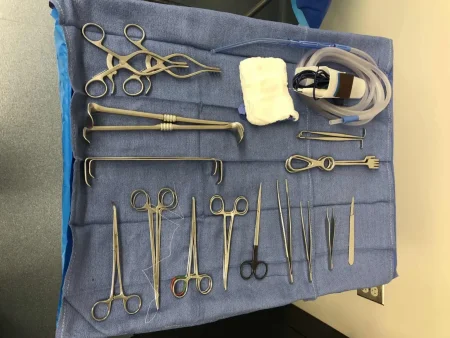
All 54 Basic Instruments with Photos & Uses
Every card below is a live entry from our comprehensive instrument library. Tap any card to see alternative names, inspection points, caution notes, and passing technique.
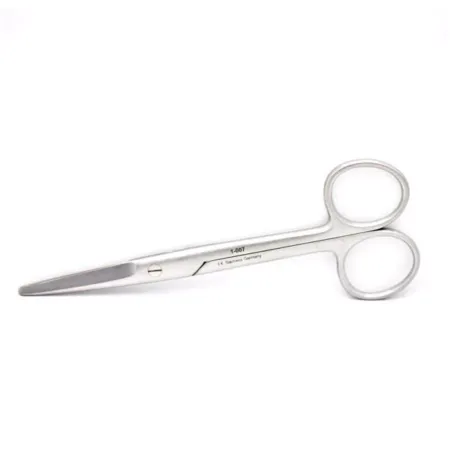 Straight Mayo ScissorCutting suture during closure and when tying off. It is also the scissors for mesh, drains, dressings and other non-tissue items on the field.Cutting & Dissecting
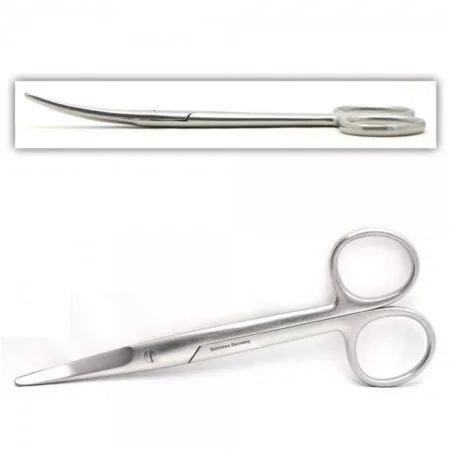 Curved Mayo ScissorCutting and dissecting heavy, tough tissue such as fascia, muscle and large tendons or ligaments.Cutting & Dissecting
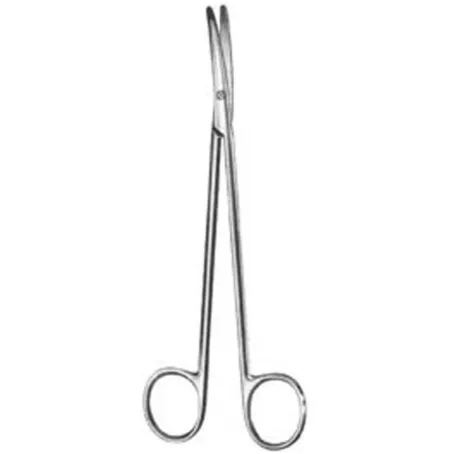 Metzenbaum ScissorCutting and dissecting delicate tissue such as peritoneum, the covering of organs, and fat. The tips are also used to spread tissue planes apart before cutting.Cutting & Dissecting
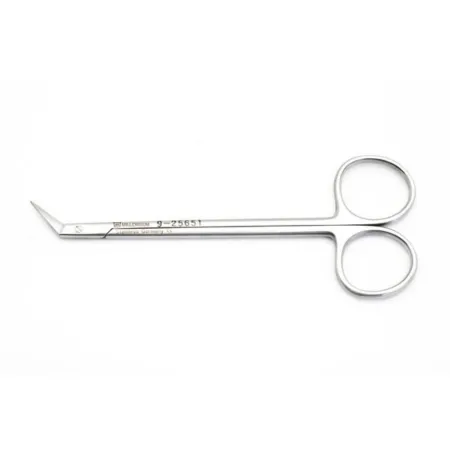 Potts-Smith ScissorsOpening a vessel and extending the incision (arteriotomy or venotomy), and trimming vessel edges, in vascular and cardiac surgery.Cutting & Dissecting
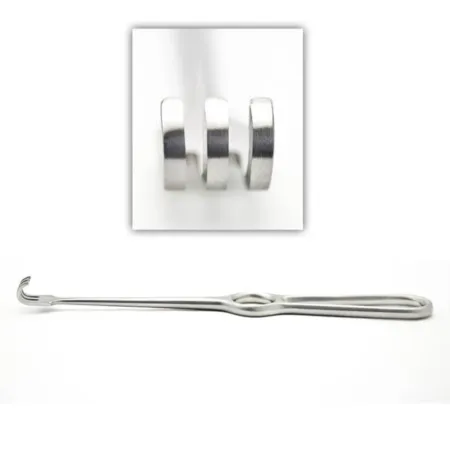 Volkmann RetractorRetracts skin and tissue near the surface.Retracting & Exposing
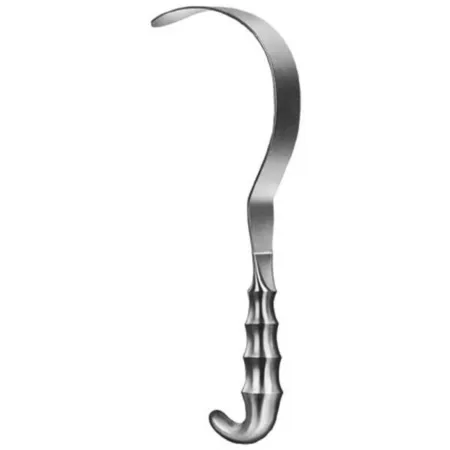 Deaver RetractorHolds back abdominal organs and the deep body wall during open abdominal and pelvic surgery, such as retracting the liver or spleen.Retracting & Exposing
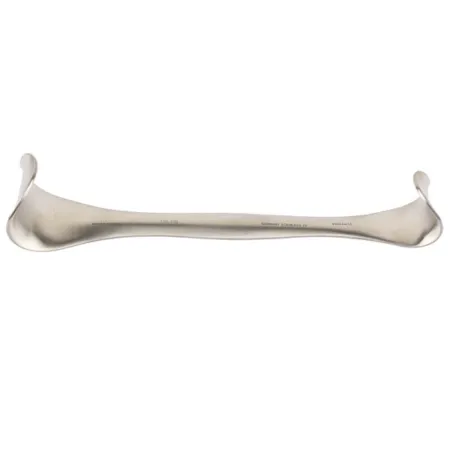 Goelet RetractorHolds back skin and superficial tissue in small, shallow incisions. It is also found on hip and other orthopedic trays.Retracting & Exposing
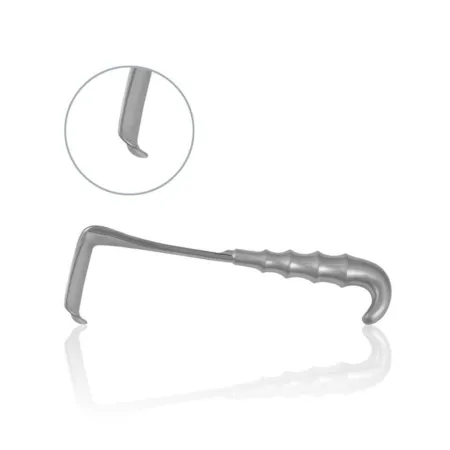 Kelly RetractorRetracts the wound edges and deeper layers, including the deep abdominal wall.Retracting & Exposing
- Quick check
Could you name these on the back table?
Five free CST practice questions: identify by photo, pick the use, spot the look-alike. The reason behind every answer, no account needed.
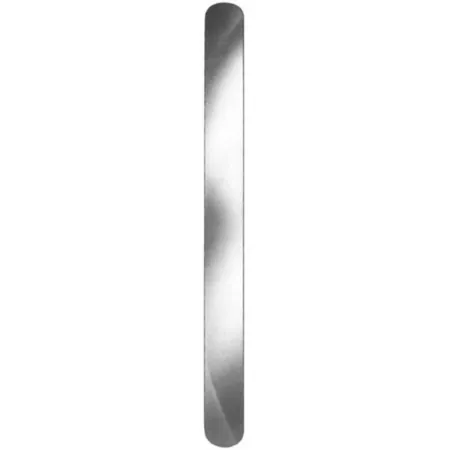 Ribbon RetractorHolds back and protects organs and bowel in a wound, mostly in the abdomen. Narrow, short ones are used in smaller sites.Retracting & Exposing
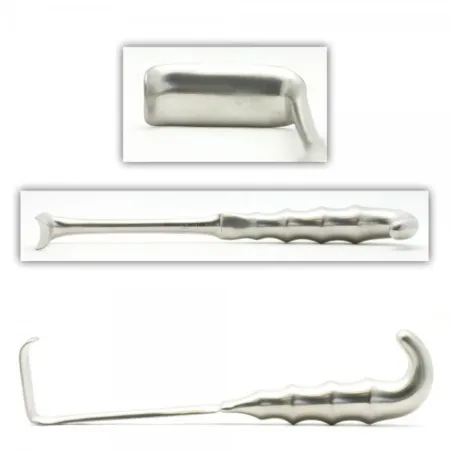 Richardson RetractorRetracts the edges of shallow to medium-depth wounds. Wider blades are also used to hold back organs such as the liver or spleen, with a sponge under the blade.Retracting & Exposing
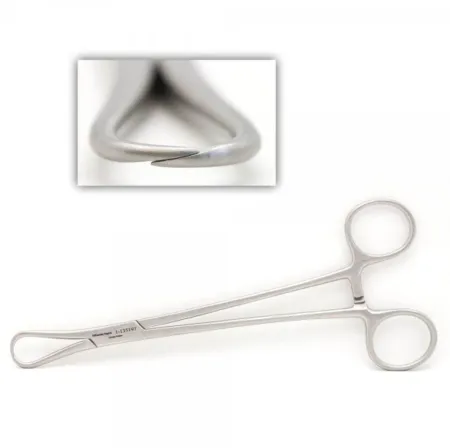 Adair Tenaculum ForcepsGrasps and holds firm tissue securely. Makers list it with the uterine tenaculums for gynecologic surgery, and in general surgery it is used to grasp large breast masses.Grasping & Holding
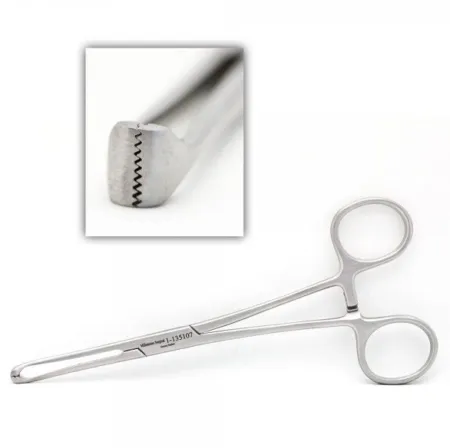 Allis ForcepsLifting, holding and retracting slippery, dense tissue, usually tissue that is being removed. Common on tonsils, breast, thyroid and vaginal tissue, and for holding bowel during a resection.Clamping & Occluding
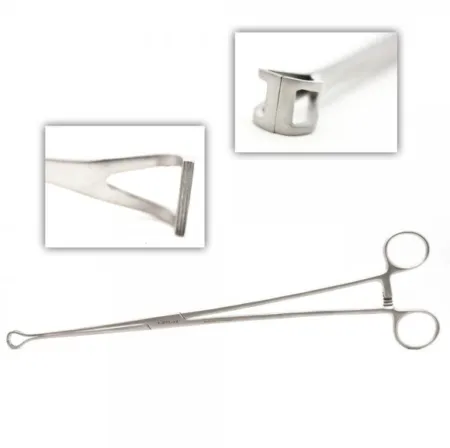 BabcockSpecifically designed for delicate manipulation of tubular structures like intestines or reproductive organs without causing crush injuries.Clamping & Occluding
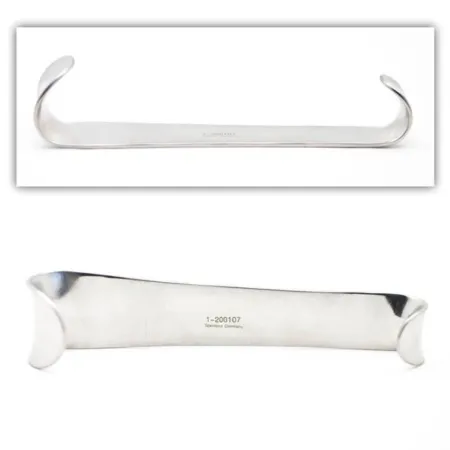 Roux RetractorHolds back skin, subcutaneous tissue, muscle or organs at the edge of the incision during open surgery.Retracting & Exposing
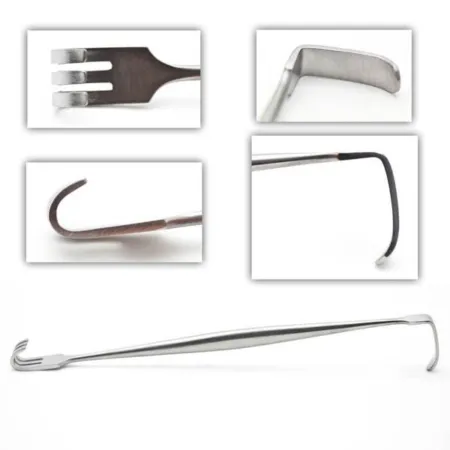 Senn RetractorRetracts skin and shallow tissue in small incisions. Usually used in pairs.Retracting & Exposing
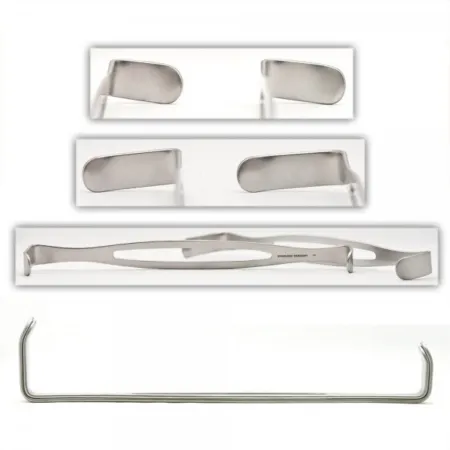 Army-Navy RetractorRetracts skin and shallow tissue in small or superficial incisions. Usually used in pairs.Retracting & Exposing
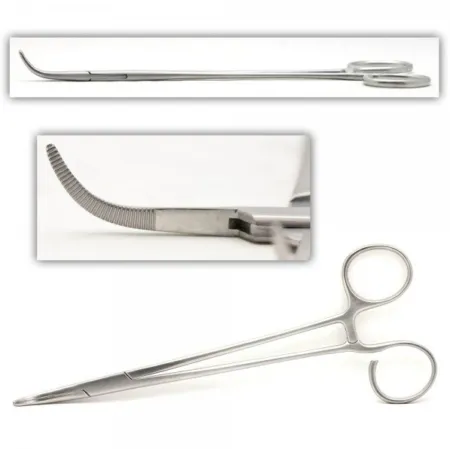 Tonsil ClampClamps small bleeders deep in a wound, such as the tonsil bed, and holds tonsil sponges. It is also used to carry a free tie around a vessel (a 'tie on a passer').Clamping & Occluding
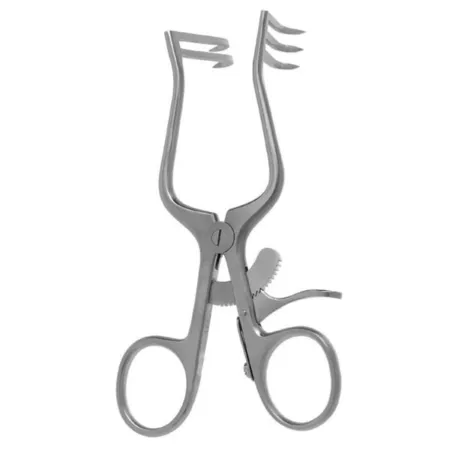 Weitlaner RetractorHolds the edges of a small or shallow wound open on its own, so nobody has to hold handheld retractors.Retracting & Exposing
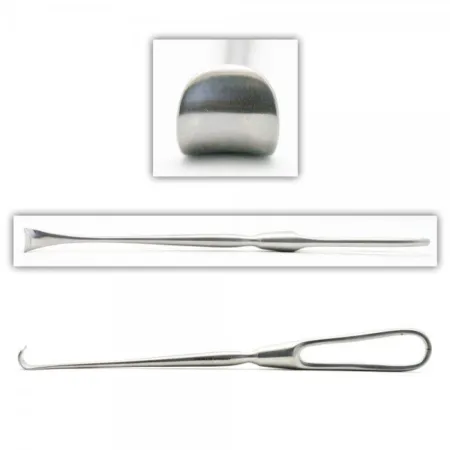 Cushing Vein RetractorHolds back veins, vessels and nearby tissue for exposure in neck work and other wounds of medium depth.Retracting & Exposing
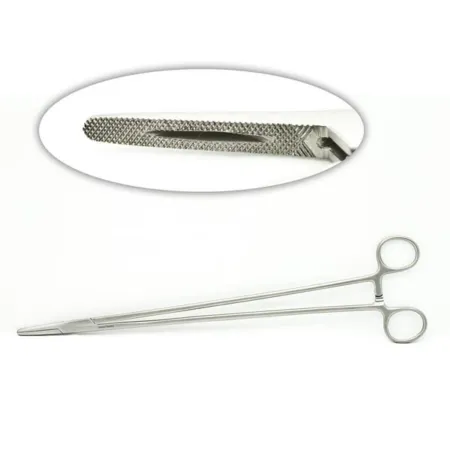 Mayo-Hegar Needle HolderHolds medium to heavy curved needles, mostly for closing fascia and other tough layers. The length is chosen by the depth of the wound.Suturing & Stapling
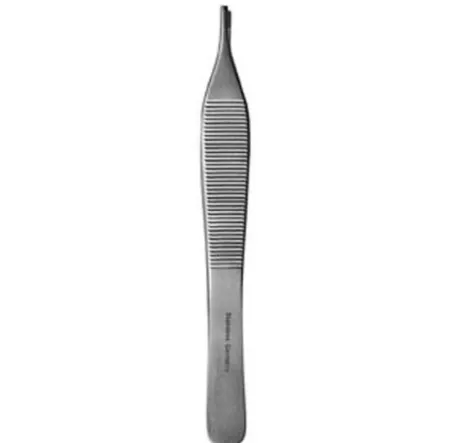 Adson-Brown ForcepsGrasping delicate, superficial tissue such as skin edges, often in plastic and hand surgery.Grasping & Holding
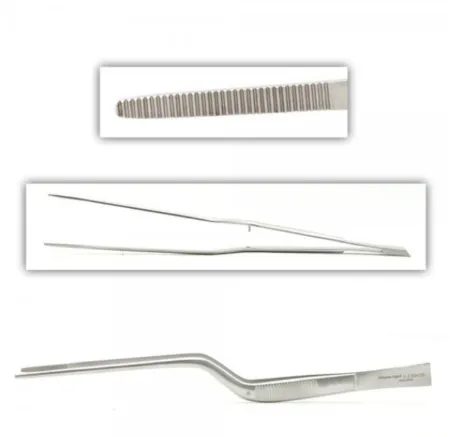 Cushing Bayonet Dressing ForcepsHolds delicate tissue gently in deep, narrow fields, such as in neurosurgery.Grasping & Holding
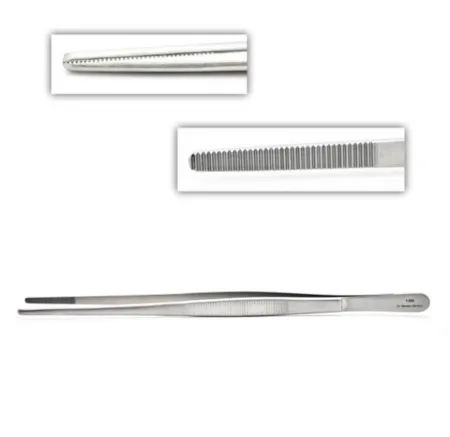 Non-Toothed PickupGrasping tissue, applying dressings, and handling gauze packing, which does not catch on it the way it would on teeth.Grasping & Holding
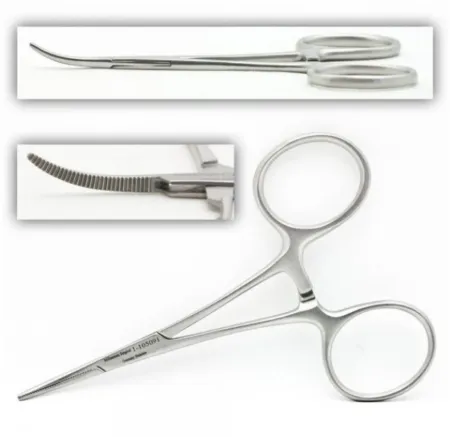 Mosquito Clamp - CurvedControls minor bleeding in delicate procedures (plastic, pediatric, thyroid, hand surgeries). Also secures fine vascular sutures.Clamping & Occluding
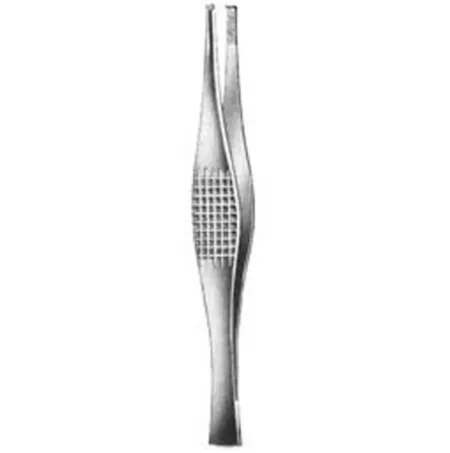 Ferris Smith Tissue ForcepsGrasps heavy, dense or fibrous tissue, muscle and bone. Common in orthopedic, spine, obstetric and colorectal surgery.Grasping & Holding
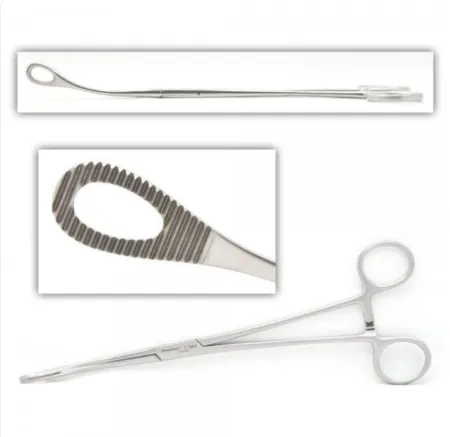 Foerster Sponge ForcepsHolds a folded gauze sponge as a sponge stick for prepping, soaking up blood or blunt dissection deep in a wound. Also used to grasp tissue such as lung, and to remove uterine contents.Grasping & Holding
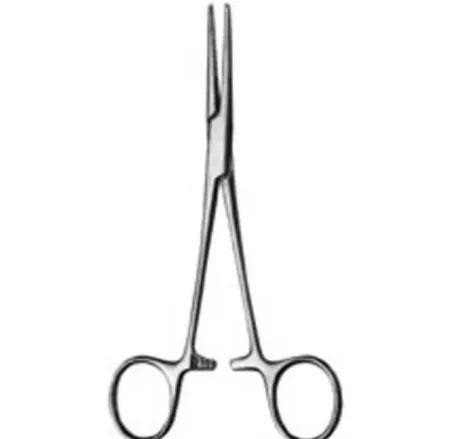 Kelly ForcepsIdeal for securing bleeders prior to ligation or cauterization in various surgical contexts.Clamping & Occluding
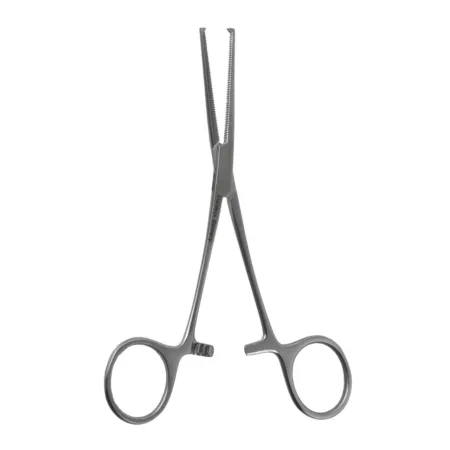 Kocher ForcepsGrasping tough, slippery tissue such as fascia, muscle and tendon, where a clamp without teeth would slip.Clamping & Occluding
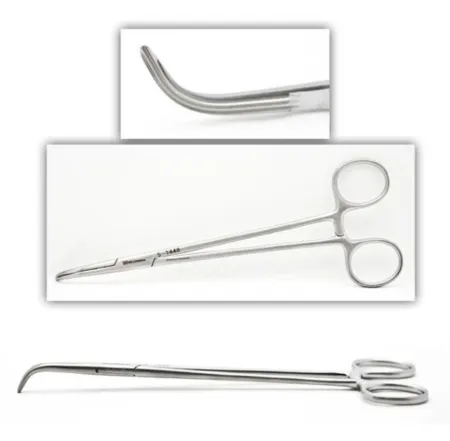 Lahey Gall Duct ForcepsDissects tissue planes, clamps vessels, and passes a tie or vessel loop under and around a duct or vessel.Clamping & Occluding
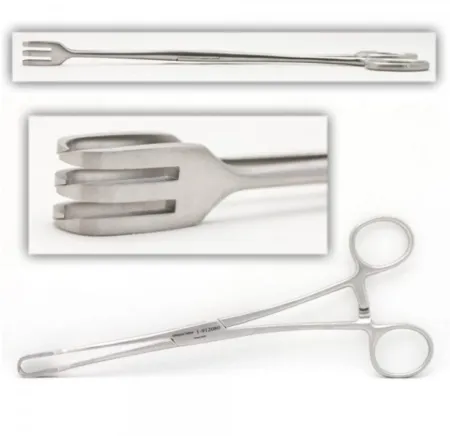 Lahey Traction ForcepsIdeal for securing and manipulating dense fibrous tissues.Grasping & Holding
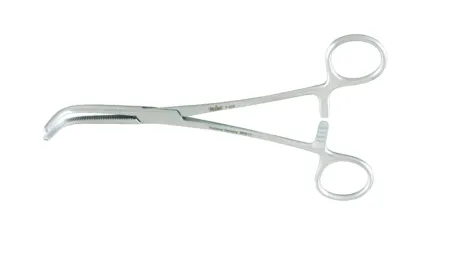 Right Angle ClampDissects around vessels and ducts and clamps them. Often used to pass a tie or vessel loop under a vessel or duct so the surgeon can pull it around to tie off or retract the structure.Clamping & Occluding
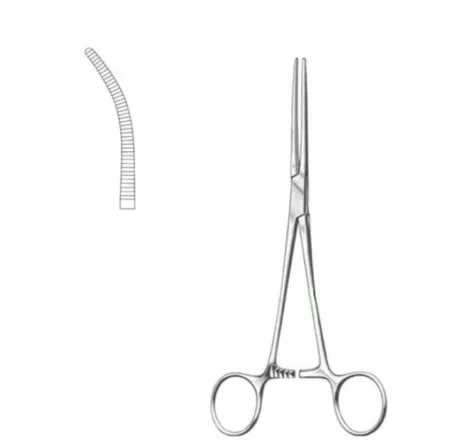 Rochester Pean ForcepsClamps large vessels or dense tissue prior to ligation, particularly in deep surgical sites.Clamping & Occluding
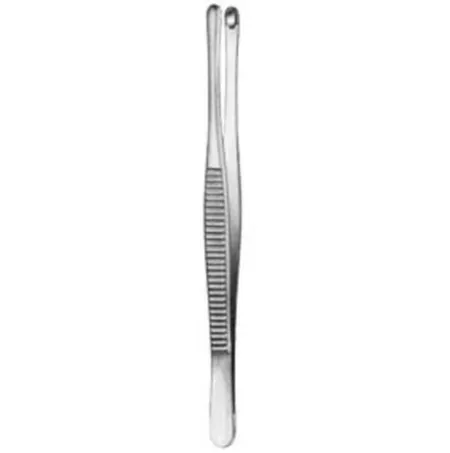 Russian Tissue ForcepsEffective for gripping dense tissues or wound edges during closure, particularly in OB/GYN procedures.Grasping & Holding
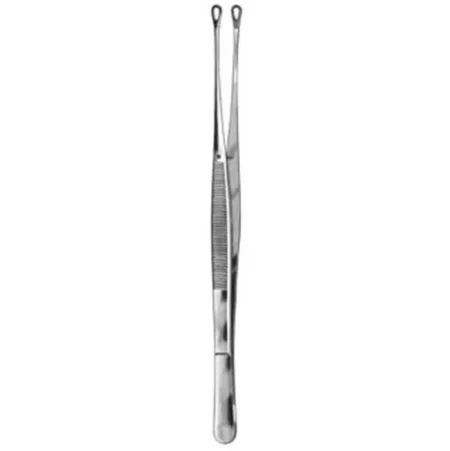 Singley Tissue ForcepsSecures delicate tissues, dressings, or intestinal tissue in general, urologic, thoracic, and OB/GYN surgeries.Grasping & Holding
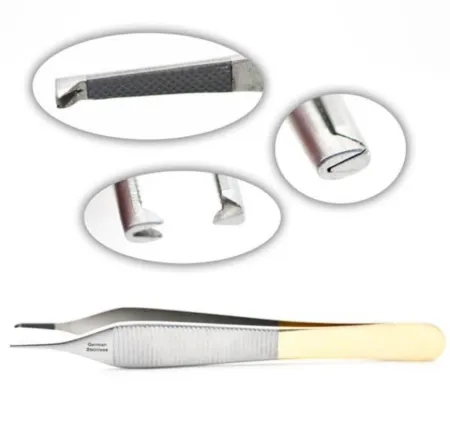 Adson ForcepsGrasping delicate or superficial tissue. The toothed version aligns the wound edges during skin stapling and holds superficial tissue while Steri-Strips are placed.Grasping & Holding
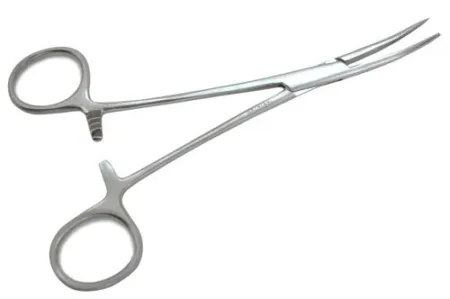 Curved HemostatsControls bleeding vessels prior to cautery/ligation. Also assists in blunt dissection.Clamping & Occluding
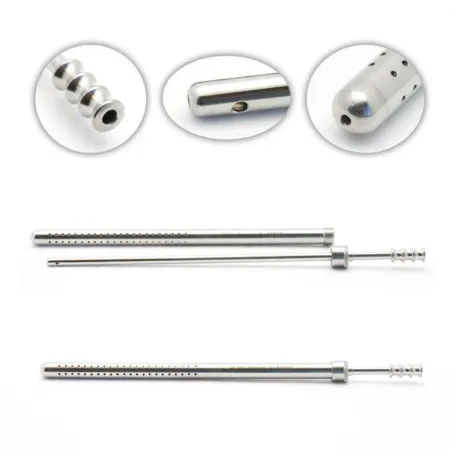 Poole Suction ProbeRemoves large amounts of blood and fluid from the abdomen or other body cavity, including amniotic fluid. The inner tube alone gives finer suction, such as down the femoral canal in hip replacement.Suctioning
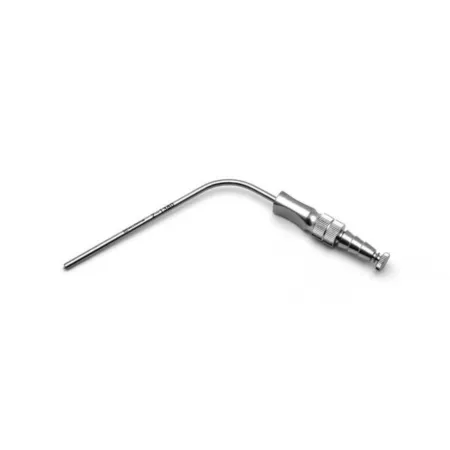 Ferg-Frazier SuctionEvacuates fluid, blood, and smoke from deep, narrow surgical pathways like nasal cavities, ear canals, and neurosurgical fields.Suctioning
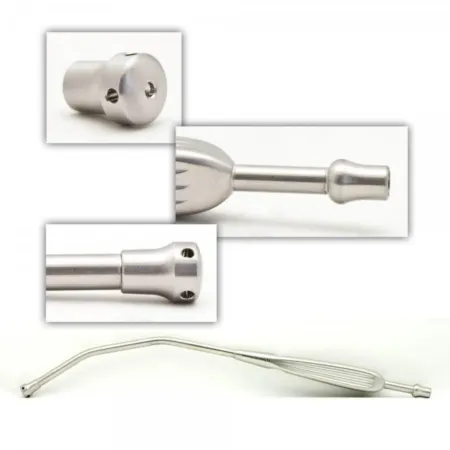 Yankauer SuctionGeneral suction of blood and fluid in almost any wound, with less risk of pulling in tissue. Anesthesia also uses it to clear secretions from the mouth and throat as anesthesia is reversed.Suctioning
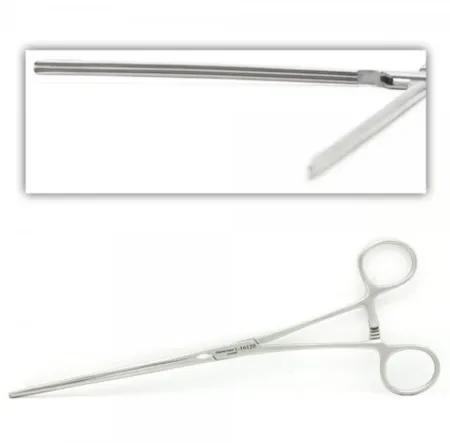 Kocher Intestinal ForcepsClamps and holds bowel during intestinal surgery.Grasping & Holding
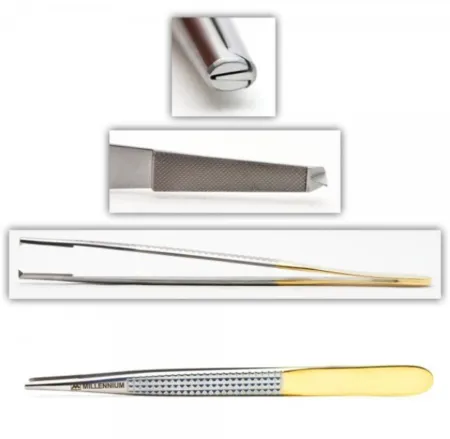 Bonney ForcepsGrasps thick, tough tissue such as fascia and muscle; common in obstetric and orthopedic cases.Grasping & Holding
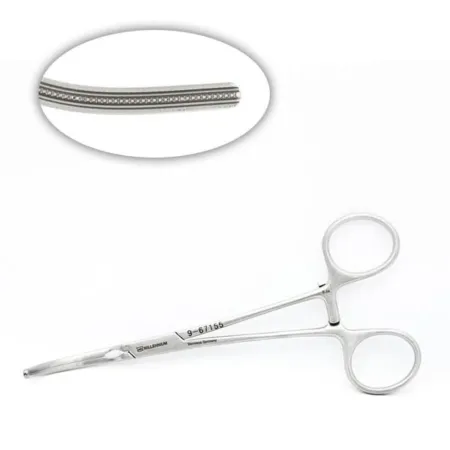 Debakey Vascular ClampGives total occlusion of peripheral vessels during vascular repair or bypass.Clamping & Occluding
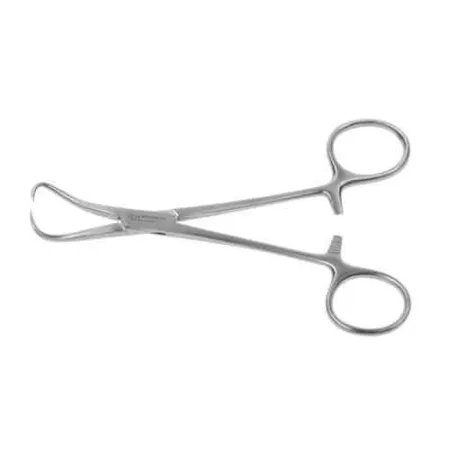 Penetrating Towel ClampHolds towels and drapes together and in place. Also used to grasp tough tissue that will be removed and to hold small bone fractures. Never use it to attach the ESU cord or suction tubing to the drapes; it punctures them.Grasping & Holding
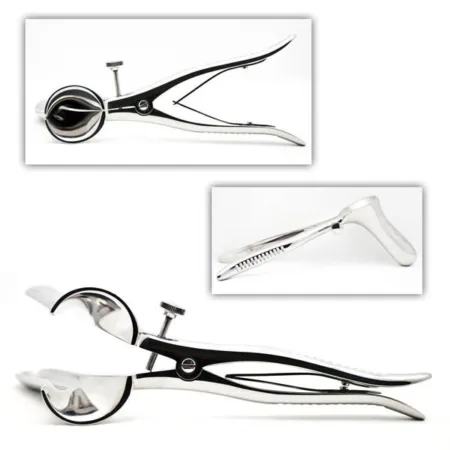 Pratt Rectal SpeculumProvides exposure and visualization of the anal canal and rectum for examination, exposure, or surgery.Retracting & Exposing
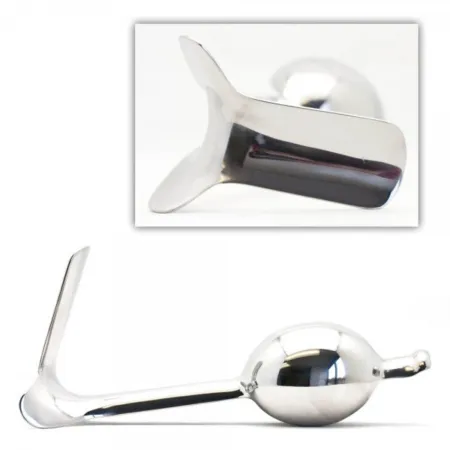 Auvard Vaginal SpeculumHolds back the posterior vaginal wall in vaginal and cervical procedures. The blade goes into the vaginal vault and the weight lets it hang in place without a hand on it.Retracting & Exposing
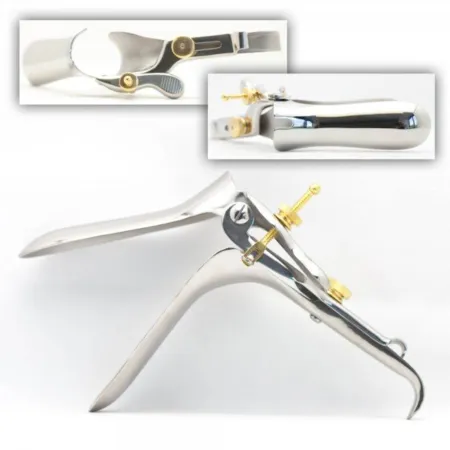 Weisman Graves SpeculumHolds the vaginal walls apart to show the cervix. The open side lets it be lifted out over a catheter or other device already placed in the uterus, and leaves room for other instruments.Retracting & Exposing
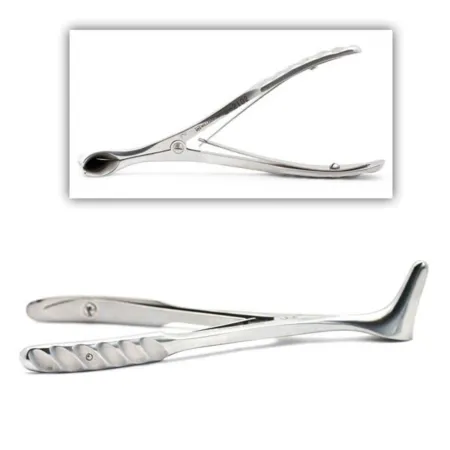 Storz Nasal SpeculumHolds the nostril open so the surgeon can see into the nasal cavity, for example during septoplasty.Retracting & Exposing
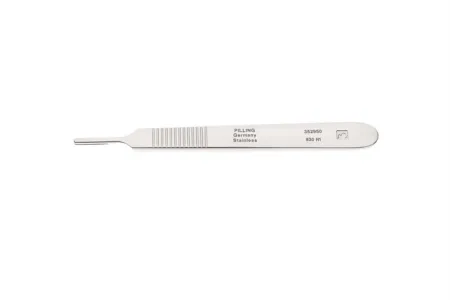 #3 Knife HandleHolds a blade for the skin incision and other fine, precise cuts. Sets often carry two: one blade for the skin and a second, clean one for deeper cutting.Cutting & Dissecting
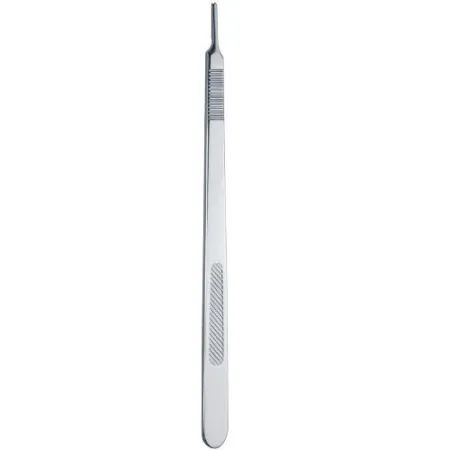 #3 Long Knife HandleUsed as the deep knife for precise cutting deep in a wound, where a standard #3 handle is too short.Cutting & Dissecting
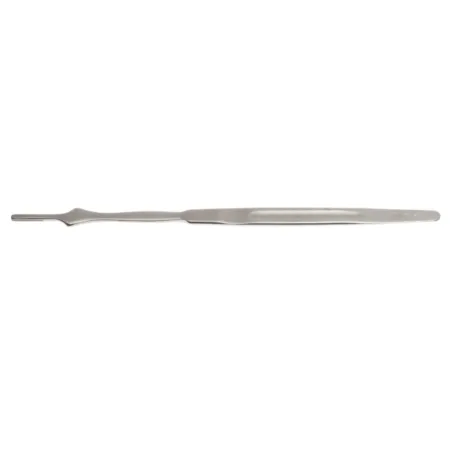 #7 Knife HandlePrecise cuts deep in a wound or in a narrow space; the thin handle does not block the view, as in the nose or throat. Often loaded with a #11 or #15 blade.Cutting & Dissecting
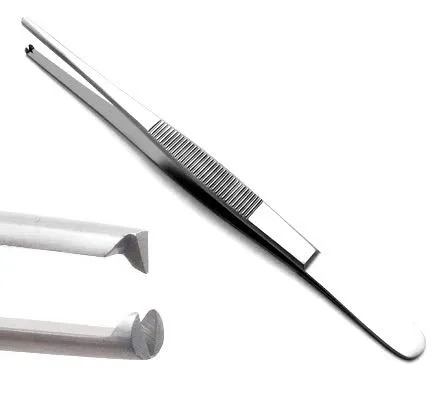 Toothed ForcepsEffective for securing moderate-to-dense tissues during wound approximation and closure procedures.Grasping & Holding
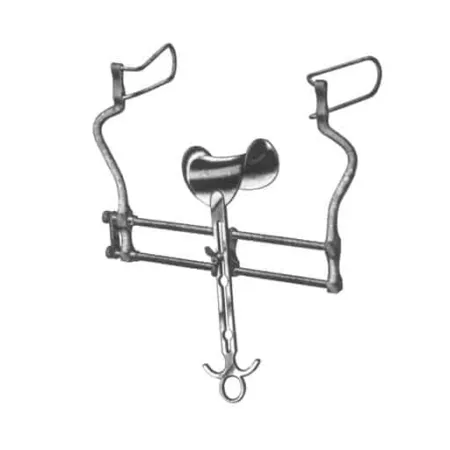 Balfour RetractorEssential for large abdominal incisions, providing multi-directional retraction for enhanced surgical access.Retracting & Exposing
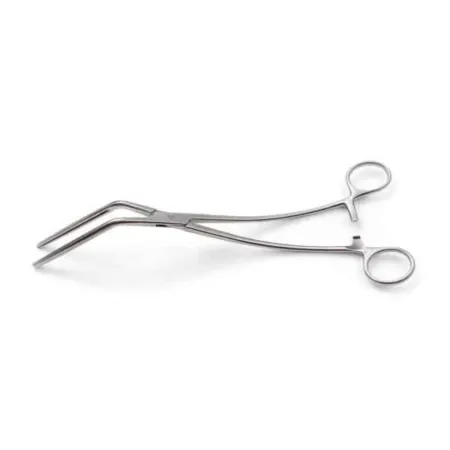 Fogarty ClampProvides atraumatic clamping for delicate vessels and graft materials during vascular procedures.Clamping & Occluding
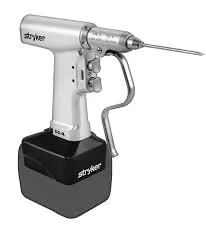 Stryker DrillDrills, reams and cuts large, dense bone in orthopedic cases such as total hip and knee replacement.Specialty
Telling the near-identical apart.
Nobody confuses a retractor with a suction tip. What costs you time on the Mayo stand is the pairs that look nearly identical in a crowded tray. Every pair comes down to a single distinguishing feature:
Deaver vs. Richardson Retractor
Curved Mayo vs. Metzenbaum Scissors
Crile Hemostat vs. Kelly Forceps
Allis Forceps vs. Babcock Forceps
Needle Holder vs. Hemostatic Clamp
Adson Tissue vs. Adson-Brown Forceps
Would you know it on the back table?
Reading an instrument list is not the same as identifying it in seconds under surgical lights. Our built-in testing system generates questions directly from real cases with authentic photographs and realistic distractors.
Try this live question from our testing system. Select an answer below to see the instant clinical explanation — no account required for this sample.
The Barnhill Adenoid Curette belongs to which instrument class?
The six functional families.
Instrument names become intuitive once you stop memorising them one by one. Almost every basic instrument belongs to one of these six functional groups:
Cutting & Dissecting
Scalpels, scissors, and curettes designed to divide, excise, or incise tissue. The working edge is sharp and must be protected when passing.
Grasping & Holding
Tissue forceps, sponge holders, and tenaculums that manipulate tissue or maintain exposure without slipping.
Clamping & Occluding
Hemostats and vascular clamps that compress blood vessels or hollow lumens to achieve haemostasis and prevent leakage.
Retracting & Exposing
Handheld and self-retaining instruments that hold wound edges and organs away from the operative field to optimize visualization.
Suturing & Stapling
Instruments engineered to drive needles, manipulate suture material, or approximate wound margins with clips and staples.
Suctioning & Evacuating
Hollow probes and cannulas attached to vacuum lines to remove blood, smoke, peritoneal fluid, and debris from the surgical field.
Why identification speed matters at the table.
Naming an instrument on a written quiz and handing it across a Mayo stand in under two seconds are two completely different skills. In the operating room, a surgeon will ask for an instrument with their eyes locked on the incision. If you hesitate or deliver the wrong clamp, the operative tempo breaks.
- Pass with purpose and orientation: Ring-handled instruments (scissors, clamps, needle holders) must be placed firmly into the surgeon's palm with the rings down and the tips facing upward or in the direction of intended use.
- Protect the tip: Scalpels (#3, #7) and sharp retractors (Senn, Volkman) should always be handed over with the sharp edge facing away from your hands and the surgeon's fingers.
- Real tables are not clean catalog shoots: On a live back table, instruments sit under lap sponges, reflect glare from surgical lights, and get wet with saline. Learn instruments by their distinctive silhouettes and hinge geometries.
Choose your study path.
Whether you are preparing for clinical rotations tomorrow or studying for your NBSTSA / NCCT certification exam, CSTSetup gives you the exact tools you need.
Web Library & Guide
Browse all 54 instruments with high-resolution photos, clinical uses, and look-alike guides online anytime.
Daily Tests & Custom Trays
Take 5 free practice questions every single day, download this 54-card deck as a printable PDF, and build and save your own surgical setups.
Full Testing Suite & PDF Export
Unlimited timed exams, look-alike drills, full printable cut-up PDF flashcard decks, and access to hundreds of specialty back tables.
The 54, and every other instrument, on your phone.
Quiz yourself on the way to clinicals, with the same account and the same Pro as the site.
CSTSetup
Everything on the site, in your pocket. One account and one Pro with the site.
340+ case setups
Instruments, positioning and steps for each case.
Every setup is a deck
Flashcards of exactly what's on the tray.
29 question types
Trays, positioning, photographs and more.
Exam prep
Practice tests and timed exams for the CST, TS-C, CRCST, CSPDT and CSFA, today's five free.
A plan for every day
A daily lesson counting down to your exam.
Build your own setups
No account needed to start; it syncs when you sign in.
Find any setup fast
Setups and instruments in one search.
Log every case
Your clinical case log, ready for review, even with no signal.
Clock in from the OR
Your clinical hours, counted.
Instruments
Just the instruments, offline, with no signal needed. One account and one Pro with the site.
Five free questions every day
And an instrument of the day to guess.
9 question types
Photo, name, use, safety and more.
Study your way
By class or by specialty.
More than a name Pro
How to check it, clean it and pass it, and where it's kept.
Beat the look-alikes Pro
Side by side until they stick.
Track every instrument Pro
Solid, learning, slipping or not met yet.
Timed exams Pro
Up to 25 questions against the clock.
Turn it in 3D Pro
At every size it comes in.
Did you assign this 54-instrument list?
The same platform your students use to study instruments runs their complete clinical case logs, attendance, and preceptor sign-offs — scored automatically against AST, NCCT, and CC4SA standards.
Explore the Educator Portal- Automatic case scoring against AST 6th Ed & NCCT requirements
- Preceptors verify and sign off via secure QR codes without logins
- Clinical hours tracking with optional geofencing
- One-click multi-tab spreadsheet exports ready for accreditation audits
Take your knowledge to real surgical tables.
Printable flashcards: the 54 free, and every setup as a deck