NCCT TS-C
The Tech in Surgery – Certified exam from the National Center for Competency Testing. 175 questions, 150 of them scored, in four hours.
How is a liquefied chronic subdural hematoma MOST often evacuated?
Right.
Not quite. The answer is A.
A chronic subdural hematoma, common in older adults after minor head injuries and in patients taking anticoagulants, gradually liquefies into a thin, dark fluid. It is usually drained through one or two burr holes made with a perforator: the dura is opened, the space is irrigated with warm saline until the return runs clear, and a soft drain is often left for a day or two to lower the chance of recurrence. A full craniotomy is reserved for collections with solid clot or thick membranes, or for recurrences.
Takeaway. Chronic subdural hematomas are usually drained through burr holes, with irrigation and often a drain.
Saline-moistened gauze is placed in a wound and removed once it has dried. What is this dressing for?
Right.
Not quite. The answer is B.
In a wet-to-dry dressing, gauze soaked in saline or another solution the surgeon chooses is laid into the wound and left to dry. When it is removed, tissue that has adhered to it comes away too, which is a form of mechanical debridement often used on burns and on infected wounds left open to heal by second intention. Because removal is painful, it is sometimes done under anesthesia in the operating room.
Takeaway. Wet-to-dry gauze debrides mechanically: whatever sticks to the dried gauze leaves with it.
The table will be flexed to bring an anesthetized patient into the Kraske position. When is the safety strap applied?
Right.
Not quite. The answer is C.
For positions achieved by moving the table after the patient is on it, such as Fowler's, prone and Kraske, the safety strap is not applied until the position is complete. A strap already in place while the table articulates pulls the skin and causes shearing and friction injuries. Once positioned, it goes two inches above the knees and is checked for tightness.
Takeaway. In Fowler's, prone and Kraske, strap the patient after the table has reached its final position, not before.
After contact with a patient who has Clostridioides difficile, how should the surgical technologist clean their hands?
Right.
Not quite. The answer is C.
Clostridioides difficile, formerly Clostridium difficile, forms spores that resist alcohol, so an alcohol-based hand rub, otherwise the preferred method of hand hygiene, leaves them behind. Contact precautions call for gloves and a gown, and after contact the hands are washed with soap and running water, where friction and rinsing physically remove the spores. Surfaces in the patient's environment are cleaned with a sporicidal disinfectant, such as a bleach-based product.
Takeaway. C. difficile spores survive alcohol rub; wash with soap and water.
Which instrument is this?
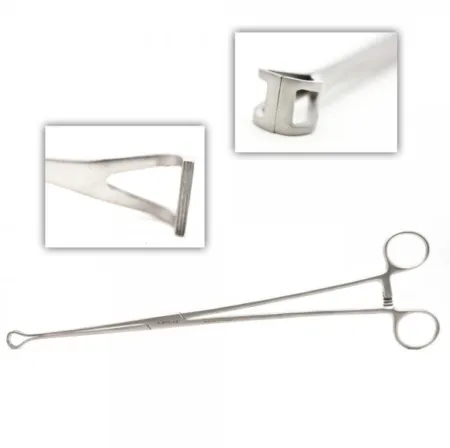
Right.
Not quite. The answer is D.
This is the Babcock. Characterized by smooth, rounded jaws with circumferential serrations that provide secure yet gentle tissue handling.
See the Babcock cardof 5 today.
Nothing is kept while you are signed out. Sign in free and today counts on your record, here and in the app.
A new five at midnight.
Five a day gets you started. Pro gets you through.
Every question, in sets as long as you like. The timed exam on the real clock. Your score by area, so you know what to fix before you walk in.
- 1,253 questions to practice, easy first
- The exam: 175 questions in 4:00:00
- Your score by area, weakest first