Surgical Counts: A Complete Guide for Surgical Techs
What gets counted, when you count it, who does it, and exactly what happens when the numbers do not match.
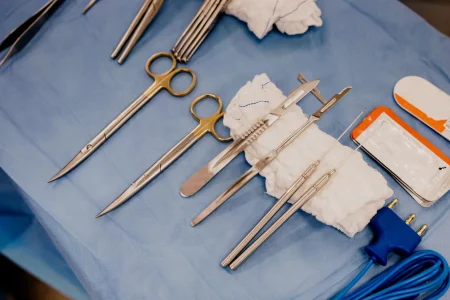
A surgical count is how the team proves nothing was left inside the patient. Before the first cut and again before the wound closes, the scrub and the circulator count every sponge, sharp and instrument on the field, out loud, together, and the numbers have to match.
A retained sponge or instrument is one of the few mistakes in surgery that should never happen at all, and the count is the main thing standing in its way. It is also one of the first jobs you will own as a surgical tech.
What gets counted
Sponges come in bundles, usually of five or ten. If a bundle has the wrong number in it, it is not counted and not used: the whole bundle is handed off the field and taken out of the room.
When you count
- Before incisionThe baseline. Everything opened for the case is counted and written on the count board before the first cut.
- Whenever something is addedAnything passed onto the field during the case is counted as it arrives and added to the board.
- Before closing a cavityA cavity inside a cavity, like the uterus at a C-section, gets its own count before it closes.
- Before closing the woundWhen closure begins, at the fascia. Something missing can still be found with the wound open.
- At skin closureThe final count, at the end of the procedure.
- At a permanent reliefWhen the scrub or the circulator hands over for good, the incoming person counts before taking responsibility.
Who counts, and how
The scrub and the circulator count together, both looking at each item and both saying the number aloud. The circulator writes it on the count board or count sheet as you go. Counting in the same order every time is what makes a count fast and hard to get wrong: the surgical site first, then the Mayo stand, the back table, and last whatever has come off the field.
Separate each sponge as you count it, so two stuck together are never counted as one. The surgeon is part of the count too: they are told when it is happening, and they wait for the result before closing.
| Item | Initial | Added | Closing | Final |
|---|---|---|---|---|
| Laps | 10 | +5 | 15 | 15 |
| Raytecs | 10 | – | 10 | 10 |
| Suture needles | 6 | +3 | 9 | 9 |
| Blades | 2 | – | 2 | 2 |
| Vessel loops | 2 | – | 2 | 2 |
When a count is off
A count that does not match is not a disaster. Carrying on as if it did match is. The response is the same everywhere:
- Tell the surgeon and the team straight away, out loud.
- Recount the item that does not match.
- Search the wound, the field, the floor, the linen and the trash.
- If it is still missing, an X-ray is taken before the patient leaves the room, when their condition allows, and read before the case is closed out.
- Document what happened and what was done, following your facility's policy.
Speaking up is the job. Nobody on a good team will ever be annoyed that you stopped them to recount.
Sharps and the needle counter
Used needles go straight into the needle counter on your back table, one to a slot, so the count is a matter of reading the numbers. When the surgeon hands a needle back, check that it is whole: a broken needle means finding the missing piece, and it is counted like any other missing item. Used blades go in the counter too, and stay there until the final count.
Can a count be skipped?
Sponges and sharps are counted on essentially every procedure that uses them. Instrument counts are different: many facilities allow them to be left out of procedures where an instrument simply could not be left behind, and each facility keeps its own list of those procedures. That is why the same case can have an instrument count at one hospital and not at the next.
Do you count instruments for an inguinal hernia repair?
Policies differ. Many facilities count instruments on an open repair, where the incision is large enough to hide one; for a laparoscopic repair, check your facility's list. Sponges and sharps are counted either way, and when in doubt, count.
What can be left out of the count on a small procedure, like an AV fistula?
Where policy allows, the instrument count is what gets left out on small, superficial procedures. Sponges and sharps are still counted.
Surgical counts: common questions
Who is responsible for the count?
The whole team. The scrub and the circulator perform it, the circulator records it, and the surgeon waits for it before closing.
What is a retained surgical item?
Anything left inside a patient by mistake after surgery, most often a sponge. It is treated as a never event, and preventing it is the entire purpose of the count.
What happens if you miscount?
You recount. That is what the process is built for. What gets people in trouble is a count reported as correct when it was not.
Starting clinicals soon? Here is how to be ready for tomorrow's case.
Know the tray before you count it.
Every instrument on the tray, by name and by sight, in the setup for each procedure.