Sutures, needles and supplies
The sutures, needles, sponges, drains and other supplies you open, prepare and pass on every case, and the reason behind the way each one is handled.
1Why it matters
Every operation ends the same way: something has to hold the tissue together while it heals, and most of the time that something is sutureSOO-cherA stitch, or the thread used to stitch, that holds the edges of a wound or incision together.Full entry . Suture is any strand used to sew tissue together; bringing two cut edges back together this way is called approximation. A strand tied around a vessel or duct to close it is a ligature, or tie, and tying it off is called ligating.
The surgeon chooses the suture. Your job is to know what comes next, read a packet in a second, open only what the case needs, load each needle ready to use, and get every needle back.
Suture needles are also the sharps that hurt surgical teams most. In one large study of sharps injuries in surgery, suture needles caused more than four in ten, and surgical technologistSUR-jih-kul tek-NOL-uh-jistA member of the operating room team who prepares the sterile field and instruments and hands them to the surgeon.Full entry were most often hurt while passing sharps, taking them apart or throwing them away.
Sponges, drains, drapes, blades, staplers, syringes and suction tips arrive on your back table too, and each has a right way to be handled. Counting them is in chapters 28 and 29, dressings in chapter 30, electrosurgeryee-LEK-troh-SUR-jer-eeUsing high-frequency electric current through a handheld tool to cut tissue or seal bleeding vessels during surgery.Full entry safety in chapter 20, and drugs on the field in chapter 12.
2The words of suture
sutureSOO-cherA stitch, or the thread used to stitch, that holds the edges of a wound or incision together.Full entry has its own vocabulary, and AST's Core Curriculum expects you to know it.
How a strand is built
- Monofilament: one solid strand. It glides through tissue and gives germs nowhere to hide, but it is stiffer and its knots slip more easily.
- Multifilament: many fine fibers twisted or braided into one strand. It is soft and ties firm knots, but the spaces between its fibers can hold fluid and bacteria.
- Coated: a covering, usually on a braided strand, so it slides more easily and frays less. Some coatings carry an antibacterial agent. An uncoated strand has none.
- Dyed or undyed: a strand may be colored with an approved dye, as violet polyglactin and blue polypropylene are, or left undyed, clear or in its natural color.
What makes a good suture
- Tensile strength: how much pull a strand takes before it breaks. A suture should be about as strong as the tissue it holds.
- Uniform size: a good strand has the same diameter all along its length, because a thin spot is a weak spot.
- Knot security: how well a knot holds without slipping.
- Memory: a strand's habit of springing back into its packet coils. High memory means tangles and knots that loosen. Monofilaments have the most; silk and braided polyester the least.
- Pliability: how easily a strand bends and handles. Silk is the classic soft suture.
- Capillarity, or wicking: soaking up fluid and carrying it along the strand. Braided strands wick most, and wicking can carry bacteria along the suture line.
- Tissue drag: frictionFRIK-shunThe rubbing of one surface against another, such as skin against bed sheets.Full entry as the strand is pulled through tissue, measured as its coefficient of friction. Coating lowers it, though a very slippery strand lets knots loosen.
- Elasticity: stretching and coming back, so a suture line can give a little as tissue swells.
- Plasticity: stretching and keeping the new shape. It helps knots stay secure; polypropylene has high plasticity.
- Tissue reaction (bioactivity): the body treats almost every suture as a foreign body and reacts with inflammation. A suture that causes little reaction is inert. Steel, polypropylene and nylon are among the most inert. Gut causes a strong reaction, and silk the most of the nonabsorbable sutures.
Absorbable and nonabsorbable
- Absorbable suture is broken down by the body. It loses its strength first, usually within weeks, then slowly disappears. Ideally it lasts as long as the tissue needs support.
- Natural absorbable suture (surgical gut) is digested by enzymeEN-zimeA protein that speeds up a chemical reaction in the body without being used up.Full entry from the body's cells. Synthetic absorbable suture is broken down by water in the tissues, called hydrolysis, which is more predictable and causes less inflammation.
- Nonabsorbable suture stays. The body walls it off in fibrousFY-brusMade of or containing tough threads (fibers), especially of connective tissue.fibr/o fiber-ous full of, relating toFull entry tissue, called encapsulation, or it is taken out later, as skin sutures often are.
- Infection speeds up the breakdown. Most sutures, gut among them, break down very quickly in infected tissue, one reason an actively infected wound is not sutured until the infection is treated.
3Suture size
Size is a strand's diameter. In the United States, every sutureSOO-cherA stitch, or the thread used to stitch, that holds the edges of a wound or incision together.Full entry needs FDA approval and has to meet the standards of the United States Pharmacopeia (USP), which cover size, tensile strength and sterilitysteh-RIL-ih-teeThe state of being completely free of living germs, including spores; also, being unable to have children.Full entry . Because of the USP standard, a 3-0 strand is the same thickness in silk, nylon or polyglactin. The numbers run two ways from 0:
- Below 0, more zeros mean a finer strand. 2-0 is finer than 0, and 4-0 is finer than 3-0. The finest go down to 11-0 and even 12-0. Size 11-0, used in microsurgery, is light enough to float in the air.
- Above 0, bigger numbers mean a thicker strand. Size 2 is heavier than size 1. The heaviest, size 5, is about as thick as ordinary string.
Finer strands are weaker, so the surgeon uses the finest one that will hold: it does less damage, makes smaller knots and leaves less foreign material. Sizes 0 to 4-0 cover most general surgery. As a rough guide, though each surgeon's preference card has the final word:
- 1 and 0: abdominal fasciaFASH-ee-uhA sheet or band of tough connective tissue that covers and separates muscles and organs.fasci/o bandFull entry and orthopedicor-thuh-PEE-dikHaving to do with the bones, joints, muscles, ligaments and tendons, and the branch of medicine that treats them.orth/o straightped/o child (the field began with straightening children's bones)-ic relating toFull entry wounds, where the pull is greatest.
- 2-0 and 3-0: most stick ties. Ties from a reel are usually 2-0, 3-0 or 4-0.
- 3-0 and 4-0: most subcuticular skin closures.
- 4-0 and 5-0: joining the aorta; 4-0 also closes the duraDOOR-uhThe tough outer layer of the membranes that cover the brain and spinal cord.Full entry .
- 6-0 and 7-0: small arteries, such as the coronary and carotidkuh-ROT-idHaving to do with the carotid arteries, the two large arteries on each side of the neck that carry blood to the head and brain.Full entry arteries.
- 8-0 to 11-0: microvascular and eye surgery.
Stainless steel wire was long sized by the Brown and Sharpe (B&S) gauge, where a bigger number means thinner wire. Steel now has USP sizes too, but some surgeons still ask for wire by gauge, and the package prints it.
More zeros, finer strand. 5-0 is far finer than 0, and size 2 is thicker than 0.
4Suture materials
sutureSOO-cherA stitch, or the thread used to stitch, that holds the edges of a wound or incision together.Full entry fall into four groups: natural or synthetic, and absorbable or nonabsorbable. Learn the groups first. Trade names differ by company, and most facilities buy most of their suture from one company, so learn its products.
Natural absorbable: surgical gut
- Surgical gut is collagenKOL-uh-jenThe main structural protein of the body, which gives strength to skin, bones, tendons, ligaments and scar tissue.coll/a glue-gen producingFull entry from the intestines of sheep or cattle, the only natural absorbable suture. Synthetic sutures have largely replaced it, but it still suits fast-healing tissue such as the lining of the mouth.
- Plain gut is untreated. It loses its strength within about 7 to 10 days, is gone in about 70 days, and causes a strong inflammatory reaction.
- Chromic gut is treated with chromium salts, so it reacts less and lasts longer: more than half its strength at 7 to 10 days, some up to 3 weeks, fully absorptionub-ZORP-shunThe taking in of a substance, such as a drug or a nutrient, into the bloodstream.Full entry in about 90 days.
- Where gut is not used: plain gut is not used in heart, vessel or brain and nerve surgery, chromic gut is kept out of the skin, where its reaction can scar and invite infection, and any gut breaks down fast in an infected wound.
- Gut is packed in an alcohol solution that can catch fire on the field, so open it away from the incision and use it soon. If it has stiffened, dip it in room-temperature saline for a few seconds just before use. Never soak or heat it, and handle it as little as you can.
Synthetic absorbable
These polymers break down by hydrolysis at a steady rate with little reaction. Keep them dry: moisture weakens them, so they are never dipped.
- Polyglactin 910 (Vicryl) and polyglycolic acid (Dexon): braided and easy to handle. They hold for about 2 to 3 weeks, for soft tissue, ties and many layers in general and gynecologygy-nuh-KOL-uh-jeeThe branch of medicine that cares for the female reproductive organs and breasts.gynec/o woman-logy study ofFull entry surgery. An antibacterial version that carries triclosan (Vicryl Plus) is also made.
- Poliglecaprone 25 (Monocryl): a smooth monofilament that loses about half its strength in a week and nearly all by 3 weeks. It is used for buried stitches, such as a subcuticular skin closure, and is not recommended for fasciaFASH-ee-uhA sheet or band of tough connective tissue that covers and separates muscles and organs.fasci/o bandFull entry or other tissue under strain.
- Polydioxanone (PDS) and polyglyconate (Maxon): monofilaments that hold much longer, about half their strength at 4 weeks, a common choice for fascia.
- Fast-absorbing versions, such as polyglactin 910 Rapide, lose most of their strength in a week and suit skin.
Natural nonabsorbable: silk
Silk is spun by silkworms, braided or twisted, and treated to wick less. It handles beautifully and its knots hold, so it is a favorite for ties and for bowel and vessels. It loses strength when wet, and buried silk slowly loses its strength over about a year. As a braided strand, it is a poor choice in a contaminated wound. Cotton is another natural nonabsorbable suture, rarely used now.
Synthetic nonabsorbable
- Nylon (Ethilon): strong and nearly inert. Monofilament nylon is a common skin suture, and its finest sizes, down to 11-0, serve eye surgery and microsurgery. Its knots slip, so surgeons tie extra throws.
- Polypropylene (Prolene): a smooth, very inert monofilament that can be used in the presence of infection, a mainstay of vascular and plastic surgery. High memory makes it springy in larger sizes.
- Polyester (Ethibond, Mersilene): braided and very strong, with little reaction, for heart valves, graftGRAFTTissue or a man-made material moved into place in surgery to replace or repair a damaged part.Full entry and fascia.
- Stainless steel: very strong and among the most inert, for bone, tendon and jaw surgery. It kinks, can tear out of tissue, and its barbed ends can damage tissue and gloves. It is never bent before use.
- ePTFE (expanded polytetrafluoroethylene): a nonabsorbable monofilament used in heart surgery, for example to replace the cords that hold the mitral valveMY-trul valvThe heart valve between the left atrium and the left ventricle.Full entry .
Barbed and antibacterial sutures
Barbed suture has tiny barbs that grip tissue in one direction, so the surgeon can close without knots and the strand does not slide back. It comes in absorbable and nonabsorbable materials. Antibacterial sutures carry an agent such as triclosan in their coating to help prevent infection.
5Choosing a suture
The surgeon chooses, and the choice is on the preference card. It rests on the type of procedure, the tissue, the state of the wound and of the patient, and the surgeon's own experience. Knowing why lets you predict the next request and catch a mistake.
- Healing speed. mucosamyoo-KOH-suhThe moist lining of body passages that open to the outside, such as the mouth, nose, gut and bladder.Full entry , the subcutaneoussub-kyoo-TAY-nee-usUnder the skin; in the fatty layer between the skin and the muscle.sub- undercutane/o skin-ous relating toFull entry layer and other quick-healing tissue can take absorbable sutureSOO-cherA stitch, or the thread used to stitch, that holds the edges of a wound or incision together.Full entry . fasciaFASH-ee-uhA sheet or band of tough connective tissue that covers and separates muscles and organs.fasci/o bandFull entry , tendon and ligament carry heavy loads, and fascia heals slowly, so they need nonabsorbable suture, or a slowly absorptionub-ZORP-shunThe taking in of a substance, such as a drug or a nutrient, into the bloodstream.Full entry one, in a larger size.
- Critical tissue. The heart and blood vessels get nonabsorbable suture.
- Wound status. An actively infected wound is not sutured. Where the risk of infection is high, because of the wound's class or the patient's condition, the surgeon wants a strong suture line that resists absorption: nonabsorbable suture, or an absorbable one that lasts a long time. Monofilaments are preferred, because braided strands wick germs. A grossly contaminated wound, such as one from a traumatic injury, may be left open to heal by second intention (see First, second and third intention, below).
- The urinary tract. Suture in contact with urine can seed stones, so absorbable suture is used.
- Scarring. For a cosmetic closure of the face and other exposed skin, the surgeon picks an inert suture, usually a monofilament, which does the least injury as it passes through.
- The patient. Age and illness such as diabetes, lung disease or long-term steroidSTAIR-oydA fat-based chemical built from cholesterol; the group includes hormones such as cortisol and estrogen, and many drugs.ster/o solid-oid likeFull entry use slow healing and change the choice.
The surgeon picks the suture. You read the card, ask when the plan changes, and have the next one ready before anyone asks.
6The suture packet and its label
sutureSOO-cherA stitch, or the thread used to stitch, that holds the edges of a wound or incision together.Full entry comes in dispenser boxes of one to three dozen packets. Each packet is two layers: a sterile primary packet of foil or paper, which may hold fluid, sealed inside a peel-open overwrap whose outside is not sterile. A packet stays sterile while it is whole, and some carry an expiration date because the suture itself can break down. Good packaging does three jobs: it keeps the suture sterile, it protects the strand and needle from damage, and it lets the suture reach the field and come out of the packet quickly without tangling.
Boxes and packets are color coded by material, but the colors are not the same at every company, so always read the label.
Suture boxes are kept on carts or racks in a supply area, or in closed cabinets in the OR, and a large facility may have a room just for suture. Suture carts are never brought into the operating room, where blood and body fluids could soil them.
Reading the label
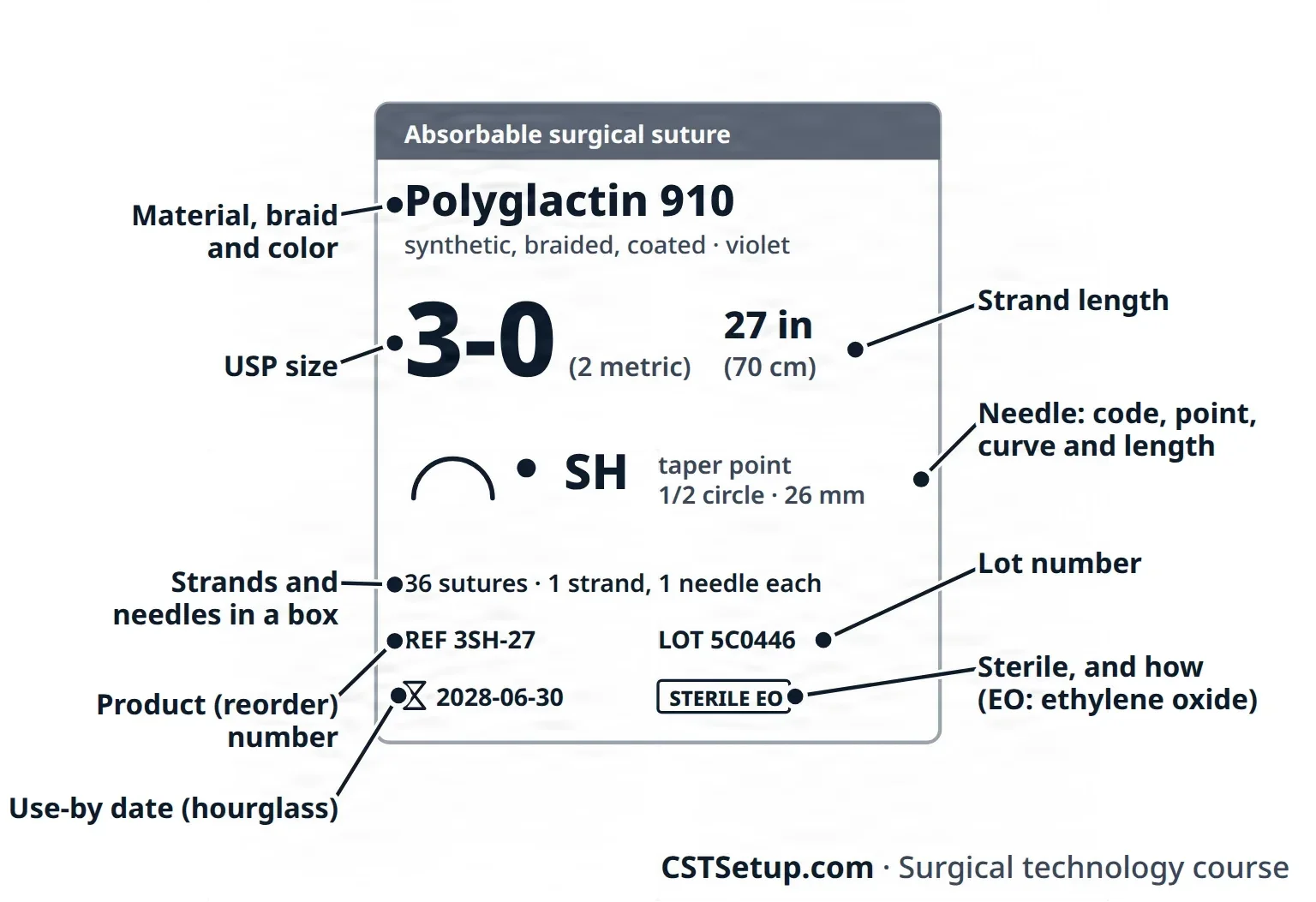
Find the size, the material, and the type and size of the needle first.
- Material, by name, with the strand's color.
- Size: the USP size, often with its metric diameter.
- Needle: a silhouette of its shape, the number of needles, and the maker's needle code.
- Strand length and number of strands.
- Product (reorder) number, lot number and expiration date.
Suture styles
- Pre-cut strands: several needlelessNEE-dul-lesWorking without a needle, such as an IV connector that a syringe or tubing attaches to directly.Full entry lengths, used as free ties, from about 12 to 60 inches.
- Reels: one long strand, often 54 inches, on a spool for many ties in a row. Reels show on x-ray, and many facilities count them because they are easily lost in a wound. The holes in the side of the reel show its size.
- Single-armed: one needle swaged to one end.
- Double-armed: a needle at each end, for joining vessels and other round structures, sewing from the middle out both ways.
- Multi-strand packs: several needle-and-strand sutures in one packet, for a row of interrupted stitches. They replaced the old way of threading eyed needles one after another (rapid-sequence suturing), but they put more needles and more paper on the field, which raises the risk of a lost needle and the cost.
- Control release (detachable, pop-off): the needle comes off with a straight tug of the needle holder, so many interrupted stitches can be placed quickly, as in an anastomosisuh-nas-tuh-MOH-sisA connection between two tube-shaped structures, such as two ends of bowel or two blood vessels, made by surgery or found naturally.Full entry . Other multi-strand packs have needles that are cut off with suture scissors.
- Looped: the strand comes as a loop, for a running stitch that is tied to itself. The label says when a suture is looped.
- Barbed and knotless: barbed suture holds without knots (see Barbed and antibacterial sutures above), and its label says so.
7Opening and preparing suture
Open only the sutureSOO-cherA stitch, or the thread used to stitch, that holds the edges of a wound or incision together.Full entry the case needs. Leftover packets cannot be sterilizationstair-uh-luh-ZAY-shunA process that destroys all microorganisms, including spores, on an item; also a permanent birth control procedure.Full entry again, and every extra needle is one more to count.
- Check each box against the preference card: material, size, needle and length.
- The circulator peels the overwrap and flips the primary packet onto the field, or holds it for you to lift out. The sealed edge is the line between sterile and non-sterile.
- Tear the primary packet at the notch near its sealed edge, or unfold it if it comes ready to load.
- Count multi-needle packets with the circulator as you open them. Your facility's policy says whether they are opened and counted before the incision.
- Arrange packets in the order the surgeon will use them, with the sharps grouped near the sharps container.
To take out a tie, hold the packet and draw the strand out by its loose end. Take out packet kinks by holding both ends and gently pulling your hands apart. Never strip a braided strand through your gloved fingers, which frays it, and never test it with a sharp jerk.
To make ties from a full-length strand, rest the coil across one hand and draw the loose end out gently until the strand is uncoiled. Then take an end in each hand and pull the middle out into thirds before cutting.
For a suture with a needle, grip the needle with the needle holder first, then draw the strand out without tugging on the swage. To straighten it, hold the strand an inch or two from the needle and pull gently on the far end. Nylon can be drawn gently between gloved fingers to take out its memory. Straighten a control-release suture with care, or the needle pops off and the suture is wasted.
Too long a strand drags below the field; too short is hard to tie. As a guide, a running suture is about 24 inches, an interrupted stitch 12 to 14 inches, and a tie for a deep vessel 24 to 30 inches.
Rules for handling suture
- Never wet a synthetic absorbable, and never soak or heat gut.
- Never crush a strand with an instrument. A damaged monofilament can look fine and still break after surgery.
- Never bend steel wire.
- Empty packets and used ties go in the suture bag on the side of the Mayo standMAY-oh standA small tray on an adjustable stand placed over or beside the patient during surgery to hold the instruments used most often.Full entry away from the wound, never in the kick bucket, where a needle could hide among the sponges.
8Needles
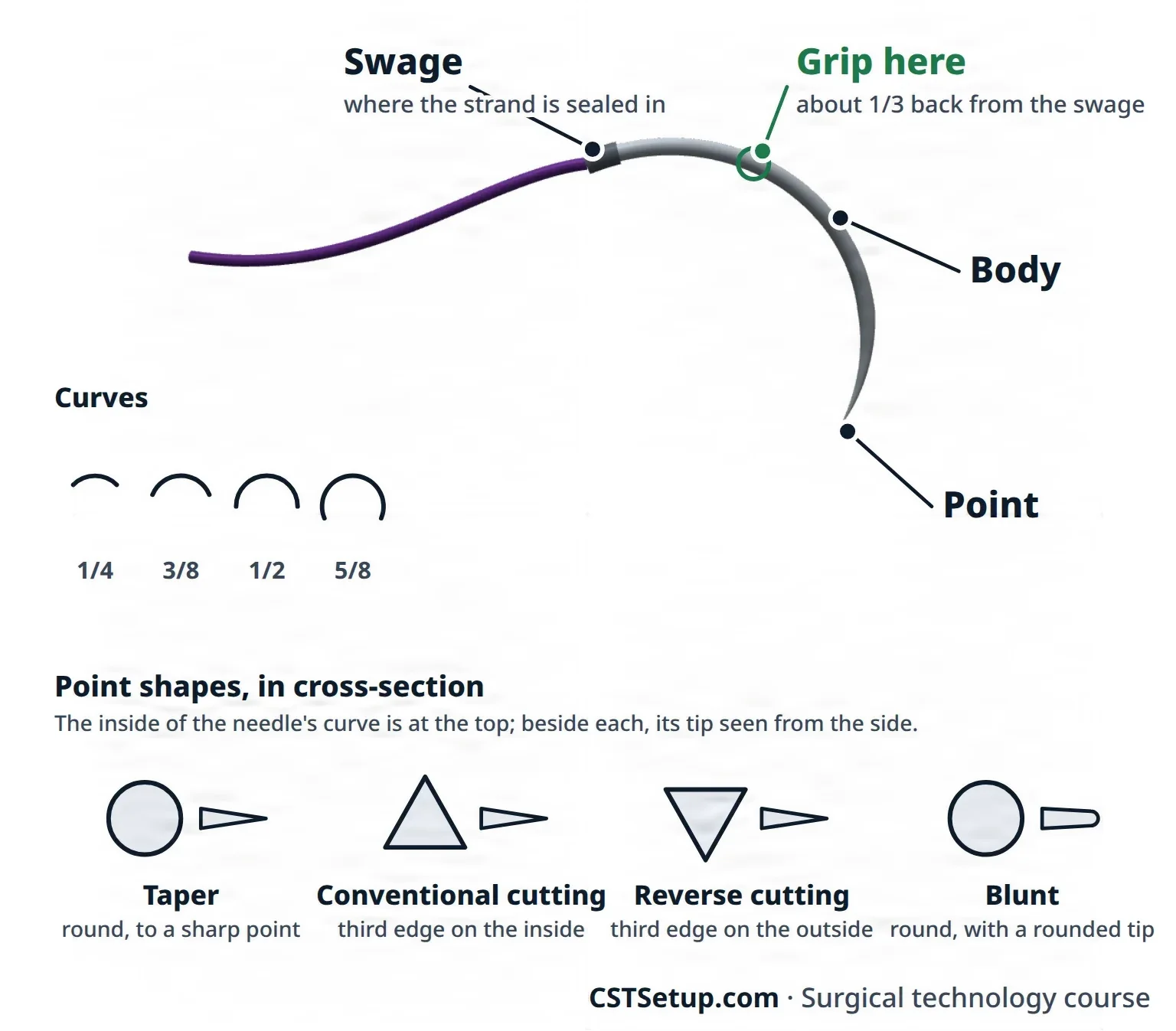
Surgical needles are made of high-grade steel alloy. Every sutureSOO-cherA stitch, or the thread used to stitch, that holds the edges of a wound or incision together.Full entry needle has three parts: the eye or swage, where the strand attaches; the body, which the needle holder grips; and the point.
Swaged and eyed needles
Nearly all suture today is swaged: the strand is sealed into the hollow end of the needle at the factory. A single strand follows the needle and fills the hole, so the tissue is barely torn. That is why a swaged needle is called atraumatic. Eyed needles are rare today, but you still need to know them:
- A closed-eye needle is threaded by hand like a sewing needle, so a double strand passes through the tissue and tears it more.
- A French-eye (spring-eye) needle has a slit above the eye. The strand is pulled down over the slit until it snaps in. Never pull the strand through the eye once it is set: that strips the strand and can break it.
Most scrubs never thread a needle, but learn how in case you must. Pass the strand through the eye from the inside of the needle's curve to the outside, which keeps the short end from slipping back out. Leave a short end of about 3 to 4 inches on a 24-inch running suture, or 2 to 3 inches on a 12- to 14-inch interrupted stitch; one reference leaves about a third of the strand. Before passing it, lay both ends between the tips of the needle holder's jaws so the strand cannot back out of the eye. In heart valve surgery, keep French-eye needles ready in case the surgeon must place a suture again after its needles were cut off.
Shape and size
A straight needle, such as a Keith needle, is used by hand, with no needle holder. Curved needles are named for the part of a circle they make: 1/4, 3/8, 1/2 or 5/8 circle. A compound curve changes its curve along its length, for delicate work such as the eye. The deeper and tighter the space, the more curve the surgeon needs. A needle's size is its length and the diameter of its body: fine needles for microsurgery, very heavy ones for closing the sternum. Each maker codes its needles by size and shape, and you learn your surgeons' codes by working with them.
Point
- Taper: a round body narrowing to a sharp point that pierces and spreads tissue without cutting. The most used point, for soft tissue such as bowel, vessels, peritoneumpair-ih-toh-NEE-umThe thin membrane that lines the belly cavity and covers most of the organs inside it.peri- aroundton stretched-eum a structureFull entry , muscle, fat and duraDOOR-uhThe tough outer layer of the membranes that cover the brain and spinal cord.Full entry .
- Conventional cutting: a triangular point with its third cutting edge on the inside of the curve, facing the wound edge, for tough tissue such as skin, tendon and joint capsule.
- Reverse cutting: the third edge is on the outside of the curve, away from the wound edge, so the stitch is less likely to tear out. Stronger than conventional cutting, and a common skin needle.
- Taper-cut: a cutting tip on a round body, for dense fasciaFASH-ee-uhA sheet or band of tough connective tissue that covers and separates muscles and organs.fasci/o bandFull entry , tendon and periosteum.
- Side-cutting (spatula): flat on top and bottom, cutting at the sides, to split thin layers of the eye without diving deep.
- Blunt: a rounded tip that pushes between tissue fibers. Used for friable organs such as the liver and kidney, and now recommended for fascia and muscle because it greatly cuts needlestick injuries.
Taper points for soft tissue, cutting points for tough tissue, blunt points for friable organs and fascia.
9Loading and passing the needle
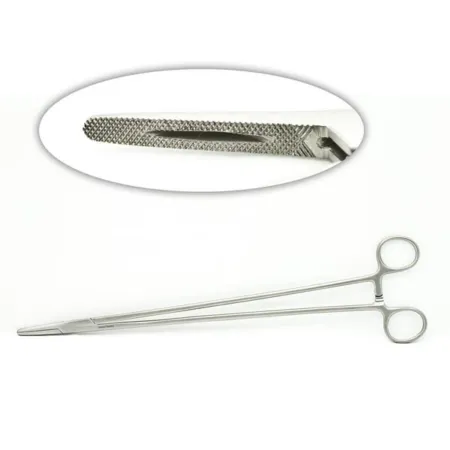
Choose a needle holder whose length suits the depth of the wound and whose jaws suit the needle: fine for fine, heavy for heavy. Chapter 24 covers the needle holders themselves.
Loading
- Load the needle while it is still in the packet, using the packet to steady it. Never set a needle in place with your fingers.
- Grip the needle with the tips of the jaws, set square (at a right angle) to them, about one-third of the way back from the swage; anywhere from one-third to one-half is acceptable. Tough tissue may call for a grip nearer the middle, and the surgeon asks when another angle is wanted.
- Never clamp the swage. It weakens the join and puts the needle holder too far back for good balance.
- Draw the strand out gently, without pulling on the needle, and straighten it.
On a needle holder with curved jaws, such as a Heaney, load the needle so the angled tip of the jaws points toward the swage, not toward the needle point. A locking micro needle holder, such as a Castroviejo, opens with a gentle squeeze on its bowed handles, takes the needle, and locks again with another squeeze. Some have no lock; keep light pressure on their handles as you pass them so the needle cannot drop.
The neutral zone
A neutral zone is a set spot on the field, such as a magnetic pad, an instrument mat or a basin, where sharps are put down and picked up, so two people never hold the same sharp at once. AST recommends it for every operation, and AORN and the American College of Surgeons recommend it too. Agree on its place with the surgeon before the incision, say "sharp" each time you place one, and take your hand completely away. Lay the needle holder so it can be picked up by the handle without turning it, and keep only one sharp in the zone at a time.
The surgeon puts the used needle holder back in the zone; never pull a loaded one out of the surgeon's hand. When the surgeon cannot use the zone, for example under a microscope, say each pass out loud and say when your hand is out of the way. A surgeon who is not using the zone turns the needle with forcepsFOR-sepsA hand instrument with two blades or arms used to grasp, hold or pull tissue or objects.Full entry toward the box lock of the needle holder before setting it down.
Some references still teach handing every loaded needle holder straight into the surgeon's palm as the usual pass, and some teams still work that way.
Passing
- Load and present the needle holder so the surgeon can use it without shifting it or looking up: needle point up, on the surgeon's thumb side, and aimed back toward the surgeon. When it is handed directly, as when the neutral zone cannot be used, place it firmly in the surgeon's palm.
- Hold the free end of the strand, or lay it over the back of your hand, so it does not tangle in the surgeon's hand or slide off the field.
- A right-handed surgeon drives the needle clockwise and a left-handed surgeon counterclockwise, so load it as a mirror image for the left hand. A backhand stitch reverses the direction. Where the surgeon stands, across from you or beside you, also changes how you hold it out, so practice both, with either hand.
- Hand tissue forceps to the surgeon's other hand with the needle holder. The surgeon uses them to steady the tissue and to pull the needle through and reposition it, so the needle is moved with instruments, never fingers. Choose them for the tissue: forceps with teeth for skin, tendon and fasciaFASH-ee-uhA sheet or band of tough connective tissue that covers and separates muscles and organs.fasci/o bandFull entry ; smooth forceps for mucosamyoo-KOH-suhThe moist lining of body passages that open to the outside, such as the mouth, nose, gut and bladder.Full entry , organs and any tissue that bleeds easily; and vascular forceps, whose scored tips grip without puncturing, for vessels.
AST's 2017 sharps guideline has the scrub pass forceps with teeth with every needle holder.
Every needle comes back
- Pass on an exchange basis: a loaded needle holder goes out as the used one comes back, so you always know where every needle is.
- Look at each returned needle: it must be whole. A broken or missing needle is reported to the surgeon and the circulator at once. Every piece is found and accounted for, then kept in the sharps container or passed off to the circulator.
- Used needles go straight onto the magnetic pad or into the needle counter. A needle is never loose: it is on a needle holder, in its packet or in the counter.
- Load needles just before they are needed, so no bare needle waits on the Mayo standMAY-oh standA small tray on an adjustable stand placed over or beside the patient during surgery to hold the instruments used most often.Full entry or back table. In a trauma case, holders may be loaded early with the needle tips still tucked in the packet.
Some references still teach keeping a loaded needle holder ready at all times, or loading ahead of time: stick ties when heavy bleeding is expected, and in a routine case the sutureSOO-cherA stitch, or the thread used to stitch, that holds the edges of a wound or incision together.Full entry , lined up in order of use.
- Before the surgeon ties, cut the needle off or use a control-release suture, so no needle swings free during the knot.
- Keep the second needle of a double-armed suture in sight, for example on a rubber-shod hemostatHEE-moe-statA clamp with finger rings and a locking ratchet used in surgery to grasp and close off bleeding vessels.hem/o blood-stat stopping, standing stillFull entry , so it does not snag the drapes.
- Pick up a needle dropped on the field with a needle holder, never fingers. One on the floor is the circulator's to pick up the same way.
- After the case: once the skin is closed and the dressing is on, look over the field for any loose sharp before the drapes come off. Needles and blades go into the small sharps container you set up on the back table, never overfilled so it closes tight, and that whole container goes into the room's large puncture-resistant sharps container.
Never touch a suture needle with your fingers, and never pass a sharp hand to hand when the neutral zone can be used. Suture needles cause more sharps injuries in surgery than any other device.
10How suture is used
Halsted's principles
More than 100 years ago, the Johns Hopkins surgeon William Halsted set out rules for treating tissue that still shape good surgery:
- Handle tissue gently.
- Control bleeding (hemostasishee-moh-STAY-sisThe stopping of bleeding, either by the body's own clotting process or by medical or surgical methods.hem/o blood-stasis stopping, standing stillFull entry ).
- Keep the blood supply.
- Keep tissue moist.
- Keep strict surgical asepsisSUR-jih-kul ay-SEP-sisPractices that keep an area or object completely free of microorganisms; also called sterile technique.a- withoutsepsis decay, infectionFull entry .
- Keep tension off the tissue.
- Close dead space, the gaps between layers where blood and serumSEER-umThe clear, yellow liquid left from blood after it clots and the cells are removed.Full entry can pool.
Halsted also favored fine sutureSOO-cherA stitch, or the thread used to stitch, that holds the edges of a wound or incision together.Full entry placed close together, which is why surgeons still use the finest strand that will hold.
How the team exposes and holds tissue during the case, with retractionrih-TRAK-shunA drawing back or pulling in of tissue; in breathing, the skin sinking in between, below or above the ribs with each breath.Full entry , tractionTRAK-shunA steady pulling force applied to a body part with weights, ropes and pulleys.Full entry and countertraction, is taught in chapter 29.
Stitches
- Continuous (running): one strand, tied only at the start and end. Quick, with tension spread evenly, but a break anywhere can loosen the whole line. It suits layers with little tension that need a tight seal, such as the peritoneumpair-ih-toh-NEE-umThe thin membrane that lines the belly cavity and covers most of the organs inside it.peri- aroundton stretched-eum a structureFull entry or a vessel.
- Locking running: each pass goes under the loop before it, for extra strength and better control of bleeding. The person following the suture keeps light tension on the strand.
- Interrupted: each stitch placed, tied and cut on its own. Slower but strongest: if one knot fails, the rest hold, and an infection is less able to travel along the line. Used for bowel and vessel joins. Interrupted stitches may be simple, figure-of-eight, vertical or horizontal mattress, or buried; buried and mattress stitches add security to the line.
- Subcuticular: a running stitch inside the dermisDER-misThe thick layer of skin under the epidermis that holds blood vessels, nerves, hair roots and glands.derm/o skinFull entry , just under the epidermisep-ih-DER-misThe thin outer layer of the skin.epi- on, uponderm/o skinFull entry , for a neat closure with few marks, usually absorbable so nothing needs taking out.
- Purse-string: a running stitch in a circle around an opening, drawn tight like a drawstring, as around the base of the appendixuh-PEN-diksA small, finger-shaped pouch attached to the first part of the large intestine, in the lower right abdomen.Full entry or around a tube.
Ties and ligatures
- Free tie: a pre-cut strand placed in the surgeon's open hand to tie around a clamped vessel.
- Reel: the whole reel goes into the palm with 2 or 3 inches of strand pulled free, then back to its place; a loose reel can fall into the wound.
- Tie on a passer: for a deep vessel, the end of a tie is clamped in the tip of a curved or right-angle clamp so the surgeon can pass it around the vessel. Lay the strand over the back of your hand as you pass it.
- Suture ligature (stick tie): a needle and strand on a needle holder. The needle passes through the vessel before the tie, so the tie cannot slip off a large vessel.
- Tag: a hemostatHEE-moe-statA clamp with finger rings and a locking ratchet used in surgery to grasp and close off bleeding vessels.hem/o blood-stat stopping, standing stillFull entry on the ends of a suture, to hold it for later or pull on it. Traction (stay) sutures hold tissue out of the way.
- Drain stitch: a nonabsorbable stitch, such as nylon, that holds a drain to the skin so it stays in place.
Suturing through a scope
In laparoscopiclap-uh-roh-SKOP-ikDone through a few small cuts in the abdomen with a thin camera and long instruments, instead of one large opening.lapar/o abdomen-scopic viewingFull entry and robotic surgery, the surgeon sutures through ports. In extracorporeal suturing the knot is tied outside the body and pushed down the port to the tissue; in intracorporeal suturing it is tied inside with instruments. endoscopicen-doh-SKOP-ikDone with an endoscope, a thin tube with a light and camera passed into the body.endo- within-scopic viewingFull entry suture devices help: a pre-tied loop on a long plastic pusher (such as the Endoloop) slips over a pediclePED-ih-kulA narrow stem or stalk that attaches a structure, such as a tumor or a skin flap, to the body.Full entry and is cinched tight, and a stitching device (such as the Endo Stitch) passes its needle between two jaws and doubles as a knot pusher. A port closure device (such as the Carter-Thomason) can close the fasciaFASH-ee-uhA sheet or band of tough connective tissue that covers and separates muscles and organs.fasci/o bandFull entry at a port site. Chapter 21 covers the scope and ports themselves.
Retention sutures and other helpers
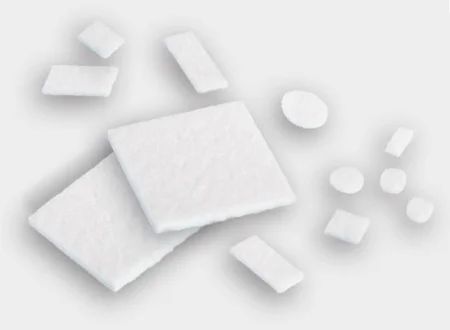
Retention sutures are heavy, nonabsorbable, interrupted sutures through all layers of the abdominal wall, a few centimeters out from the incision. They take strain off a wound at risk of splitting open (dehiscencedee-HIS-ensThe splitting open of the edges of a wound that had been closed, such as a surgical incision.Full entry ) or of the bowel pushing through (eviscerationih-vis-er-AY-shunThe pushing out of internal organs, usually loops of bowel, through a surgical wound that has come open.e- outviscer/o internal organs-ation processFull entry ). Where they cross the skin, they run through bolsters of rubber or plastic tubing, or tie over an adjustable bridge, so they do not cut in. A pledget, a small square of felt on a stitch, keeps it from cutting through a fragile vessel wall. A tendon suture may be tied over a button for the same reason, and a suture anchor, a small device of metal or absorbable material (such as a screw) set into bone, holds a suture that fixes tendon or ligament to the bone.
Cutting suture
Use suture scissors, never tissue scissors. Steady the blades with your index finger, open them slightly, slide the tips down to the knot and turn them to about a 45-degree angle, which leaves a short tail. When you can, keep the strand and knot in view so you cut nothing else. Leave the tail the surgeon wants: long enough that the knot holds, short enough to leave little foreign material. Monofilament knots slip more easily, so their tails are usually left a little longer. Cut too short, and you may cut the knot itself; then the stitch has to come out and be placed again.
When you must cut while doing other tasks, you can palm the scissors. Pick cut ends out of the wound area so they cannot fall in. To take a stitch out, lift it with a straight clamp, cut it below the knot on one side only, and pull it through; cut both sides, and the strand can be drawn into the wound, where it may not be found without opening the wound. A straight hemostat, such as a Crile or Kelly, is the best tool for pulling out the remains of a cut suture. When the surgeon removes old sutures from an earlier operation, often buried in scar, a fine straight hemostat works best: lay a folded towel on the field to hold the pieces so none drop back into the wound, then take the towel off the field.
First, second and third intention
Surgical wounds are also named by how they are closed, which decides how they heal. How the body heals a wound is taught in chapter 11.
- First intention (primary): a clean wound sutured closed, so its cut edges touch and heal together.
- Second intention (granulation): a wound left open, such as an infected or badly contaminated one. It fills in slowly from its base with granulation tissuegran-yuh-LAY-shun TISH-ooNew, moist, red tissue that fills a healing wound from the bottom up.Full entry and leaves a larger scar, and a large one may need a skin graftGRAFTTissue or a man-made material moved into place in surgery to replace or repair a damaged part.Full entry .
- Third intention (delayed primary closure): an infected or contaminated wound is treated and packed open first, then sutured once enough granulation tissue has grown.
11Blades
Scalpel blades fit handles by number: #10, #11, #12 and #15 fit the #3 and #7 handles, and #20 and up fit the #4 handle.
- #10: a curved edge, for skin incisions.
- #11: for small puncture (stab) incisions, such as port sites.
- #12: curved, cutting on the inside of its curve, for tonsilTON-sulOne of the masses of lymph tissue at the back of the throat that help fight germs entering the mouth and nose.Full entry and palate surgery.
- #15: for short, delicate cuts: small vessels, plastic surgery skin incisions and the hand.
- #20 and #22: larger versions of the #10; the #20 for orthopedic surgeryor-thuh-PEE-dik SUR-juh-reeSurgery on the bones, joints, ligaments, tendons and muscles.ortho- straightped child (the specialty began with straightening children's bones)-ic relating toFull entry , the #22 for chest and heart incisions.
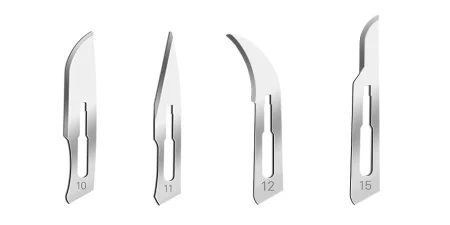
Never load or remove a blade with your fingers. To load one, grip the blade's dull side with a hemostatHEE-moe-statA clamp with finger rings and a locking ratchet used in surgery to grasp and close off bleeding vessels.hem/o blood-stat stopping, standing stillFull entry or a needle holder and fit it into the handle's slots. Skip any needle holder whose jaws are lined with diamond dust or special metal: loading blades can knock its jaws out of line. To take a blade off, use a single-handed blade remover, or use a safety scalpel instead, such as one with a retractable blade or a single-use handle that is never taken apart.
Some references still teach taking the blade off with a needle holder: lift the lower corner of the blade slightly, then pull it out of the slot.
With a safety scalpel, AST suggests the scrub uncovers the blade, places the scalpel in the neutral zone, and covers it again when it returns. Pass every knife through the neutral zone, drop used blades straight into the sharps container, and pick up a blade dropped on the field with forcepsFOR-sepsA hand instrument with two blades or arms used to grasp, hold or pull tissue or objects.Full entry .
12Sponges
Sponges soak up blood, cushion tissue under retractorrih-TRAK-terA surgical instrument that holds back tissue or organs so the surgeon can see and reach the operative site.Full entry , hold bowel aside and help separate tissue. Every sponge used in a wound has a radiopaqueray-dee-oh-PAYKBlocking x-rays, so the material shows up white on an x-ray image.radi/o radiation, x-rayopaque not letting throughFull entry markerMAR-kerSomething that can be measured, such as a substance in the blood, that shows a disease or body process is present.Full entry that shows on x-ray, and gauze without one never goes in. AST and AORN guidance say sponges are never cut or altered.
- Raytec (4 by 4): woven gauze folded into a 4-inch square, for shallow wounds. In a deep wound or body cavity, it is always mounted on sponge forcepsFOR-sepsA hand instrument with two blades or arms used to grasp, hold or pull tissue or objects.Full entry as a sponge stick: fold it in thirds one way and in half the other, with the folded edge at the tip. Any loose Raytec comes off the field before the peritoneumpair-ih-toh-NEE-umThe thin membrane that lines the belly cavity and covers most of the organs inside it.peri- aroundton stretched-eum a structureFull entry is opened.
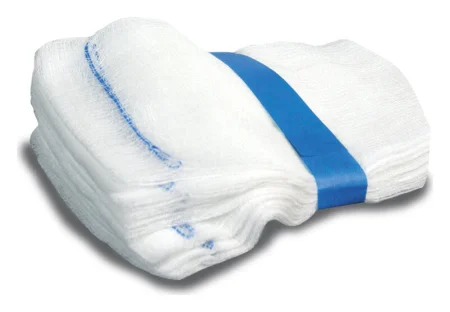
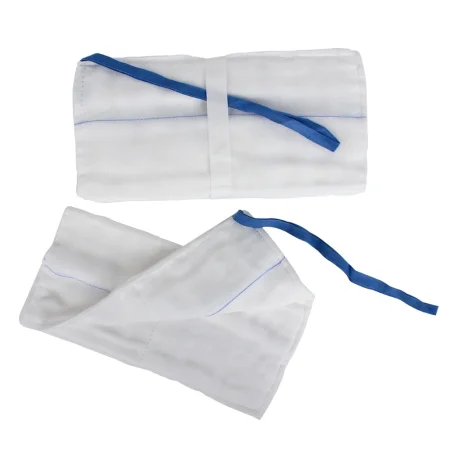
- laparotomylap-uh-ROT-uh-meeSurgery that opens the abdomen through a large cut to reach the organs inside.lapar/o abdomen-tomy cutting intoFull entry sponge (lap): a large pad with a loop of tape and a radiopaque marker at one corner, for the abdomen and chest. Wet it in warm saline and wring it out before passing, unless the surgeon wants it soaking wet or dry.
- Dissectors (peanuts, Kittners, cherries, pushers): small, tightly rolled sponges for blunt dissectiondy-SEK-shunA tear in the inner layer of an artery wall that lets blood split the layers apart; also, the cutting apart of tissue in surgery.Full entry , always passed on a clamp. Spares stay in their holder, never loose on the field.
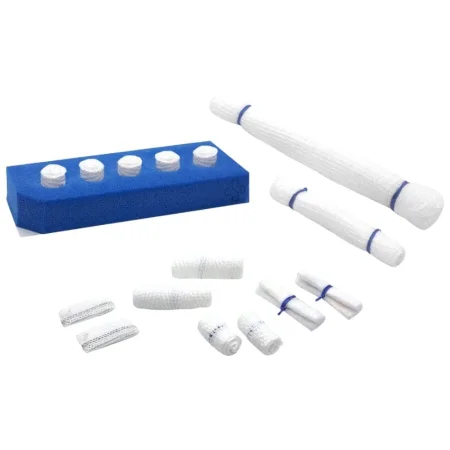
- tonsilTON-sulOne of the masses of lymph tissue at the back of the throat that help fight germs entering the mouth and nose.Full entry sponges: gauze-covered balls on a string, for the throat. The string stays outside the mouth so a sponge cannot fall into the airway; check it is still attached when the sponge comes back.
- Cottonoids (patties): flat squares of pressed cotton or rayon with a string, for brain, spine, ear and vascular surgery. They are usually wet with saline or a drug such as thrombinTHROM-binAn enzyme in the blood that turns fibrinogen into fibrin, the threads that hold a blood clot together.thromb/o clot-in substanceFull entry , kept moist the whole case, and offered from a basin or on a flat ribbon retractor, and they can sit between a suction tip and delicate tissue. Every one comes back with its string; never cut the strings.
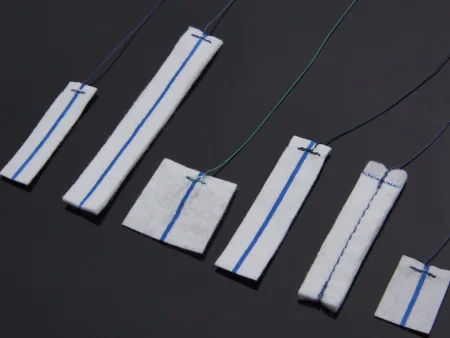
- Cellulose spears (such as Weck-Cel): small cellulose sponges used in eye and eyelid surgery to dab tiny bleeders, so the surgeon has a dry view and can find each bleeder to cauterize.
- Dental sponges: small 2 by 2 gauze sponges, with cotton rolls or dental pellets, for mouth and tooth surgery. A gauze throat pack with a radiopaque thread is moistened and placed in the throat; it is counted, and it must come out before the breathing tube does.
Keep one basin of saline just for wetting sponges, because lint comes off them. Drop used sponges, never throw them, into the kick bucket for the circulator to count.
13Drains
Blood and serumSEER-umThe clear, yellow liquid left from blood after it clots and the cells are removed.Full entry that collect in a wound give germs a place to grow, and a drain gives that fluid, or air, a way out. Most drains leave through a small stab wound beside the incision and are stitched to the skin with nonabsorbable sutureSOO-cherA stitch, or the thread used to stitch, that holds the edges of a wound or incision together.Full entry . They are made of premature ventricular contractionpree-muh-CHOOR ven-TRIK-yuh-ler kun-TRAK-shunAn extra heartbeat that starts early from a ventricle instead of from the heart's normal pacemaker.Full entry , silicone (Silastic is a silicone rubber), rubber or latexLAY-teksNatural rubber made from the sap of the rubber tree, used in some gloves, catheters and other medical supplies.Full entry , so check for a latex allergyLAY-teks AL-er-jeeAn allergic reaction to proteins in natural rubber latex, found in some gloves, catheters and other products.Full entry . Before a drain goes in, look it over and make sure it is open all the way through, because a faulty drain can leave a piece behind when it is pulled.
All but the simplest drains empty into a reservoirREZ-er-vwarA place where germs live and multiply, such as a person, animal, water or soil.Full entry , which keeps the fluid contained so infection does not spread and lets the team measure it. Keep every drain's collection unit below the level where its tube leaves the body, so fluid cannot run back in.
Drains are flat or tube-shaped, with or without a reservoir, and they are open or closed. An open drain, such as a Penrose, lets outside air reach the wound. A closed drain is sealed from the air and works by suction or a pressure difference.
Passive drains
Passive drains work by gravity and capillaryKAP-ih-lair-eeOne of the tiniest blood vessels, joining the smallest arteries to the smallest veins.Full entry action.
- Penrose: a soft, flat, thin-walled tube that lets fluid run out into the dressing, with no reservoir. A Penrose is also looped around a structure, such as the esophagusih-SOF-uh-gusThe muscular tube that carries food and liquid from the throat to the stomach.esophag/o esophagusFull entry , to lift and hold it.
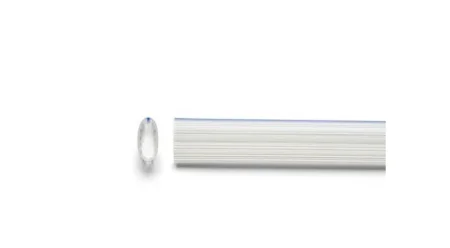
- T-tube: drains bilebileA yellow-green fluid made by the liver and stored in the gallbladder that helps digest fats.chol/e bileFull entry from the bile ductbyle duktOne of the tubes that carry bile from the liver and gallbladder to the small intestine.Full entry into a bag.
- Catheters such as the indwelling urinary catheterin-DWEL-ing YUR-ih-nair-ee KATH-uh-terA tube passed through the urethra into the bladder and left in place to drain urine into a bag.Full entry , Malecot and Pezzer also drain passively, as after genitourinaryjen-ih-toh-YOOR-ih-nair-eeRelating to the genital (reproductive) organs and the urinary organs together.genit/o reproductive organsurin/o urine-ary relating toFull entry surgery (chapter 34). Drains such as the Pezzer, Malecot and Penrose are usually set in place in the wound with a blunt clamp, such as a Mayo or Pean.
- Sump drain: a tube inside a tube. Fluid seeps into the outer tube, which has many holes, and is drawn off through the inner one, a design that keeps the holes from clogging. It handles large amounts of fluid deep in the abdomen. AST's Core Curriculum groups it with the passive drains, though it works best on low suction.
Active drains
- Closed suction drains, such as the Jackson-Pratt (a soft bulb) and the Hemovac (a canister that is pressed flat): perforationper-fuh-RAY-shunA hole that goes all the way through the wall of an organ or tissue.per- throughforat bored (a hole)-ion processFull entry tubing in the wound connects to a reservoir. Once the wound is closed, squeezing the reservoir flat and closing its plug creates suction that draws fluid out as it slowly opens up. As the dressing is taped, the circulator connects the drains' nonsterile ends (dressings are in chapter 30).
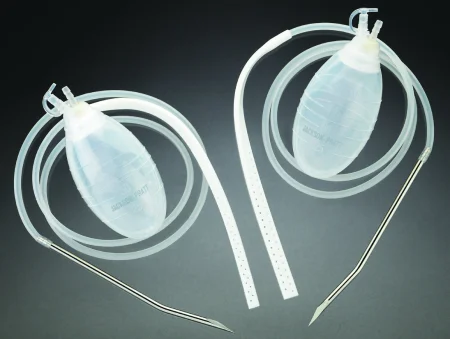
- The tubing leaves the skin on a sharp trocarTROH-karA sharp or bladed instrument inside a tube (cannula), used to pierce a body wall and leave the tube in place as a port.Full entry . Take off its guard with an instrument, pass it through the neutral zone, and put the cut-off trocar straight into the sharps container.
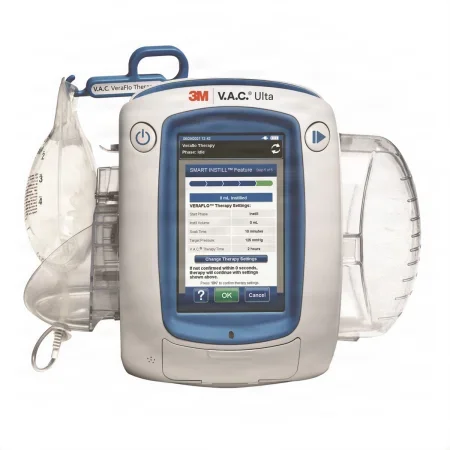
- wound vacuum-assisted closurewoond VAK-yoom uh-SIS-tid KLOH-zhurA wound treatment that uses a sealed dressing connected to a suction pump to draw fluid out and help the wound heal.Full entry (a wound VAC): foam in the wound, sealed under film and connected to a pump that keeps up steady suction. It removes fluid, keeps the wound moist and reduces swelling.
- A stomaSTOH-muhAn opening on the surface of the body made by surgery, such as the end of bowel brought out through the belly wall.stoma mouth, openingFull entry pouch, which collects drainage from an opening made onto the skin in surgery, goes on with the dressings (chapter 30).
Chest drainage
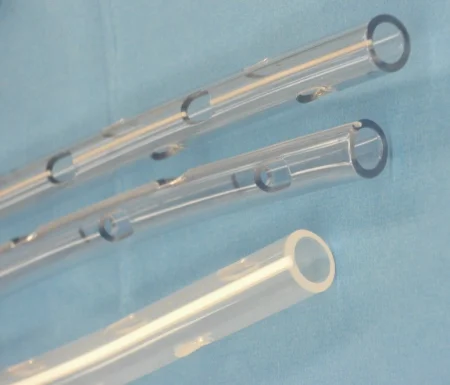
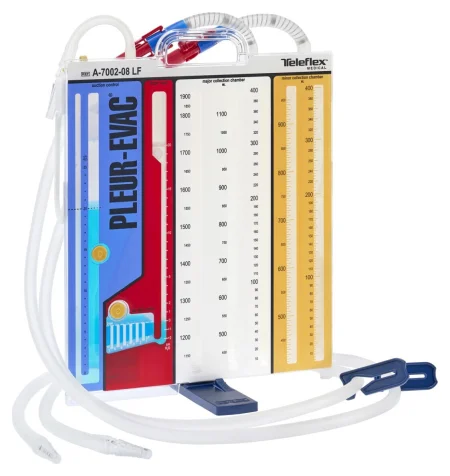
The space around the lungs normally holds a negative pressureNEG-uh-tiv PRESH-erPressure that is lower than the pressure around it, so air or fluid is drawn in.Full entry that keeps them open. After chest surgery or injury, a chest tubechest toobA tube placed through the chest wall into the space around the lung to drain air, blood or fluid.Full entry connects to a chest drainage unit (the Pleur-evac is one brand) with three chambers: one collects drainage, one holds a water seal that keeps air from being drawn back into the chest, and one controls suction. Keep the unit upright and below the chest at all times, because fluid running back can collapse the lung. Chest tubes are stiff Silastic or PVC tubes with many holes near the tip, sewn to the skin with heavy nonabsorbable suture and dressed with petroleum gauze, fluffs and flat gauze; two tubes may be joined with a Y-connector to one unit. Connections are secured with bands or tape, and each tube is labeled, such as anterior and posterior. If a tube comes out, cover the hole at once with sterile petroleum gauze, so air cannot rush in. Tubes come out when the air leak has stopped and the drainage has stayed low for 24 hours.
14Drapes
Drapes form a barrier between the prepped incision site and everything that is not sterile. Draping itself comes in chapters 26 and 28; these are the materials.
- Nonwoven disposable drapes are impervious or nearly so. Woven cloth drapes are treated to resist moisture but are not waterproof, so they need extra layers where fluid will be. AST calls for impervious, fluid-resistant drapes, especially around the opening.
- Towels square off the incision site as the first layer.
- Adhesive barrier drapes: plastic towel drapes (such as the Steri-Drape) with a strip of adhesive along one edge, used to wall off an area, such as the eyes, nose and mouth in ear surgery.
- Fenestrated drapes have a window (fenestration) over the incision, made for each area: laparotomylap-uh-ROT-uh-meeSurgery that opens the abdomen through a large cut to reach the organs inside.lapar/o abdomen-tomy cutting intoFull entry , thyroid, eye, extremity and more.
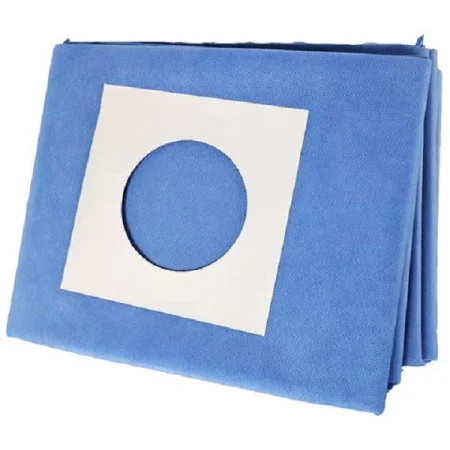
- Plain sheets (half, three-quarter or full), also called utility drapes, cover large areas, and split or U-drapes wrap around a limb or the hip. Universal drapes are used with towels in place of a fenestrated sheet on some cases.
- Fluid-collection pouch: a pouch, built into a drape or added to it, that catches and channels large amounts of irrigationeer-ih-GAY-shunWashing out a wound, body cavity, tube or eye with a steady flow of liquid.Full entry and blood, with ports to drain it during the case, as in orthopedicor-thuh-PEE-dikHaving to do with the bones, joints, muscles, ligaments and tendons, and the branch of medicine that treats them.orth/o straightped/o child (the field began with straightening children's bones)-ic relating toFull entry , brain, gynecologygy-nuh-KOL-uh-jeeThe branch of medicine that cares for the female reproductive organs and breasts.gynec/o woman-logy study ofFull entry and urologic surgery.
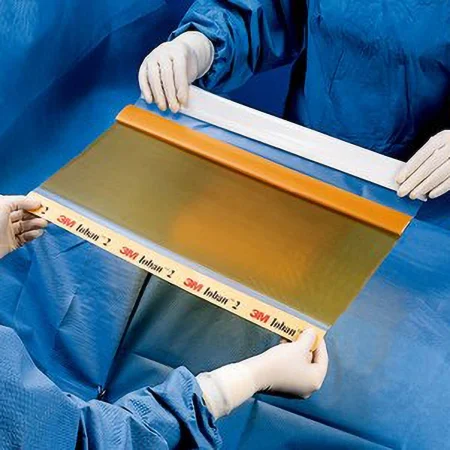
- Incise drapes: clear adhesive plastic pressed onto the prepped skin over the incision, plain or impregnated with an iodineEYE-uh-dyneA mineral the thyroid gland uses to make thyroid hormone; it is also used to kill germs on the skin and in some contrast dyes.Full entry antiseptic. The CDC finds them not necessary to prevent infection, so whether one is used follows the surgeon and your facility's policy. When one is used, some guidelines call for the iodine type, except for a patient allergic to iodine.
- Stockinette: a fabric tube, impervious or not, rolled up over an arm or leg. Coban, a stretchy wrap that sticks to itself, may be wound over it.
- Equipment covers: sterile plastic sleeves shaped for the microscope, C-arm, cameras, probes and robot.
15Electrosurgical supplies
Chapter 20 explains electrosurgeryee-LEK-troh-SUR-jer-eeUsing high-frequency electric current through a handheld tool to cut tissue or seal bleeding vessels during surgery.Full entry and its safety. These are the supplies you set up.
- Active electrode: the handheld pencil, often called the Bovie, with changeable tips: blade, needle, ball, loop and extended, some insulated or coated. Check the cord and insulation, and seat the tip firmly. The tip counts as a sharp: it is part of the sharps count and goes into the sharps container at the end.
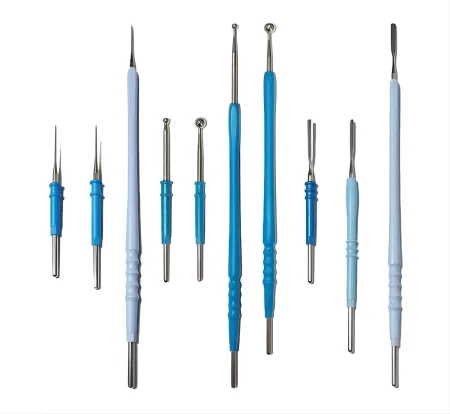
- Safety holster: a nonconductive holder on the drapes, in plain sight and within the surgeon's reach, preferably fastened with a clamp that is not metal. The pencil goes back in it after every use, never onto the patient or drapes.
- Scratch pad: an abrasive pad for cleaning char (escharES-karThick, dry, dark dead tissue that covers part or all of a wound.Full entry ) off the tip, kept handy for the surgeon but away from the wound. A coated, nonstick tip is wiped with a wet sponge instead, because the pad ruins the coating. Never scrape a tip with a blade; it pits the tip and risks a cut.
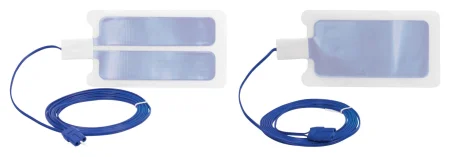
- Patient return electrode: the adhesive, gel-coated pad that carries current back to the generator in monopolar electrosurgery. Check its expiration date, pick the right size, never cut it, and place it on clean, dry skin over a large muscle near the surgical site. bipolarby-POH-lerHaving two poles or two opposite ends; most often used as a short form of bipolar disorder.bi- twopolar having polesFull entry instruments need no pad.
- Other energy handpieces you will set up: bipolar forcepsFOR-sepsA hand instrument with two blades or arms used to grasp, hold or pull tissue or objects.Full entry , some with an irrigationeer-ih-GAY-shunWashing out a wound, body cavity, tube or eye with a steady flow of liquid.Full entry channel at the tips; vessel-sealing devices (such as LigaSure); the harmonic (ultrasonic) scalpel, which coagulationkoh-ag-yuh-LAY-shunThe process by which blood changes from a liquid into a gel, forming a clot.coagul clot-ation processFull entry and divides tissue between its jaws; the argon beam coagulator; radiofrequency ablationab-LAY-shunA procedure that destroys a small area of tissue, often with heat or cold, to stop it from causing a problem.Full entry probes; and suction coagulators. Chapter 20 explains how each kind of energy works.
16Staplers and clips
Staplers close or join tissue quickly with staples of stainless steel, titanium or absorbable material. Each staple closes into a B shape that does not crush, so blood still reaches the tissue edges. Staplers come disposable or reusable, for open or minimally invasive surgery, and most take color-coded reloads. A reusable stapler is put together by the scrub during setup; a disposable one comes assembled and sterile, and new cartridges load into it so one stapler can fire again. Each company's stapler works differently, so learn each one through the maker's training. Chapter 32 shows them at work.
Stapling is faster than suturing, with less blood loss and less time under anesthesiaan-us-THEE-zhuhLoss of feeling or sensation, often brought on by drugs so that surgery or a procedure can be done without pain.an- withoutesthesi/o feeling, sensation-ia conditionFull entry , but it costs more, and a misplaced staple line is much harder to fix than a stitch. Besides the open and endoscopicen-doh-SKOP-ikDone with an endoscope, a thin tube with a light and camera passed into the body.endo- within-scopic viewingFull entry kinds, staplers come powered (batteryBAT-uh-reeIn law, touching a person on purpose without their consent.Full entry driven), robotic (fired from the robot's arm) and for skin and subcuticular closure.
- Linear stapler: straight, staggered rows that close tissue without cutting it.
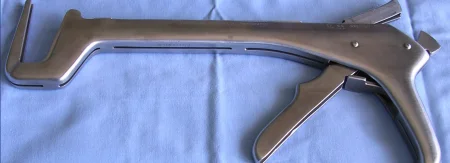
- Linear cutter: two double rows with a knife between them, sealing and dividing in one firing, as in bowel surgery.
- Circular (intraluminal) stapler: a double ring of staples with a circle trimmed inside it, to join two ends of bowel, often low in the colon.
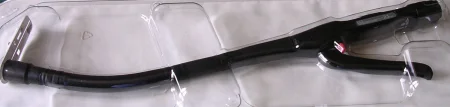
- Staple line reinforcement: strips of absorbable synthetic or biologic material (a buttress) fitted to the stapler's jaws, a glue, or stitches sewn over the line, used to cut bleeding and leaks along a staple line, as in a sleeve gastrectomy.
- Skin stapler: one staple per squeeze, the arrow on the stapler head lined up on the skin edges while the surgeon turns them outward with toothed forcepsFOR-sepsA hand instrument with two blades or arms used to grasp, hold or pull tissue or objects.Full entry . Quick, low in tissue reaction and even in tension, though it leaves more marks than a subcuticular closure and the staples must be taken out later. AST's position is that a CSTsee-es-tee (said as letters)Certified Surgical Technologist, a credential for surgical technologists; in maternity care, contraction stress test.Full entry has the training to run the skin stapler while the surgeon or assistant everts the edges.
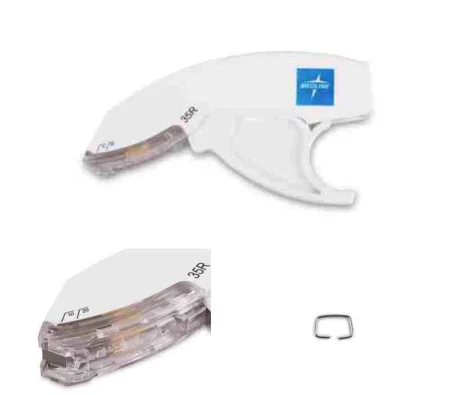
Staplers can misfire, fail to fire or form staples badly. When you reload a linear cutter, wipe off the other side of its jaws so no staple from the last firing is left behind, because a leftover staple can make it misfire or not fire at all. The FDA asks teams to read the maker's instructions, keep a range of staple sizes on hand, use the cartridge that matches the tissue's type and thickness, and, if a stapler fails on tissue, clamp or tie the vessels before it is released.
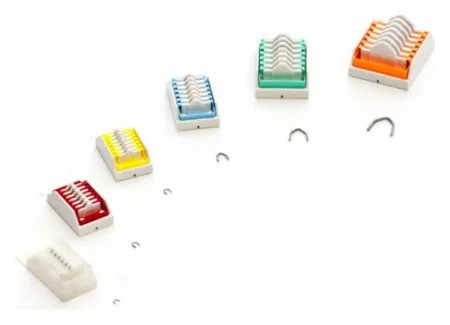
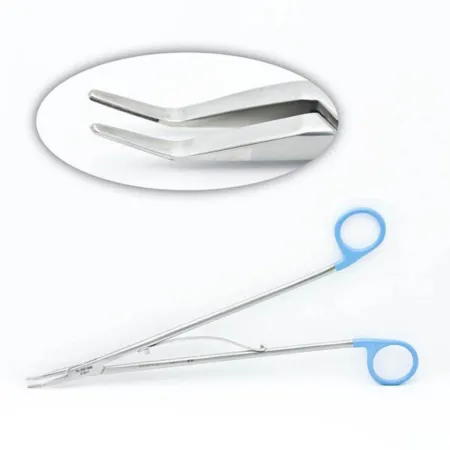
Ligating clips close a vessel or duct in place of a tie. They are stainless steel, titanium or absorbable, come in sizes from micro to large, each matched to its own applier, and are usually placed on both sides before the structure is cut between them. Appliers come disposable and preloaded, or reusable and loaded one clip at a time, with long versions for laparoscopylap-uh-ROS-kuh-peeSurgery or an exam done through small cuts in the belly, using a thin, lighted tube with a camera.lapar/o abdomen-scopy looking with an instrumentFull entry .
17Syringes and injection needles
- Fittings: a Luer-lock tip twists on and locks, so a needle or tubing cannot pop off. A slip tip pushes on and pulls off, for low-pressure uses. Both ends of a connection must match.
- Sizes: 1 mL to 60 mL, each marked along the barrel in milliliters. The 1 mL tuberculin syringe measures tiny doses; never confuse it with an insulinIN-suh-linA hormone made by the pancreas that lets the body's cells take in glucose, also made as a medicine.Full entry syringe, which is marked in units. A 60 mL syringe is for flushing and irrigationeer-ih-GAY-shunWashing out a wound, body cavity, tube or eye with a steady flow of liquid.Full entry , not measuring. Most syringes are plastic; glass ones are used when a very smooth injection matters, such as injecting local anestheticLOH-kul an-es-THET-ikA drug that blocks feeling in one part of the body without making the person unconscious.Full entry into tissue.
- Control syringe: rings for the thumb and fingers, for better control while injecting, such as local anesthetic.
- Prefilled cartridges: some drugs come in a ready-filled cartridge that fits a holder with a plunger. The older Tubex system was replaced by the Carpuject.
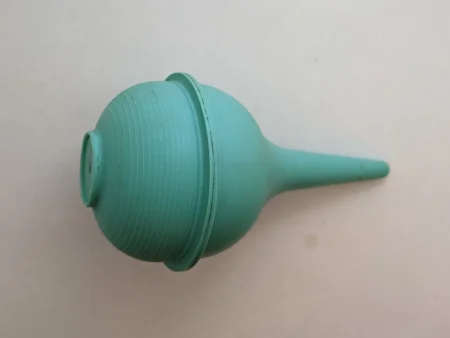
- Irrigation: the Asepto, a bulb on a barrel holding about 120 mL, is the usual irrigator in open cases. The bulb syringe has no barrel, for small areas and an infant's mouth and nose. The Toomey is a large syringe, often used through a catheter to irrigate the bladder. Keep track of the irrigation you use, because it mixes with blood in the suction canister and the team needs it to estimate blood loss.
- Needles: hypodermic needles are sized by gauge and length. The higher the gauge, the thinner the needle: an 18-gauge is wider than a 22-gauge. A blunt needle draws a drug from the circulator's vial without risk of a stick, and a filter needle keeps glass out when drawing from an ampule. Spinal needles are 3 to 4 inches long with a stylet. An angiocatheter (such as the Angio-Cath) uses a needle to place a plastic tube that stays in a vein or artery. Chapter 12 covers drawing up and labeling drugs on the field.
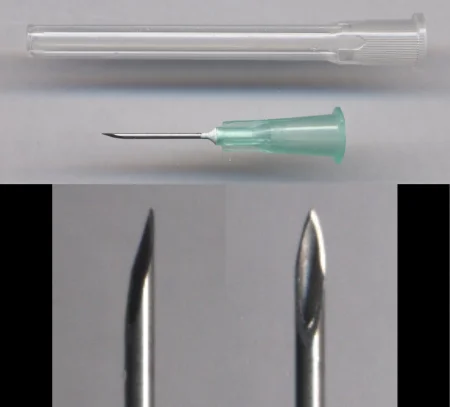
- Recapping: never with two hands. If the same needle will be used again on the same patient, scoop the cap up from the Mayo standMAY-oh standA small tray on an adjustable stand placed over or beside the patient during surgery to hold the instruments used most often.Full entry one-handed and leave it loose.
18Containers and field items
- Basins: one for irrigationeer-ih-GAY-shunWashing out a wound, body cavity, tube or eye with a steady flow of liquid.Full entry and a second only for wetting sponges, placed so the circulator can pour without reaching over the field.
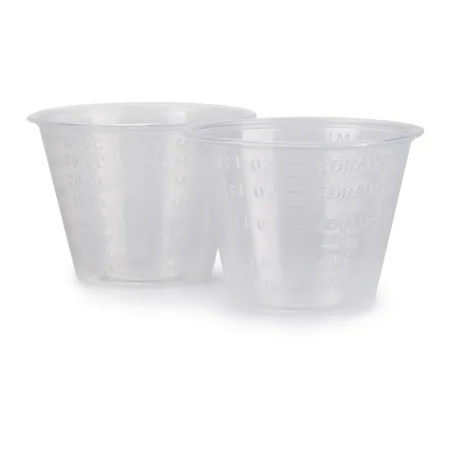
- Medicine cups: set at the edge of the back table to be filled, then moved in. Label every cup, basin and syringe that holds a solution or drug.
- Specimen cups: hold tissue in a safe spot on the back table until it goes off the field.
- Pitchers, trays and petri dishes: sterile containers come in many shapes, and many carry graduated marks for measuring. A graduated pitcher sits at the edge of the back table to be filled, like a medicine cup, and a petri (culture) dish can hold a small piece of tissue, such as a donor corneaKOR-nee-uhThe clear, dome-shaped layer at the front of the eye, over the iris and pupil.Full entry .
- Light handle covers: sterile covers that let the sterile team move and focus the overhead lights.
- Magnetic mat or needle counter: holds used needles and small sharps where you can see and count them.
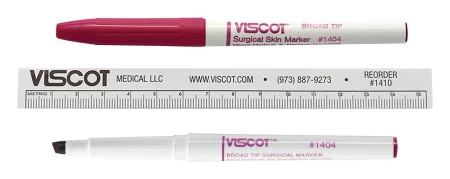
- Sterile marking pen, ruler and labels: for marking the skin and labeling drugs and solutions.
- sutureSOO-cherA stitch, or the thread used to stitch, that holds the edges of a wound or incision together.Full entry bag: a paper bag from the back table pack for empty packets and used ties.
19Suction
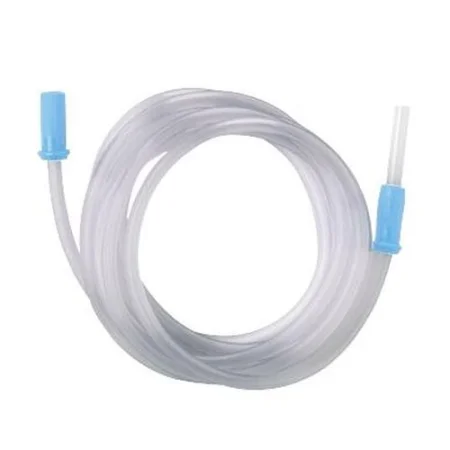
Tubing joins the tip on the field to a canister. Set it up with the tip attached, and draw sterile water through it now and then so blood does not clot inside. Firm, large-bore tubing is used with high-power suction, as in liposuction.
- Yankauer (tonsilTON-sulOne of the masses of lymph tissue at the back of the throat that help fight germs entering the mouth and nose.Full entry suction): a rigid, angled tube with a rounded tip, the most used tip, which suctions without grabbing tissue.
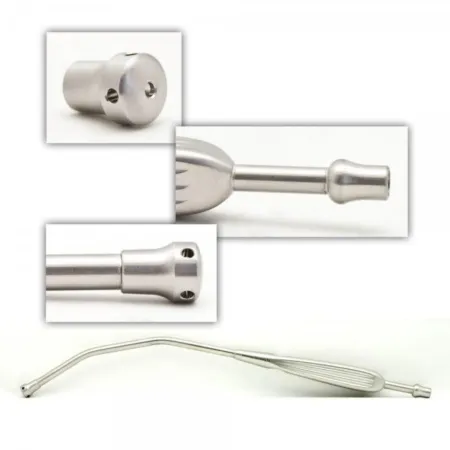
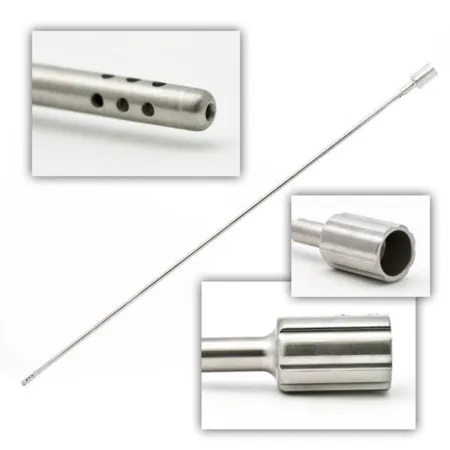
- Frazier: a thin, angled tip with a thumb hole; covering the hole increases the pull. For small spaces such as the nose, spine and skull, with a wire stylet to clear it.
- Poole: an outer sheathSHEETHA covering that wraps around a structure; in procedures, a short hollow tube left in a blood vessel to pass catheters through.Full entry with many holes over an inner tube, for large amounts of fluid in the abdomen. The holes spread the suction so bowel is not drawn against the tip.
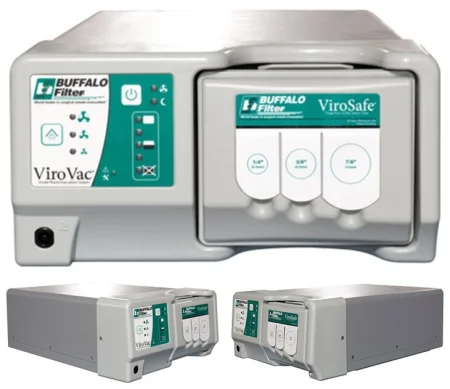
- Smoke evacuation: electrosurgeryee-LEK-troh-SUR-jer-eeUsing high-frequency electric current through a handheld tool to cut tissue or seal bleeding vessels during surgery.Full entry and lasers make a smoke plume that carries chemicals, cells and germs. A smoke evacuator with a filter removes it. Hold the wand as close as you can to where the tip meets the tissue, always within 2 inches (5 cm), without blocking the surgeon's view.
AST's 2012 electrosurgery standard says to hold the wand less than 1 centimeter from where the electrode touches the tissue.
- Cell salvage: a cell saver suctions the patient's own blood, washes and filters it, and returns it, reducing the need for donor blood. Topical hemostatichee-moh-STAT-ikStopping bleeding; also, a product or agent used to stop bleeding.hem/o blood-stasis stopping, standing still-ic relating toFull entry and some antibiotics should not be suctioningSUK-shun-ingRemoving mucus, saliva or other secretions from the mouth, nose or airway with a tube connected to a suction source.Full entry into it, and amniotic fluidam-nee-OT-ik FLOO-idThe fluid inside the amniotic sac that surrounds and protects the baby during pregnancy.Full entry needs its own separate suction.
20Tissue repair and replacement
Closing skin without suture
- Skin closure tapes (such as Steri-Strips): adhesive strips that hold small wounds closed or support a subcuticular closure. They need dry skin, and a liquid adhesive such as benzoin helps them stick.
- Skin adhesive (a cyanoacrylate glue, such as Dermabond; the Core Curriculum also names Cavilon): painted in layers over skin edges held together. It seals out germs, needs no removal and wears off on its own in about 5 to 10 days. Only for wounds not under tension, and never on an infected wound or for a patient allergic to cyanoacrylate or formaldehyde.
- Wound zipper: two adhesive strips joined by a zipper. The strips go on clean, dry skin on each side of the incision, and closing the zipper pulls the edges together, with no needle holes and no needles to stick anyone.
Mesh
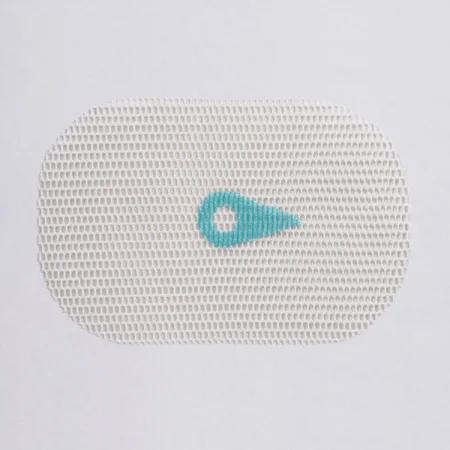
Mesh bridges or strengthens tissue that cannot be closed without tension, most often in herniaHER-nee-uhA bulge of an organ or tissue through a weak spot in the muscle or tissue wall that normally holds it in.Full entry repair. Synthetic meshes include polypropylene, which tolerates infection; polyester, which does not; PTFE; and absorbable polyglactin 910 for temporary support. Biologic meshes, made from animal tissue, let the patient's own tissue grow in.
Grafts
- Autograft: tissue moved within the same patient, such as skin, bone, cartilageKAR-tih-lijFirm, smooth, rubbery tissue that cushions joints and gives shape to parts such as the ear, nose and windpipe.chondr/o cartilageFull entry or fat.
- Allograft (homograft): tissue from another person, kept by a tissue bank, such as skin, bone or cartilage.
- Xenograft: tissue from another species, such as pig or cow skin.
Protect an autograft: keep it moist in saline unless the surgeon says otherwise, never on a dry, absorbent surface, in a safe spot on the back table, and point it out when you hand off to another scrub. Implants such as mesh are opened only once the surgeon confirms the exact type and size, and, as with any sterile package, the wrapper is checked for damage and the expiration date confirmed first. Each one goes in the facility's implant log with its lot number and expiration date.
21Other supplies
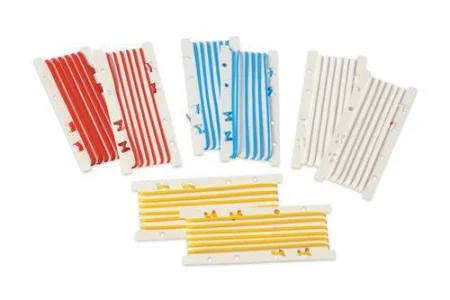
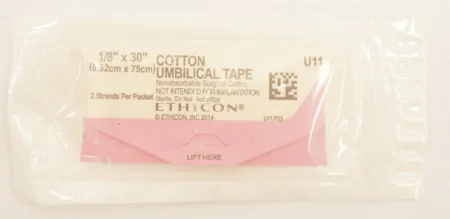
- Vessel loops: colored silicone loops that lift and hold vessels, nerves and ducts; red usually marks arteries, blue veins, and white or yellow nerves and ducts. Umbilical tape, a cotton tape used wet on a hemostatHEE-moe-statA clamp with finger rings and a locking ratchet used in surgery to grasp and close off bleeding vessels.hem/o blood-stat stopping, standing stillFull entry , does the same job.
- Pain pumps: a small catheter left in the wound or joint and a disposable pump that delivers local anestheticLOH-kul an-es-THET-ikA drug that blocks feeling in one part of the body without making the person unconscious.Full entry for 2 or 4 days, depending on the pump.
- latexLAY-teksNatural rubber made from the sap of the rubber tree, used in some gloves, catheters and other medical supplies.Full entry -free supplies: for a patient with a latex allergyLAY-teks AL-er-jeeAn allergic reaction to proteins in natural rubber latex, found in some gloves, catheters and other products.Full entry , every item must be latex-free, ideally from a dedicated latex allergy cart, and the patient goes first in the day.
- Emergency supplies: know where the malignant hyperthermiamuh-LIG-nunt hy-per-THER-mee-uhA rare inherited reaction to certain general anesthesia drugs in which the muscles' metabolism speeds up out of control.mal- badhyper- above normaltherm heat-ia conditionFull entry cart and the other emergency carts are and what they hold, so you can fetch them without stopping to think.
Specialty supplies
Each specialty has supplies of its own, and you meet them with the procedures that use them: general surgery (chapter 32), laparoscopiclap-uh-roh-SKOP-ikDone through a few small cuts in the abdomen with a thin camera and long instruments, instead of one large opening.lapar/o abdomen-scopic viewingFull entry and robotic surgery (chapter 21), obstetrics and gynecologygy-nuh-KOL-uh-jeeThe branch of medicine that cares for the female reproductive organs and breasts.gynec/o woman-logy study ofFull entry (33), urology, with its many catheters and stentstentA small tube, often of metal mesh, placed inside a vessel or duct to hold it open.Full entry (34), eye (35), ear, nose and throat (36), oral and maxillofacial (37), plastic and reconstructive (38), orthopedicor-thuh-PEE-dikHaving to do with the bones, joints, muscles, ligaments and tendons, and the branch of medicine that treats them.orth/o straightped/o child (the field began with straightening children's bones)-ic relating toFull entry (39), heart, chest and vascular surgery (40 and 41) and neurosurgery (42). anesthesiaan-us-THEE-zhuhLoss of feeling or sensation, often brought on by drugs so that surgery or a procedure can be done without pain.an- withoutesthesi/o feeling, sensation-ia conditionFull entry supplies are in chapter 13.
22Handling any supply
The same habits apply to every item on this page. Know whether it is disposable or reusable and what it does well or poorly. Inspect it before it goes on the field, because a single-use item can be damaged too: check the package is whole and the date is good. For a device such as a stapler, learn from the maker's training how to prepare, load, reload and unload it. Keep track of what is used, in the count, the implant log and the record.
Know how each device can fail and what to do about it, as with a stapler that misfires (see Staplers and clips). At the end, dispose of each item by its type and your facility's policy: sharps go into the sharps container, and soiled drapes, gowns and gloves are placed, never thrown, into the impervious biohazard bag. Breaking down the field is in chapter 30.
What to take from this chapter
- Sutures are absorbable or nonabsorbable, natural or synthetic, and monofilament or multifilament. Braided strands handle well but wick; monofilaments glide and resist infection but hold knots less well.
- More zeros mean a finer strand: 4-0 is finer than 2-0, and 2 is thicker than 0. The surgeon uses the finest strand that will hold.
- Read the label for size, material, needle and length, and open only what the case needs.
- Never wet synthetic absorbables, never soak gut, never crush a strand, and never bend steel wire.
- Taper points for soft tissue, cutting points for tough tissue, blunt points for friable organs and fascia.
- Load the needle in its packet, one-third back from the swage, never with fingers. Pass it ready to use, through the neutral zone, one for one, and check that every needle comes back whole.
- Every sponge in a wound is radiopaque and never cut. Dissecting sponges always go up on a clamp.
- Passive drains work by gravity; active drains use suction. A chest drainage unit stays upright and below the chest.
Check yourself5 quick questions
Free for everyone. Pick an answer for each, then check them all at once.
In the ORWhere you'll use this
The chapter's whole question pool in sets of 10, with the answer explained after each one.
Part of the educators programThe chapter's words on spaced cards: the ones you miss come back sooner.
Part of the educators programGiven by your class's teacher. Each class draws its own 25 from the chapter's pool.
Part of the educators program
Suggest a fix
Something wrong, unclear or out of date in this chapter? Tell us and we will fix it for everyone. Your email is only used to reply.